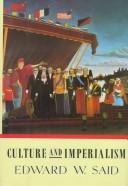
Culture and imperialism
Edward W. Said · 1993 · 509 pages
As an Amazon Associate we earn from qualifying purchases. Some book links are affiliate links; you pay the same price and we may earn a small commission.
About this book
In a series of essays, Said argues the impact of mainstream culture (mainly British writers of the 19th and early 20th century, like Jane Austen and Rudyard Kipling) on colonialism and imperialism, and conversely how imperialism, resistance to it, and decolonization influenced the English and French novel. In the introduction to the work, Said explains his focus on the novel: he "consider[s] it the aesthetic object whose connection to the expanding societies of Britain and France is particularly interesting to study. The prototypical modern realistic novel is Robinson Crusoe, and certainly not accidentally it is about a European who creates a fiefdom for himself on a distant, non-European island." On the connection between culture and empire, Said observes that "The power to narrate, or to block other narratives from forming and emerging, is very important to culture and imperialism, and constitutes one of the main connections between them." Hence he analyzes cultural objects in large part to understand how empire works: "For the enterprise of empire depends upon the idea of having an empire... and all kinds of preparations are made for it within a culture; then in turn imperialism acquires a kind of coherence, a set of experiences, and a presence of ruler and ruled alike within the culture." Said defines "imperialism" as "the practice, the theory, and the attitudes of a dominating metropolitan center ruling a distant territory." His definition of "culture" is more complex, b
Appears in these reading paths
Understanding Edward Said: Best Books to Read in Order
Related reading guides
Reader reviews
Ratings and notes from readers — tagged with how deep into the subject they were.
Loading reviews…