This reading list is about fraud specifically: people who fabricated or falsified data, how they got away with it for years, and the institutions that found them useful right up until the moment they did not. That is a narrower subject than the replication crisis, which is mostly about honest work that fails to hold up. The two get conflated constantly, so it is worth saying which page you are on — for the methods-and-statistics argument, questionable research practices, p-hacking and reform, see the replication crisis, which is its own separate path.
The books here were chosen because the cases in them were investigated forensically, by journalists or by historians who went to the primary documents. No scientific training is assumed, though the psychology and biomedicine chapters go easier if you have met a p-value before.
Get the categories straight first
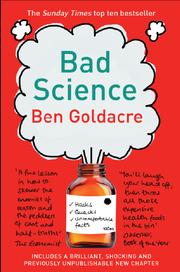
Bad Science is still the best short training in reading a scientific claim sceptically: what a controlled trial is for, how regression to the mean fools people, how nutritionists and newspapers between them manufacture findings. Start here even if it looks introductory.
Science Fictions does the sorting this whole subject needs. Stuart Ritchie separates fraud, bias, negligence and hype into four chapters and shows what a fix for each would look like. Deliberate fabrication turns out to be the rarest of the four and still worth a reading path of its own. Take its fraud chapter as the map for what follows.
Four cases, documented
Plastic fantastic is the definitive account of Jan Hendrik Schon, the Bell Labs physicist who fabricated a run of breakthrough results in molecular electronics and published them in Science and Nature. Eugenie Samuel Reich reconstructs it from the data files themselves — the same curve reappearing across supposedly different experiments — with dozens of physicists looking straight at it. The best single case study here.
Doctor Who Fooled the World is Brian Deer's account of Andrew Wakefield's 1998 MMR paper. This is a matter of record rather than allegation: the paper was fully retracted by The Lancet in 2010, the General Medical Council struck Wakefield off the UK medical register, and Deer documented both the undisclosed litigation money and the alteration of the children's medical histories. It is the case where the damage was to public health rather than to the literature. Our catalogue drops the leading article from the display title.
The Great Pretender is the unsettling one. Susannah Cahalan set out to celebrate David Rosenhan's famous pseudopatient study and found she could not verify most of it — pseudopatients she could not locate, a participant whose account contradicts the published paper. A result that reshaped a profession, unchecked for fifty years.
Bad Blood is the boundary case: Theranos was commercial rather than academic fraud, but John Carreyrou's reporting shows the identical failure mode, a board of eminent people who never asked to see the data.
Misconduct as a subject, and the system that rewards it
Betrayers of the truth opened the field in the early 1980s, arguing that misconduct was structural rather than a few bad apples; it was fiercely attacked then and looks better now. The Great Betrayal is the considered scholarly successor, and Horace Freeland Judson is the best here on how universities investigate themselves. On fact and fraud is short and written from inside the machinery by a Caltech administrator who handled allegations; his three risk factors are the most useful diagnostic on the list. Fraud in the Lab is the most current on mechanics — image manipulation, paper mills, the retraction economy and the sleuths who now work in public.
The last four turn to incentives. The seven deadly sins of psychology is by one of the architects of registered reports and is concrete about which reforms were actually adopted. Rigor Mortis is the biomedical counterpart, and grimmer. Bad Pharma: How Medicine is Broken, and How We Can Fix it is Ben Goldacre on withheld trials, the argument that launched the AllTrials campaign — note our record's year is wrong metadata, the book is from 2012. Ending Medical Reversal closes by cataloguing established treatments that failed when finally tested properly, which is not fraud at all, and is exactly the point.
The full fraud reading path has the stage goals and study plans.