Adorno's difficulty is a position, not a failing. He believed that clear, digestible prose invites the reader to absorb a conclusion without performing the thinking, and that a text should therefore resist. Whether you find that principled or self-defeating, it means you should not open him cold — you need the Hegelian and Marxian vocabulary he assumes, and you need to know what problem the Frankfurt School was trying to solve.
That problem, in short: why did the most educated societies in Europe produce fascism and industrialised murder, and why did the working class not behave as historical materialism predicted? Adorno's answer implicates reason itself, or at least the instrumental form of it that treats everything, including people, as material to be calculated with. Reading the books that set that question up first makes the rest tractable.
The run-up
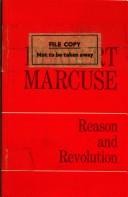
Herbert Marcuse's Reason and Revolution is the best available introduction to the Hegel that the Frankfurt School was working from, and Marcuse writes with a clarity Adorno never attempts. Max Horkheimer's Eclipse of Reason then states the central thesis in compact form — the distinction between objective reason, which can evaluate ends, and instrumental reason, which only optimises means. Between them these two books give you most of the conceptual equipment.
The core texts
Dialectic of enlightenment, written with Horkheimer in Californian exile, is the pivotal book: the argument that enlightenment reverts to myth, plus the essay on the culture industry that gave the field its most durable term. The culture industry collects the related essays on mass media, jazz, astrology columns and television, and it is more approachable than the joint book. Adorno's contempt for popular music is the part that ages worst and provokes the most useful disagreement — cultural studies has spent decades arguing that audiences are far less passive than he assumed.
Minima moralia is the book to read if you read only one. It is a sequence of aphorisms and short reflections written in exile, subtitled reflections from damaged life, and its fragmentary form is the argument: a life under these conditions cannot be given a whole and satisfying account. It is also, in places, extraordinarily beautiful.
The lectures, and the aesthetics
Adorno's lecture courses were transcribed and are much easier than his published prose, because he was speaking to students and had to be followable. Problems of moral philosophy works through Kant and the question of whether ethical life is possible in a wrong society. Hegel consists of three studies on how to read the philosopher who underwrites the whole method. Lectures on negative dialectics is the best available route into his most forbidding book — read the lectures before, or instead of, attempting Negative Dialectics itself.
Two final volumes are for the musically inclined. Philosophy Of New Music is the argument for Schoenberg and against Stravinsky, and it makes little sense without some familiarity with both. Aesthetic Theory was unfinished at his death and is the hardest text in the whole Frankfurt School corpus — genuinely rewarding, genuinely brutal, and best left until everything above is behind you.
Browse more reading paths on Discover, or follow the full path to keep this sequence.
Follow the full ordered path here: How to Read Adorno, in Order.
Ready to learn something deeply?
Build a reading path — free