Geopolitics is the subject that makes the news legible. Without it, world events look like a random sequence of crises; with it, you start to see the same forces — geography, power, fear — producing predictable patterns across centuries. The catch is that the field is full of confident, contradictory grand theories, so the reading order matters: ground yourself in the map before the theorists start telling you what it means.
Understand geopolitics: a reading path for making sense of the news
July 6, 2026 · 2 min read
The map, then the theories, then the cases
Our geopolitics path builds in that order.
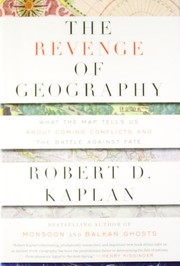
Foundations — how the world is shaped. Tim Marshall's Prisoners of Geography is the ideal entry point: ten maps that explain why Russia behaves like Russia and why rivers and mountains still dictate strategy in the missile age. Kaplan's The Revenge of Geography deepens the argument. Start here and everything later has a physical map to sit on.
Classical theory — the intellectual pillars. Huntington's The Clash of Civilizations and Brzezinski's The Grand Chessboard — two of the most influential (and most argued-with) frameworks of the modern era. Read them as powerful lenses, not gospel; the path deliberately gives you more than one.
Great powers — case studies in action. Marshall's The Future of Geography (space as the new arena), Haass's The World, and Graham Allison's Destined for War on the US–China "Thucydides Trap" — theory meeting the actual present.
Advanced analysis — order and disorder. Kissinger's World Order and Mearsheimer's The Tragedy of Great Power Politics — the deep, contested arguments about whether stability or conflict is the natural state of the system.
Read with a map open
One habit transforms this path: keep a world map beside you and physically trace every argument onto it. Geopolitics is spatial reasoning; readers who follow the coastlines, chokepoints, and borders as they read retain ten times what the pure-prose readers do. Bosphorus, Malacca, the North European Plain — these stop being names and become the logic.
About 80 hours, and the news never reads the same again. Follow the path, browse the geopolitics hub, or go deeper on the past that shaped it with how to read history.
FAQ
- Is geopolitics just geographic determinism?
- The opening books lean that way on purpose — geography is the stable floor. But the later theorists (and history itself) show ideas, economics, and leaders bending those constraints. The path gives you both the floor and its limits.
- Are these books politically biased?
- Each has a strong point of view, and they disagree sharply — Kissinger and Mearsheimer are nearly opposites. Reading the full set is how you get analysis instead of a single school’s talking points.
Get the books
- 1Prisoners of geographyAmazon ↗Tim Marshall
- 2The Revenge of GeographyAmazon ↗Robert D. Kaplan
- 3The Clash of Civilizations and the Remaking of World OrderAmazon ↗Samuel P. Huntington
- 4The Grand ChessboardAmazon ↗Zbigniew Brzezinski
- 5The Future of GeographyAmazon ↗Tim Marshall
- 6The WorldAmazon ↗Richard N. Haass
As an Amazon Associate we earn from qualifying purchases. Some book links are affiliate links; you pay the same price and we may earn a small commission.
Follow the full reading path


How to learn Geopolitics
Beginner9books80 hrs4 stages
Ready to learn something deeply?
Build a reading path — free