Tinnitus is a subject where the good books and the popular books barely overlap. Search online and you will find a great deal of confident marketing; search the actual literature and you find clinical texts written for audiologists and ENT specialists. This path is drawn from the second group, which means it is more demanding than a typical reading list and considerably more reliable.
One thing to settle before you start. Books can teach you the mechanisms, the vocabulary, and the evidence base for the main management approaches, and that knowledge genuinely helps in a consultation. They do not substitute for assessment by an audiologist or physician, and no book on this list offers a cure. Tinnitus that is sudden, one-sided, pulsatile, or accompanied by hearing loss or dizziness warrants prompt medical evaluation rather than reading.
Start with the model that organised the field
Tinnitus retraining therapy by Pawel Jastreboff and Jonathan Hazell sets out the neurophysiological model and the therapy built on it. The core claim is that distress arises less from the sound itself than from the limbic and autonomic reactions attached to it, and that structured counselling plus sound therapy can promote habituation. Whether TRT outperforms other structured approaches remains debated in the literature, but the model is the reference point everyone else argues with, so it is the right first read.
Then the clinical management picture
Tinnitus, edited by Jack Vernon, collects treatment approaches from a clinician who spent a career on the problem and helped develop masking. It is practical in orientation: what is tried, in what order, and with what expectations. Read after Jastreboff, it shows the model translated into clinic-room decisions and where practitioners diverge.
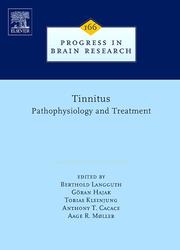
Tinnitus, the volume edited by Berthold Langguth and colleagues in the Progress in Brain Research series, is the research-facing one. It gathers work on pathophysiology, neuroimaging, animal models, pharmacology, and stimulation approaches. This is where you learn what is actually established versus what is promising, and it is candid that a broadly effective drug treatment does not exist. It is a hard read for a non-specialist; take chapters selectively rather than cover to cover.
The multidisciplinary synthesis
Finish with Tinnitus, David Baguley's clinically oriented text written with colleagues. It is the most balanced overview of assessment and management across disciplines: audiology, psychology, and medicine together, including cognitive behavioural approaches, hearing aids, sound enrichment, and the handling of coexisting hyperacusis. Because three books in this path share the same one-word title, keep them straight by editor: Vernon for treatment practice, Langguth for the science, Baguley for the integrated clinical view.
If you are reading as a patient rather than a professional, a reasonable route is Jastreboff for the model, Baguley for the practical synthesis, and Langguth only if you want to evaluate specific claims you have encountered. If you are a clinician or a student, read all four in the order given.
What the whole path teaches, cumulatively, is that the credible interventions target distress, attention, and habituation rather than the perceived sound, and that anyone promising elimination is going beyond the evidence. That is a useful thing to know before you spend money on a treatment, and it is the single clearest return on the effort of reading clinical texts rather than marketing copy. Related health paths sit under asthma and other chronic-condition hubs on this site.
Follow the full ordered path here: Best Books on Tinnitus, in Reading Order.