Thailand teaches a powerful national narrative: the only Southeast Asian country never colonised, unified under a continuous monarchy, modernised on its own terms. Much of it is defensible and all of it is a construction, assembled in the late nineteenth and twentieth centuries for specific political purposes. The reading problem is that if you take the narrative in first and never see the scaffolding, Thai politics of the last several decades will look like a series of inexplicable crises.
There is also a practical constraint worth naming. Thailand's lèse-majesté law makes candid published discussion of the monarchy legally risky inside the country, so the frankest scholarship is written from abroad. That shapes what exists in English, and it is one reason a short path of four serious books beats a long one of shallow ones.
Two surveys, read in this order
Start with A History of Thailand by Chris Baker and Pasuk Phongpaichit. It is the current standard: strong on economy, society, and the twentieth century, and clear-eyed about the military, the monarchy, and the cycles of coup and constitution. If you read only one book on Thailand, this is it.
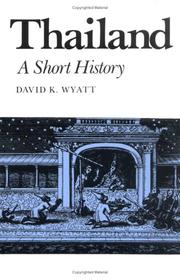
Then read Thailand by David K. Wyatt, the older short history that many students still start with. Wyatt is more narrative and more dynastic, taking the story from early Tai settlement through Sukhothai and Ayutthaya to the Chakri kings. Reading it second, after Baker and Pasuk, lets you see the traditional framing clearly rather than absorbing it as neutral background. The two overlap; if your time is limited, Baker and Pasuk is the better single choice.
Then the book that changes everything
Siam Mapped by Thongchai Winichakul is the pivot of this path and one of the most influential books written about any Southeast Asian country. Thongchai shows how Siam acquired what he calls a geo-body: how modern mapping, boundary negotiation with the French and British, and a new territorial idea of the nation produced the Thailand that now feels eternal. It reframes the survey you just read, converting an inherited map into a historical artefact with a datable construction.
It is an academic book and it repays patience. Read the opening chapters carefully; the argument is cumulative.
Modernity on Thai terms
Finish with The Ambiguous Allure of the West, edited by Rachel Harrison and Peter Jackson, a collection of essays on Thailand's relationship with Western power and culture. Its guiding question is what it means to describe Siam as semicolonial: never formally ruled, yet deeply shaped by European pressure, treaty terms, and the desire to be seen as civilised by European standards. The essays cover literature, film, medicine, and sexuality, and they are the natural sequel to Thongchai.
Four books is a small path, but these four are unusually load-bearing. Between them you get the chronology, the received national story, the mechanism by which that story was made, and the cultural ambivalence it papers over.
If you want to extend it, the obvious directions are the 1932 revolution and the long cycle of military intervention, the economic transformation from rice exports to manufacturing and tourism, and the regional histories of the north and the Muslim-majority south, all of which the surveys introduce without exhausting. Thai-language scholarship goes much further than the English shelf does, and translated work is slowly catching up. Follow the whole sequence rather than stopping at the survey, because the last two books are what turn information into understanding.
Follow the full ordered path here: How to Learn Thai History from Books, in Order.