Stone carving is a subtractive craft, which makes the reading problem unusual: you cannot undo a cut, so everything you learn from a book has to be settled before the chisel touches the block. The skills that decide whether a carving works — reading form in three dimensions, understanding how a shape resolves from every angle, judging where the stone will fail — are mostly learned in clay first, which is why the best starting book on this path is not about stone at all.
Be honest about the literature, too. This is a short path, and it is short because good stone-specific instruction is thin on the ground and mostly transmitted in workshops. The books below cover form, materials, and ambition; the actual hammer technique you will get faster from a weekend with a carver than from any page.
Learn form in clay before you cut
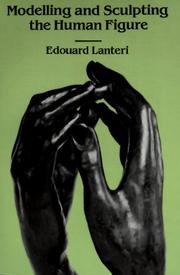
Start with Modelling and sculpting the human figure, Edouard Lanteri's classic course. It is over a century old, unapologetically academic, and still the most thorough written training in building a figure from armature to finished surface — proportion, anatomy, the sequence of blocking in masses before refining them. Working through it in clay teaches you to see volume, which is the transferable skill. Carvers who skip this stage tend to produce work that reads well from one angle and collapses from the others.
The academic framing dates it. Lanteri assumes a life-drawing studio, a model, and a great deal of patience, and his aesthetic is firmly nineteenth-century. Take the method and leave the taste.
Get a materials and process reference
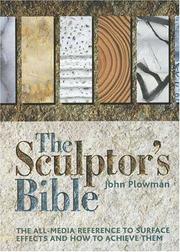
The Sculptor's Bible is the practical volume — a survey of sculptural materials and processes covering stone alongside clay, plaster, metal, and wood, with tool lists and step-by-step sequences. Because it is a survey it will not make you a stone specialist, but it is the book that answers the questions a beginner actually has: which stones are soft enough to start on, what the point, claw, and flat chisels each do, how to rough out safely, and what finishing and polishing involve.
Read it with a specific first project in mind. Limestone or alabaster and a simple closed form will teach you more than an ambitious figure in marble that cracks at the neck. Pay particular attention to the safety sections, which the romance of the craft tends to obscure: silica dust from dry cutting is a genuine and cumulative lung hazard, so wet cutting, proper respirators, and eye protection are not optional extras. Note also what the book says about stone selection — bedding planes, inclusions, and hairline fractures decide whether a block will hold a thin projection, and no amount of skill rescues a piece carved into a flaw.
Then look at what carving can be
Brancusi, the Hultén-edited monograph, is not instruction — it is the argument. Brancusi carved directly into stone and wood without a clay model, reducing form until only the essential mass remained, and he treated the base as part of the sculpture. Studying the plates after you have felt how hard it is to remove material teaches you something no technique manual will: that restraint in carving is a decision made in advance, not a style applied afterwards.
Three books is a genuinely small path, so supplement it with hands-on time. A local studio, a stone yard willing to talk about what they stock, and a set of secondhand chisels will move you further than a fourth book. If you want to build a longer list yourself, the site's list builder lets you assemble one. Follow the full path for the sequence.
Follow the full ordered path here: Learning Stone Carving From Books: Where to Start.