This is a craft reading list, not a survey of research design. It assumes you have already decided to do qualitative work and want to do it competently: sitting across from someone and asking a question well, being in a setting long enough to see something, and turning a shelf of transcripts into a claim you can defend. If the open question is instead what design your study should have — sampling, causal inference, survey construction, experiments, mixed methods — that is the companion path at /subjects/social-science-research-methods, and the two lists share no books at all.
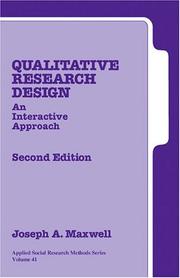
Start with Joseph Maxwell's Qualitative Research Design, 192 pages and the shortest useful thing in the field. Maxwell treats design as an interactive model in which goals, framework, questions, methods and validity constrain each other, which is how qualitative projects actually develop, and it will save you from writing a plan you cannot follow.
Choosing a tradition
Qualitative research is not one method. John Creswell's Qualitative Inquiry and Research Design runs the same worked example through narrative, phenomenology, grounded theory, ethnography and case study so that the differences are concrete rather than definitional; read it second, to choose. Then Lincoln and Guba's Naturalistic inquiry, the 1985 book that gave the field the trustworthiness criteria — credibility, transferability, dependability, confirmability — that qualitative work is still judged by in place of reliability and validity. It is dated in places and it is the standard you will be held to, so read it for that rather than for its philosophy of science.
Interviewing
Robert Weiss's Learning from Strangers is the most practical book on qualitative interviewing in English: recruiting, opening, probing, what to do when it goes wrong, with long annotated extracts from real interviews. It is craft rather than theory, and it belongs first. Steinar Kvale's Interviews — catalogued under that display title rather than his intercapped InterViews — is the standard text and the theoretical complement, covering the whole arc from thematising through transcription to reporting. James Spradley's The ethnographic interview comes last in this stage because it is a different animal: descriptive, structural and contrast questions aimed at eliciting a culture's own categories rather than answering yours.
Fieldwork and fieldnotes
Spradley's companion volume, Participant observation, is the clearest procedural account of fieldwork available — how to select a setting, what degree of participation to adopt, how to get from wandering around to systematic observation. Emerson, Fretz and Shaw's Writing ethnographic fieldnotes covers the part nobody teaches: how to actually write the notes, from jottings in the field to full accounts the same evening. There is no real substitute for it, and its central point is worth taking early — the decision about what is worth recording is already the first interpretive act in the study.
Coding and analysis, the stage projects underestimate
Johnny Saldana's The coding manual for qualitative researchers is the reference: dozens of coding methods, each defined, exemplified and matched to the kind of question it suits, organised into first and second cycles. Braun and Clarke's Thematic Analysis is the most current book on the path — a full treatment of reflexive thematic analysis and, as usefully, of its widespread misuse, including themes that are really topic summaries and the incoherence of claiming themes emerged from the data.
For grounded theory specifically, read Kathy Charmaz's Constructing grounded theory alongside Corbin and Strauss's Basics of qualitative research. They disagree about how prescriptive the method should be, and watching that disagreement is more instructive than adopting either on faith. Miles and Huberman's Qualitative data analysis is the most systematic approach here — condensation, display, conclusion-drawing, and the matrix and network displays that make cross-case comparison possible. The recurring warning across all of these is worth stating plainly: coding is not analysis, and quotations sorted into labelled bins are a report rather than a finding.
Close with John Van Maanen's Tales of the field, 173 pages on ethnographic writing as a set of genres with different claims to authority. The choice between a realist account, a confessional methods story and an impressionist tale is methodological rather than stylistic, because it determines what a reader can check.
Several of these are long-running texts held here at earlier editions; where an approach has moved on, buy current. The staged version, with study plans, is at /paths/pt_ai_qualitative-research-methods.