Semiconductors is a subject where the prerequisite chain is unusually rigid. A transistor is a physics object, a circuit is an abstraction over it, and a chip is an abstraction over that. Each layer's textbooks assume the layer below, and the assumption is silent — a VLSI text will use a threshold voltage model without deriving it, because it expects you to have met it a year earlier.
The other thing worth knowing before you start is that the geopolitics and the engineering are now genuinely entangled, and the popular books at the front of this path are not filler. They tell you why the industry has the shape it has, which is otherwise invisible from inside a circuits textbook.
Start with the story of the industry
Chip War by Chris Miller is the best available account of how semiconductor manufacturing became concentrated in a handful of firms and territories, and why that concentration is now a strategic problem. It is journalism and history rather than engineering, and some specialists find its technical passages compressed, but it gives you the map.
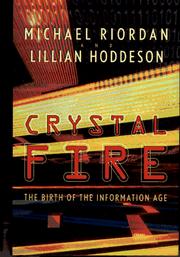
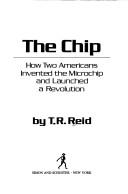
Crystal fire by Michael Riordan and Lillian Hoddeson covers the invention of the transistor at Bell Labs, and The Chip by T. R. Reid tells the parallel story of the integrated circuit through Kilby and Noyce. These two overlap in period and cast; if you only want one, Reid is the more propulsive read and Riordan and Hoddeson the more careful on the physics.
Device physics — the layer everything else assumes
Solid state electronic devices by Ben Streetman and Sanjay Banerjee is the standard undergraduate entry: band structure, carrier transport, pn junctions, then the MOS transistor, at a level that expects calculus and introductory physics but not quantum mechanics as a prerequisite.
Semiconductor physics and devices by Donald Neamen covers similar ground with more worked examples and a gentler slope. These two are direct substitutes — pick the one whose problem sets you prefer and do not buy both.
Circuits, and then the leap to systems
Microelectronic circuits by Sedra and Smith is the book most electrical engineers learn analog and digital circuit design from. It is enormous, and you should treat it as a course rather than a read-through.
Introduction to VLSI systems by Carver Mead and Lynn Conway is the historically pivotal text — it is the book that made chip design teachable to people who were not process engineers, and it created the design-rule abstraction the whole industry still uses. Read it for that, and read it knowing it is decades old and describes process geometries that no longer exist.
Principles of CMOS VLSI design by Weste and Eshraghian, and Digital integrated circuits by Rabaey, Chandrakasan and Nikolic, are the modern successors. Rabaey is the one to prioritise if you care about power, timing and the physical realities that dominate contemporary design; Weste is broader on the design flow.
The analog end, and the reference shelf
Design of Analog CMOS Integrated Circuits by Behzad Razavi is the most widely used graduate analog text and is unusually good at explaining why a topology exists before showing its equations. Analysis and design of analog integrated circuits by Gray, Hurst, Lewis and Meyer is the deeper and more demanding companion — the reference practising analog designers keep.
Physics of semiconductor devices by S. M. Sze closes the path, and it is important to say what it is: a comprehensive reference, not a book you read front to back. It is where you go when a device behaviour in one of the earlier books needs a real derivation.
One honest note. Books will teach you device physics and design principles, and they will not give you the tool fluency, process knowledge or tape-out experience that chip design jobs require — that comes from coursework with EDA tools, lab access and working on real silicon. Use this path to build the understanding those environments assume. Browse related engineering paths when you are ready to specialise.
Follow the full ordered path here: Best Books on Semiconductors and Chip Design, in Reading Order.