Start with Haroun and the Sea of Stories. It is about 200 pages, it was written for his son, and it is a complete Rushdie novel in miniature — nested tales, invented cities, puns in three languages, and an argument about why storytelling matters that is made without a single lecture. Most importantly, it teaches you the sentence rhythm. Rushdie's prose has a particular forward-tumbling motion, lists inside lists, and readers who bounce off him usually bounce off that rather than off any idea.
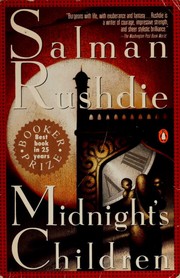
The obvious alternative is Midnight's Children, which is the major work, the Booker of Bookers, and the book he will be read for in a century. Make it your second, not your first. It is 600 pages, its narrator is deliberately unreliable about Indian history, and it assumes a tolerance for digression that Haroun and the Sea of Stories builds in an afternoon.
The novels, in order of reading
- Haroun and the Sea of Stories (1990) — the door.
- Midnight's Children (1981) — Saleem Sinai, born at the stroke of midnight on 15 August 1947, handcuffed to the history of a new country.
- The Moor's Last Sigh (1995) — Bombay, a spice-trading family, four generations, and the best late-career prose he has written. Underrated because it followed the loudest book of his life.
- The Satanic Verses (1988) — read fourth, deliberately.
Shame, The Ground Beneath Her Feet, Shalimar the Clown and Victory City are not in our catalogue. Of those, Shame is the one to seek out early; it is short, savage and much more controlled than the books around it.
Why The Satanic Verses goes last
This is the closest thing to a real ordering controversy in Rushdie, and it is worth stating plainly. It is by a wide margin his most famous novel, and by a similar margin his hardest. Two men fall from an exploding aircraft and the book splits into a modern London narrative and a set of dream sequences set in a city called Jahilia, which is where almost everyone who abandons the novel abandons it. The Jahilia material is also the material that caused everything else, and reading it without the context of how Rushdie handles myth elsewhere makes it far more opaque than it needs to be.
Read three novels first and the fourth becomes legible. Read it first and you get a difficult book plus a controversy, which is not the same as reading a novel.
The non-fiction
Is Nothing Sacred, delivered as the Herbert Read Memorial Lecture in 1990, is a short and useful statement of what he thinks literature is for. It sits naturally after The Satanic Verses.
Joseph Anton is his memoir of the years spent under police protection following the 1989 fatwa, written in the third person — a formal choice that some readers find distancing and others think is the only way the material could be handled. Knife is his account of the 2022 attack on him in New York, and is much shorter and more direct.
Read both after the fiction. They are books about the consequences of the novels, and they only mean what they mean if the novels came first.
Honest warnings
Midnight's Children loses momentum in its final third. The Sundarbans section and the descent into the Emergency are where the book's energy dips, and a great many readers report struggling there after loving the first 400 pages. It recovers for the ending.
Rushdie in bulk is exhausting in a specific way: the density of allusion, the refusal to let a plain sentence stand, the jokes stacked three deep. Read one novel, then read something else, then come back.
Where to stop
Two novels — Haroun and the Sea of Stories and Midnight's Children — is a real and defensible Rushdie education. Four novels plus Joseph Anton is the full case. Then pick another reading path.
Follow the full ordered path here: Salman Rushdie Reading Order: Where to Start.
Ready to learn something deeply?
Build a reading path — free