Reinforcement learning has an unusually sharp divide between people who understand it and people who can only run code. The concepts — value functions, policies, the exploration-exploitation tradeoff — are subtle, and deep RL layers neural networks on top of them, so a shaky foundation turns modern RL into expensive guesswork.
That makes reading order especially important here. Build the classical theory first, then add the deep-learning machinery, then get hands-on, and only then reach for the frontier of multi-agent systems. Each book below is placed to keep the theory just ahead of the practice.
Build the foundations
Start with Reinforcement Learning, the Sutton and Barto text that is the field's canonical foundation — it develops Markov decision processes, dynamic programming, and temporal-difference learning with unmatched clarity. For a more mathematically compact companion, Algorithms for Reinforcement Learning distills the core algorithms and their guarantees. These two give you the vocabulary and intuition every later book assumes.
Add deep learning
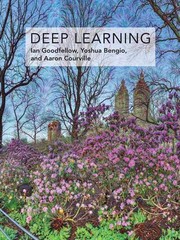
Modern RL runs on neural networks, so Deep Learning by Goodfellow, Bengio, and Courville is the reference for the deep-learning fundamentals you will need. With those in place, Deep Reinforcement Learning Hands-On bridges theory and code, implementing DQN, policy gradients, and more on real problems. Grokking Deep Reinforcement Learning covers similar ground with a famously intuitive, illustration-heavy approach that makes the algorithms click.
Go deeper and broader
To consolidate the deep-RL landscape rigorously, Foundations of Deep Reinforcement Learning connects the algorithms into a coherent framework with implementation detail. Finally, Multi-Agent Reinforcement Learning: Foundations and Modern Approaches opens the door to systems where many agents learn at once — a frontier that powers everything from game AI to market simulation.
Read in this order and reinforcement learning stops being a black box you poke at. Follow the full path to go from your first grid-world agent to implementing and understanding modern deep RL.
Follow the full reading path →
Ready to learn something deeply?
Build a reading path — free