Particle physics asks what everything is made of, and its answers — quarks, leptons, force-carrying bosons, fields filling all of space — are as beautiful as its mathematics is punishing. The danger for a learner is going straight to that mathematics, or worse, staying forever in hand-wavy pop science that never quite says what a particle is. Neither builds real understanding.
The path through is a careful escalation. Begin with vivid, accurate popular accounts to build intuition and get the cast of characters straight, then read conceptual treatments that explain the ideas honestly, then reach the quantum field theory that is the true language of the field. Each stage prepares you for the abstraction of the next.
Meet the particles
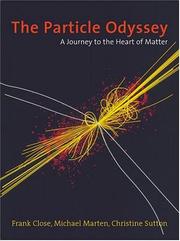
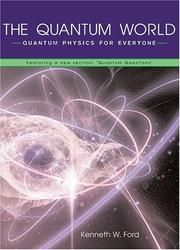
Start with The particle odyssey by Frank Close, a richly illustrated tour of the particle zoo and how we discovered it. Then The Quantum World by Kenneth Ford explains the quantum foundations everything rests on, and Quarks by Harald Fritzsch introduces the constituents of matter from someone who helped work them out. The ideas of particle physics by Coughlan bridges popular and technical, giving you the conceptual scaffolding for the Standard Model.
Understand the ideas honestly
Now go deeper without full formalism. Deep down things by Bruce Schumm is a rare book that explains gauge symmetry and the Standard Model conceptually, and Higgs by Jim Baggott tells the gripping story of the boson that completes the picture. The lightness of being by Frank Wilczek offers a Nobel laureate's intuition for mass, energy, and the grid of space, and Collider by Paul Halpern explains the machines, like the LHC, that test all of it.
Reach the mathematics
For the genuine theory, step into the formalism. Introduction to elementary particles by Griffiths is the beloved first real textbook, and Gauge Theories in Particle Physics by Aitchison builds the framework of the Standard Model rigorously. An introduction to quantum field theory by Peskin and Schroeder is the standard graduate text — the true language of particles — and Supersymmetry by Gordon Kane points toward what may lie beyond the Standard Model.
Follow the path in order and particle physics becomes a coherent ascent from wonder to real theory.
Follow the full reading path →
Ready to learn something deeply?
Build a reading path — free