Marbling frustrates beginners for a reason that has nothing to do with artistry. The pattern is the easy part. The hard part is the invisible chemistry underneath: the viscosity of the size, the alum mordant on the paper, the surface tension of each colour, and how all three change with temperature and time. A batch that worked beautifully on Tuesday can refuse to hold a single drop on Thursday, and until you know which variable moved you will simply be guessing.
So the reading order runs from a controlled, forgiving start toward the books that explain the variables. Get a successful pull early — it is enormously motivating — then go back and learn why it worked.
Get a first successful print
Marbling Paper and Fabric is the sensible entry because it is built around a kit: prepared materials, a small set of colours, and instructions that assume nothing. The chemistry is pre-solved for you, which means your first session produces a real marbled sheet rather than a tray of murky water. That matters more than it sounds.
Understand what you are actually doing
The art of marbled paper by Einen Miura is the history and aesthetics book, covering the Japanese suminagashi tradition and the Turkish ebru lineage from which Western marbling descends. Suminagashi is worth attempting early in its own right: it uses plain water rather than a thickened size, so it strips the process down to ink, surface tension, and breath, and it teaches control with far fewer variables in play.
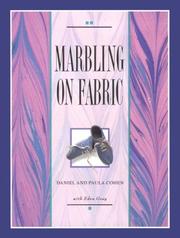
Marbling on fabric extends the same techniques to textiles, where the differences are mostly in preparation — fabric needs its own mordanting and the pigments must be heat-set to survive washing. Even if you only intend to marble paper, the fabric material clarifies what the alum is doing, because the consequences of getting it wrong are more visible.
Learn to control the variables
The practical guide to marbling paper is the technical core of the path and the book to work from once you are serious. Anne Chambers covers size preparation from carrageenan and other thickeners, alum mordanting, colour mixing and the role of ox gall in spreading, and the traditional pattern families — stone, get-gel, nonpareil, chevron, Spanish — with the comb and rake work each requires. This is where marbling stops being random and becomes repeatable.
A practical note the books tend to underplay: keep a log. Record size recipe and age, room temperature, alum concentration, drying time between mordanting and printing, and how much gall went into each colour. Marbling problems are almost always diagnosable from that record and almost never diagnosable from memory. Two or three sessions of disciplined notes will teach you more than a fourth book would.
Four titles is a short path, and that reflects a small English-language literature rather than a gap in the curation. If you want to go further afterwards, the usual next step is not another marbling book but a bookbinding one, since marbled sheets have always been made to become endpapers and covers. The neighbouring craft hubs on ReadingSherpa cover that ground.
Follow the full path to read these in order.
Follow the full ordered path here: Best Books on Paper Marbling, in Reading Order.