Beginners at Olympic weightlifting almost always start with the wrong book: a dense technique manual full of positions their body cannot yet reach. They spend months frustrated, blaming coordination when the real problem is strength and mobility. The lifts are athletic expressions of a foundation, and the foundation has to come first.
Read this path in order and it mirrors how good coaches build a lifter: get strong and mobile, learn the two lifts properly, then organize the training over time before diving into the science that explains why any of it works.
Stage 1: strength and mobility first
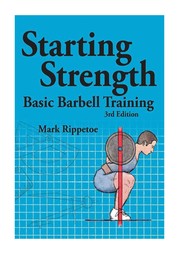
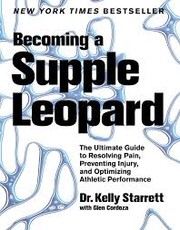
Start with Starting strength by Mark Rippetoe for the barbell fundamentals — the squat, press, and pull that everything else is built on, taught with unusual precision. Alongside it, Becoming a Supple Leopard by Kelly Starrett and Glen Cordoza gives you the movement and mobility work to actually reach the positions the lifts demand.
Stage 2: learn the two lifts
Now the sport. Olympic Weightlifting: A Complete Guide for Athletes and Coaches by Greg Everett is the clearest single book on the snatch and clean & jerk — technique, progressions, and drills a beginner can follow without a coach in the room. This is the one to live in for your first year.
Stage 3: program the training
Lifting well once is not the same as improving month over month. Weightlifting programming by Bob Takano teaches how to structure training for the classic lifts, and Practical programming for strength training by Mark Rippetoe gives the broader logic of progression, recovery, and periodization that keeps you advancing.
Stage 4: the science deep end
When you want to understand why, go to the references. The weightlifting encyclopedia by Arthur J. Drechsler is an exhaustive tour of the sport. The Russian Weightlifting System by Yuri Verkhoshansky and Supertraining by Mel Cunningham Siff are demanding texts on advanced methods, and Science and practice of strength training by Vladimir M. Zatsiorsky ties the physiology together. Read these last, when you have the experience to test their ideas against your own training.
How to study it
This is a physical skill, so read a little and lift a lot. Film your lifts, compare them to the cues in Everett's book, and fix one thing at a time. Progress mobility work daily rather than in binges. Books and video build the model; a qualified coach catches what you cannot see, and lifting under load carries real injury risk — progress conservatively and get coaching before loading heavy.
The staged version, with a study plan per stage, is the full reading path. Browse the subject hub, or build your own list.
Ready to learn something deeply?
Build a reading path — free