People with cranky knees usually reach straight for a list of exercises, do them for a week, and quit when nothing changes. The exercises might even be right — but without understanding what pain is telling you and how the whole leg moves, you cannot tell a helpful ache from a warning, or a stiff hip from a knee problem. That understanding is what makes rehab stick.
The order here goes from concepts to the body to targeted practice. Learn how pain works and how movement is organized before you load anything, and the specific programs later in the path stop being random and start being aimed.
Stage 1: how pain and the body work
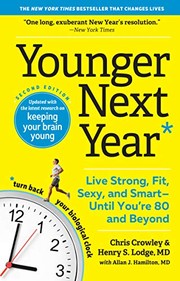
Start with Explain pain by David S. Butler, the clearest short account of why pain is produced by the nervous system, not simply by damage — the single most freeing idea for anyone with persistent knee pain. Widen the lens with The Body by Bill Bryson, an accessible tour of how the whole system fits together, and Younger next year by Chris Crowley for the case that consistent movement is the long game.
Stage 2: the mechanics
Now the movement itself. Anatomy trains by Thomas W. Myers shows how muscle and fascia connect the foot, knee, and hip into chains, which is why the knee is so often a victim of what happens above and below it. Running rewired by Jay Dicharry translates that into gait and running mechanics you can actually change.
Stage 3: build resilient knees
Loading tissue on purpose is what makes it tolerant. Becoming a Supple Leopard by Kelly Starrett and Glen Cordoza gives mobility and positional work for the hips, ankles, and knees. Women's strength training anatomy by Frédéric Delavier illustrates the exact lower-body exercises that build the strength a knee needs, and The sports medicine bible by Lyle J. Micheli is a sane reference for common injuries and when to worry.
Stage 4: the recovery multipliers
Finally, the things that let tissue adapt. Why We Sleep by Matthew Walker makes the case that recovery is where repair happens, and Exercised by Daniel E. Lieberman puts movement in evolutionary context so you understand what bodies are actually built for.
How to study it
Read a little, then apply it to your own knee. After the pain science, notice how your symptoms shift with mood, sleep, and load. After the mechanics books, film a squat and a few steps and look at the hip and ankle, not just the knee. Progress strength slowly and consistently. These books are education, not medical care — persistent, sharp, or swelling knee pain deserves a clinician, and this path complements treatment rather than replacing it.
The staged version, with a study plan per stage, is the full reading path. Browse the subject hub, or build your own list.
Ready to learn something deeply?
Build a reading path — free