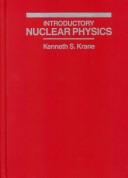
Nuclear physics is quantum mechanics applied to the densest, strangest object in ordinary matter — the atomic nucleus. That means you cannot start with the nucleus itself; you have to earn it. Skip the quantum foundation and the shell model, decay rates, and cross-sections all read as unmotivated formulas.
The path therefore begins one level down, in quantum and modern physics, then moves into the nucleus proper, then out again into the reactions and applications — reactors and fusion — that make the subject matter beyond the classroom.
Build the quantum foundation
Start with Introduction to Quantum Mechanics (2nd Edition) by David J. Griffiths. Nuclear behavior is quantum behavior, and Griffiths is the clearest on-ramp to the wavefunctions, operators, and probability that everything else assumes. Then read Modern physics, which surveys relativity, atoms, and the early nuclear picture — the bridge from the quantum core to the nuclear world.
Enter the nucleus
Now the subject itself. Introductory nuclear physics is the standard first course — binding energy, radioactive decay, the shell model, and reactions, all developed carefully. Follow it with Nuclear and particle physics, which widens the lens to the particles and forces underneath nuclear structure.
For deeper theory, Nuclear structure and The nuclear many-body problem take you into how physicists actually model the collective and single-particle behavior of nucleons — dense books, best read once the introductory picture is solid.
Reach reactions and applications
Finally, the payoff. Nuclear Reactions for Astrophysics connects nuclear physics to how stars burn and elements form. Nuclear reactor analysis turns the theory into engineering — neutron transport, criticality, reactor design — and The physics of inertial fusion covers the frontier of controlled fusion. Nuclear energy rounds it out with a broader, policy-aware view of the technology's uses and risks.
Follow the path in order and the nucleus goes from a black box to something you can reason about. The related fluid-dynamics and differential-equations paths sharpen the math these later chapters lean on.
Follow the full reading path →
Ready to learn something deeply?
Build a reading path — free