Differential equations are the language physics, biology, and engineering use to describe anything that changes over time. Learned badly, the subject becomes a bag of tricks for solving specific equation types. Learned well, it becomes a way of seeing how systems evolve — and reading order is the difference.
The path starts with the standard solution techniques you need as a foundation, then shifts to the modern, qualitative view of dynamical systems and chaos, and ends with the mathematical methods that connect it all to real problems. Follow it and the equations stop being exercises and start describing the world.
Learn the solution methods
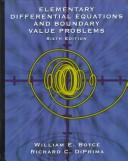
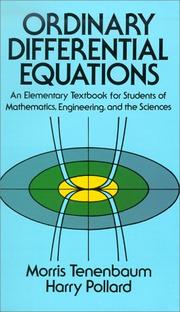
Begin with Elementary differential equations and boundary value problems, the comprehensive standard text covering first-order equations, linear systems, series solutions, and boundary value problems — the toolkit every later course assumes. For an especially clear, gentle treatment of the core techniques, Ordinary differential equations is a beloved book that makes the mechanics genuinely understandable. Add Differential Equations with Applications and Historical Notes for the context and motivation that make the methods memorable, and A first course in differential equations with modeling applications for its emphasis on turning real situations into solvable equations.
Shift to the qualitative view
Here the subject transforms. Nonlinear dynamics and Chaos is a landmark book that teaches you to understand systems geometrically — fixed points, stability, bifurcations, and chaos — often without solving anything explicitly. It is one of the most illuminating math books written, and it changes how you see differential equations entirely. Differential equations, dynamical systems, and an introduction to chaos pairs with it, giving the rigorous foundations behind the same modern viewpoint.
Connect to applications
Finally, ground the theory. Differential equations and their applications consistently ties methods back to physical models, showing why the mathematics matters, and Mathematical Methods for Scientists and Engineers places differential equations within the broader toolkit of applied mathematics that scientific work demands.
Read in this order and differential equations stop being an exercise in symbol manipulation and become a way of reasoning about change itself. Follow the full path from your first separable equation to understanding chaos and real dynamical systems.
Follow the full reading path →
Ready to learn something deeply?
Build a reading path — free