Mathematical modeling is less a body of theorems than a craft: the skill of deciding what to keep and what to throw away when you translate a real problem into equations. That judgment is hard to teach and easy to skip past. Dive into a specialized technique too early and you can solve models beautifully without knowing whether they are the right ones.
The path below builds the craft first, then the differential-equation and stochastic toolkits, then the modern complex-systems and simulation methods that handle problems no clean equation can capture.
Learn the craft
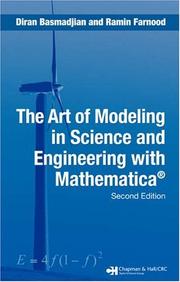
Start with A first course in mathematical modeling by Giordano, the standard introduction that teaches the whole modeling cycle — assumptions, formulation, testing, refinement — across many small examples. The art of modeling in science and engineering with Mathematica by Basmadjian is the wise companion that treats modeling as judgment and approximation, emphasizing the choices behind the equations. Together they make clear that the equation is the easy part; framing the problem is the real work.
The differential-equation toolkit
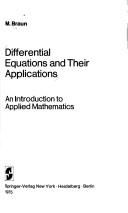
Most classical models are differential equations, so build fluency there. Differential equations and their applications by Martin Braun teaches ODEs through vivid real-world models rather than abstract exercises. Mathematical models in biology by Edelstein-Keshet is the celebrated text on applying these tools to populations, epidemics, and biochemical systems, and Nonlinear dynamics and Chaos by Strogatz gives you the intuition for the rich behavior — cycles, bifurcations, chaos — that nonlinear models produce.
Stochastic and complex systems
The final arc handles randomness and scale. An introduction to stochastic modeling by Taylor and Karlin covers Markov chains, queues, and random processes for systems where uncertainty is essential. Simulation modeling and analysis by Law is the professional reference for building and validating simulations when analysis alone will not do. Introduction to the Modeling and Analysis of Complex Systems by Sayama covers networks, agents, and emergence, and Model Building in Mathematical Programming by Williams teaches how to cast decision problems as optimization models.
Read in this order and modeling becomes a disciplined craft rather than a grab bag of methods. Follow the full path from your first assumption to a validated simulation.
Follow the full reading path →
Ready to learn something deeply?
Build a reading path — free