Materials science is the discipline that connects what a thing is made of to how it behaves — why steel bends, glass shatters, and plastic creeps. Its central idea is the structure-property relationship, and everything else builds on it. Learn the branches in isolation and you miss that unifying thread; learn them in order and each material class becomes a variation on one theme.
The path moves from the foundational framework, into the physics of specific material families, and finally to the engineering questions of failure and selection that working practice revolves around.
The unifying framework
Start with Materials Science and Engineering - An Introduction by Callister, the standard first text that establishes atomic bonding, crystal structure, and the structure-property paradigm that organizes the whole field. For context and inspiration, The coming of materials science by Cahn tells how the discipline came together from metallurgy, ceramics, and chemistry — useful for seeing why the subject is shaped as it is.
The material families
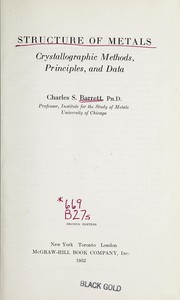
With the framework in place, study the classes in turn. Structure of metals and Phase transformations in metals and alloys explain how metals get their properties from crystal structure and heat treatment, while Physical Metallurgy Principles deepens that understanding of the metals that dominate engineering. Beyond metals, Introduction to ceramics by Kingery is the definitive text on ceramic materials, and Polymer Science and Engineering covers the physics of plastics and rubbers — together completing the three great material families.
Failure, corrosion, and selection
Engineering practice lives at the point where materials fail. Mechanical Behavior of Materials by Dowling connects structure to strength, fatigue, and deformation, and Fracture mechanics by Anderson is the standard treatment of how cracks grow and things break. Corrosion engineering by Fontana covers the slow chemical failure that quietly destroys infrastructure. Finally, Materials selection in mechanical design by Ashby teaches the systematic way engineers choose the right material for a job, and Nanomaterials by Vollath points toward the frontier where new properties emerge at small scales.
Read in this order and the field coheres: the same atomic principles explain a jet turbine, a wine glass, and a plastic bottle. Follow the full path to go from bonding and crystals to the engineering judgment behind every designed object.
Follow the full reading path →
Ready to learn something deeply?
Build a reading path — free