Lost-wax casting is a process with one dramatic moment and a long chain of unglamorous decisions leading to it. You carve or build a model in wax, attach sprues, invest it in a plaster-based refractory, burn the wax out in a kiln over a controlled ramp, and then force molten metal into the void with centrifugal force, vacuum, or steam pressure. Almost every casting failure — porosity, incomplete fills, flashing, cracked investment — traces back to something decided hours earlier: sprue placement, investment water ratio, burnout schedule, flask temperature.
That is why the reading order here starts with metalsmithing rather than with casting. A cast piece comes out of the flask rough, oxidised, and attached to a sprue tree. Everything after that — sawing, filing, soldering, stone setting, finishing — is bench work, and if you cannot do bench work, casting produces expensive lumps. Learn the shop first.
A safety note stated once and plainly: this craft involves molten metal at over nine hundred degrees, kilns running burnout cycles, investment powder containing crystalline silica, and pickle solutions. Books can teach process; they cannot supervise you. Ventilation, respiratory protection, eye protection, and ideally in-person instruction or a shared studio are not optional.
Build the bench foundation
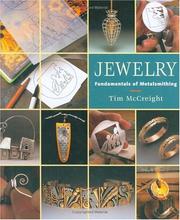
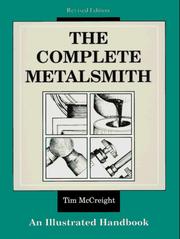
Jewelry by Tim McCreight is the standard beginner text on metalsmithing fundamentals — sawing, filing, annealing, soldering, forming — written with unusual clarity about why each operation behaves as it does. The complete metalsmith, also McCreight, is the compact spiral-bound reference that lives on the bench: alloy tables, melting points, wire gauges, pickle recipes, and process notes condensed to the point of usefulness. Get both; they do different jobs.
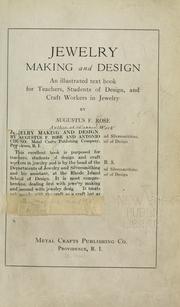
Jewelry making and design by Augustus F. Rose is the older classic, and its value here is that it treats casting and model-making at length in a period when hand skills were assumed. Some material is dated — check any chemical handling against current safety guidance — but the design and technique chapters remain instructive.
Understand metal in the liquid state
Metal casting by Steve Chastain comes at the subject from the foundry rather than the jewellery bench: alloys, melting, gating and risering, shrinkage, and why metal flows where it does. It is aimed at larger-scale work than a ring, and that is exactly why it helps — the physics is the same, and seeing it explained at a scale where you can watch it happen makes the small-scale version comprehensible. Read it for the theory of feeding and solidification.
Sharpen the bench references
The jeweler's bench reference by Harold O'Connor is terse, dense, and full of the practical specifics that longer books omit. Professional goldsmithing by Alan Revere teaches bench technique through step-by-step projects photographed in sequence, which is the closest a book gets to watching a skilled hand. Jewelry concepts and technology by Oppi Untracht is the encyclopedia of the field — enormous, exhaustively illustrated, covering nearly every metalworking process across cultures. Nobody reads it through; everybody who is serious owns it.
The casting-specific classic
Finally, Centrifugal or lost wax jewelry casting for schools, tradesmen, craftsmen by Murray Bovin is the most directly on-topic book on the list. It is dated in equipment and presentation, and it is still the clearest sustained treatment of the actual casting sequence: wax model preparation, sprue systems, investing and vibration, burnout schedules, and centrifugal machine operation. Read it last, when the surrounding knowledge makes its specifics land.
Read in this order and casting becomes a controlled process rather than a gamble with hot metal.
Follow the full ordered path here: Lost-Wax Casting: The Best Books to Read First.