Everyone who has ever been told to sit up straight knows how the experiment ends: about ninety seconds of virtue, then a slow slide back to the keyboard hunch. That is not a discipline failure. Posture is not a pose you hold — it is the sum of tissue capacity, movement habits, and an environment that either fights you or does not. You cannot willpower a static position for eight hours, but you can build a body that defaults somewhere better.
That is what this reading order does, and the order is doing real work. Start with the mobility books and you will spend a year chasing tightness that is actually weakness. Start with strength and you will load a joint that cannot yet get into position. One caveat worth stating plainly first: books are for improvement, not diagnosis — persistent, radiating, or night pain deserves a qualified clinician before any self-treatment.
Change the environment, then the tissue
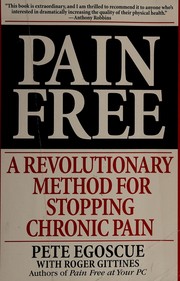
Start where the damage happens: Deskbound by Kelly Starrett is the book about what prolonged sitting does and how to engineer your day around it — workstation setup, movement breaks, and basic maintenance for desk-shaped humans. Pair it with Pain free by Pete Egoscue, whose gentle alignment sequences have a long track record of getting stiff, achy people moving again with no equipment at all.
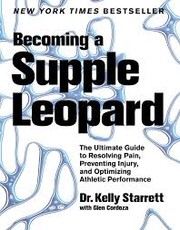
Then build a movement vocabulary. Becoming a Supple Leopard, also by Starrett, is the big systematic reference — how to organize the spine and shoulders, plus a catalog of mobilizations for whatever is stuck. The roll model by Jill Miller is the gentler self-massage counterpart, and it is the better first purchase if the idea of a barbell is still a long way off. Between them you have most of what a home setup needs.
Assess before you prescribe
Two books upgrade you from following exercises to choosing them. Movement Functional Movement Systems by Gray Cook is a professional screening text — dense, clinical, and written for trainers rather than readers, but it is the clearest explanation of why you assess a pattern before you correct it. Anatomy trains by Thomas Myers maps the body as continuous myofascial lines rather than isolated muscles, which explains why a restricted ankle shows up as a stiff neck. Both are influential and both are contested: the fascial-line model in particular is a useful map, not settled anatomy, and Myers says as much. Read them for the way of looking, not for doctrine.
Stretching Scientifically by Thomas Kurz is the odd one out here, aimed at martial artists chasing extreme range. Its value on a posture path is narrow but real — it takes the difference between passive flexibility and strength at end range seriously, which is exactly the distinction that separates a posture that lasts from one that collapses under load.
Then get strong
Here is the part most posture advice omits. A position you cannot hold is a position you do not own, and Starting strength by Mark Rippetoe teaches the loaded hinge, squat, and press mechanics that make upright feel strong rather than effortful. For the back specifically, Back mechanic by Stuart McGill is the standout: a spine researcher's method for identifying which movements provoke your symptoms and which build tolerance. Finish with Built from Broken by Scott H Hogan, which ties the project together with joint-friendly training for people who came to this subject because something already hurts.
The habit: the hourly reset
Once an hour during the workday, stand up and do one thing: ten slow hip hinges, a doorway pec stretch, or two minutes of walking. Rotate through them and set an actual timer, because intention does not survive a spreadsheet. No single rep matters; what matters is that you never again accumulate the unbroken multi-hour blocks of one position that produced the hunch in the first place. Environment beats willpower, and a timer is environment.
Ten books is roughly 100 hours of reading, best spread across the months you spend actually training the material. Follow the full path, or start at the posture hub. The strength half of the equation continues at the strength after 40 hub.