The most common low-water landscape is gravel, three agaves, and regret. People fail at this subject because they treat it as a plant swap — replace the thirsty things with tough things — while keeping the same design habits and the same irrigation reflexes. A dry garden that works is designed differently from the soil up: hydrozones, unwatered establishment, plants chosen as communities rather than specimens. The books on this path teach that order of operations.
Best Books for Low-Water & Drought-Tolerant Landscaping, in Order
July 9, 2026 · 3 min read
The path, stage by stage
Begin with Xeriscape gardening by Connie Lockhart Ellefson, which lays out the classic seven-principle framework — planning, soil, turf limits, efficient irrigation, mulch, plant selection, maintenance. It gives you the vocabulary everything else builds on.
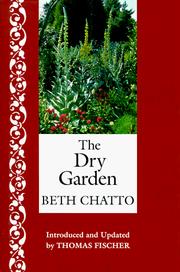
Then read the genre's founding document: The dry garden by Beth Chatto. Chatto famously gardened gravel in one of England's driest corners without irrigation, and her principle — right plant, right place — is the single idea that separates gardens that survive drought from gardens that merely start out drought-tolerant.
Before you buy a single plant, detour through The informed gardener by Linda Chalker-Scott. It is a myth-busting book grounded in horticultural research, and it will talk you out of a dozen expensive habits — amending planting holes, overwatering new trees, believing product labels — that quietly kill dry gardens.
The design stage
Planting in a post-wild world by Thomas Rainer reframes planting as designed plant communities: layered, ground-covering, self-sustaining vegetation instead of specimens floating in mulch. Pair it with The dry gardening handbook by Olivier Filippi, the Mediterranean nurseryman's masterwork on how plants actually survive drought — and why summer water kills many of them. Then Garden revolution by Larry Weaner teaches you to steer natural processes instead of fighting them, so the landscape gets cheaper to maintain every year instead of more expensive.
Two further books extend the same argument into specific plantings. The American meadow garden by John Greenlee is the practical case for replacing lawn with meadow: which grasses to use, how to establish them, and how to mow a meadow once a year instead of a lawn forty times. It is the best answer on the path to the question most people actually arrive with, which is what to do about the turf. And Gaia's Garden by Toby Hemenway is the permaculture entry — not a drought book as such, but the clearest home-scale explanation of catching and storing water on site, building soil that holds it, and stacking functions so one plant does three jobs. Read it for the water-harvesting chapters; its climate assumptions are broader than this subject.
Then get regional
At some point the general principles have to meet your actual rainfall, and plant lists are stubbornly local. Landscaping with native plants of Texas and the southwest by George Oxford Miller is the path's regional volume — worth reading if you garden anywhere hot and dry, and worth skipping outright if you do not, because a plant list for the Chihuahuan Desert is actively misleading in a Mediterranean or maritime climate. The general habit it teaches, though, does travel: find the equivalent regional native-plant book for your own area and treat it as the last book in this sequence rather than the first.
The habit: the monthly water audit
Once a month, walk the whole landscape with a notebook and write down three things per zone: what got watered, what looks stressed, and what is thriving on neglect. Over one season this log becomes your real hydrozone map — not the one you planned, the one your site actually has — and it tells you which plants to repeat and which to stop replacing. Ten minutes a month, and it quietly replaces years of guessing with a record of what your specific soil, sun, and rainfall actually reward.
How long it takes
Nine books is roughly 90 hours of reading — spread across a fall and winter, it is exactly the homework season before a spring installation. Follow the path, or start from the low-water landscaping hub. Dry-adapted natives also happen to be superb habitat, so the pollinator gardening hub pairs naturally with this one.
FAQ
- Does low-water landscaping mean rocks and cactus?
- No — that is the stereotype the best books argue against. Beth Chatto's gravel garden and Olivier Filippi's Mediterranean plantings are lush, layered, and flower-heavy; they just use plants adapted to dry summers and get established without permanent irrigation.
- What should I do about my lawn?
- Read John Greenlee's meadow book before you rip anything out. Converting turf to a native meadow or a low-mow grass matrix is usually cheaper and better-looking than gravel, and it is the single largest water saving available on a typical suburban lot.
- When should I plant a drought-tolerant garden?
- Fall in most dry-summer climates. Roots establish through the cool, moist season, so plants face their first summer already anchored. Filippi's handbook and Chatto's dry garden book both treat planting season as a core technique, not a detail.
Get the books
- 1Xeriscape gardeningAmazon ↗Connie Lockhart Ellefson
- 2The dry gardenAmazon ↗Beth Chatto
- 3Gaia's GardenAmazon ↗Toby Hemenway
- 4The informed gardenerAmazon ↗Linda Chalker-Scott
- 5Planting in a post-wild worldAmazon ↗Rainer, Thomas (Landscape architect)
- 6The American meadow gardenAmazon ↗John Greenlee
As an Amazon Associate we earn from qualifying purchases. Some book links are affiliate links; you pay the same price and we may earn a small commission.
Follow the full reading path


Design a low-water landscape
Beginner9books48 hrs4 stages
Ready to learn something deeply?
Build a reading path — free