Everyone who wants to make games starts the same way: download an engine, follow a tutorial, build half a platformer, quit. The tutorial taught you buttons, not games. Game development sits at the intersection of design, storytelling, and programming, and if you learn them in the wrong order you end up with technical skills and nothing worth building.
Game Development Books: A Reading Path to Your First Game
July 11, 2026 · 2 min read
Why order matters here
Engines change every few years. Design principles do not. If you learn Unity before you understand what makes a game fun, you will faithfully implement bad ideas. The path below front-loads design thinking, then adds structure and story, and only then puts code in your hands — by which point you know what the code is for.
The path, stage by stage
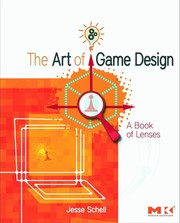
Start with The Art of Game Design by Jesse Schell. Its lens-based approach — dozens of small questions to interrogate any design — gives you a working vocabulary before you write a line of code. Pair it with Rules of Play by Katie Salen, the more academic of the two, which builds a rigorous framework for what games actually are; skim the denser theory chapters and keep the frameworks.
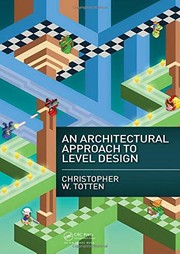
Next, get concrete about craft. An Architectural Approach to Level Design by Christopher Totten borrows from real architecture to explain why some spaces feel tense and others feel safe — the single most transferable skill in game making. For narrative, The Ultimate Guide to Video Game Writing and Design by Flint Dille comes from working writers and treats story as a design constraint, not decoration.
Now, and only now, code. Game Programming Patterns by Robert Nystrom is the friendliest serious programming book in the field — it teaches the architecture patterns (game loops, state machines, components) that keep a growing project from collapsing. Then Learning C# by Developing Games with Unity by Harrison Ferrone walks you through an actual engine with an actual language, and everything you learned earlier gives the exercises meaning.
Two books round it out. Game Design Workshop by Tracy Fullerton is a playtesting-driven curriculum — treat it as your lab manual and actually do the exercises. And Blood, Sweat, and Pixels by Jason Schreier is honest reporting on how real games get made and nearly fail; read it so shipping-is-hard never surprises you.
How to actually study this
Build tiny games the whole way through. After the design books, make a paper prototype or a one-room mod. After the programming books, ship one complete, terrible, finished game — finishing is the skill. Keep a design journal: every game you play, one paragraph on a mechanic that worked and why.
The staged version of this — with study plans, pacing, and self-check questions per stage — is the full reading path. For adjacent routes into programming and design, browse the game development hub, or explore other paths.
FAQ
- Can I learn game development from books alone?
- Books give you the design theory and architecture that tutorials skip, but you must build small games alongside them. Read a stage, then ship something tiny.
- Should I learn game design or programming first?
- Design first. Engines and languages change; understanding what makes a game fun is permanent, and it makes the programming books far more useful.
Get the books
- 1The art of game designAmazon ↗Jesse Schell
- 2Rules of playAmazon ↗Katie Salen
- 3An architectural approach to level designAmazon ↗Christopher W. Totten
- 4Amazon ↗
- 5Game Programming PatternsAmazon ↗Robert Nystrom
- 6Learning C# by Developing Games with UnityAmazon ↗Harrison Ferrone
As an Amazon Associate we earn from qualifying purchases. Some book links are affiliate links; you pay the same price and we may earn a small commission.
Follow the full reading path

Make your first video game
Beginner8books70 hrs4 stages
@codesherpa♥ 0
Ready to learn something deeply?
Build a reading path — free