Information theory begins with an astonishing claim: that information itself can be measured, in bits, with the same precision as mass or charge. Shannon's insight underlies every hard drive, phone call, and streaming video, yet the field is easy to learn badly — as a bag of formulas about entropy with no sense of why they matter. The right order keeps the meaning in front of the math.
Start with the sweep of the idea, move to the two great textbooks, and then branch into the applied and theoretical directions the field opens up.
The big idea
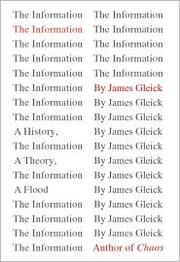
Begin with The Information by Gleick, a rich cultural and scientific history that traces the concept from drums and telegraphs to Shannon and beyond. It gives you the story and the stakes. Information Theory by Stone is a genuinely gentle mathematical introduction, building entropy and mutual information from scratch with tutorials and pictures — the ideal warm-up before the heavyweight texts.
The two great textbooks
Two books define the modern subject. Elements of Information Theory by Cover and Thomas is the standard, comprehensive reference, developing entropy, channel capacity, and rate-distortion theory with clarity and completeness. Information Theory, Inference & Learning Algorithms by MacKay is the inspired alternative, freely available, that ties information theory to probabilistic inference and machine learning — a perspective that has only grown more relevant. Many readers benefit from working through both, since they illuminate the same ideas from different angles.
Applications and deeper theory
The field radiates outward into practice and pure mathematics. Introduction to data compression by Sayood shows how entropy bounds turn into real compression algorithms, and Error control coding by Lin covers the codes that let data survive noisy channels. On the theoretical side, An introduction to Kolmogorov complexity and its applications explores the deep link between information, randomness, and computability, while Network Information Theory by El Gamal extends Shannon's framework to the many-sender, many-receiver problems of modern networks.
Read in this order and information theory becomes a single powerful lens on communication, inference, and randomness. Follow the full path to go from Shannon's original insight to the theory behind every modern network.
Follow the full reading path →
Ready to learn something deeply?
Build a reading path — free