Passive investing is almost embarrassingly simple: buy the whole market cheaply and hold for decades. The trouble is that simple is not the same as easy. Without understanding why indexing works, investors abandon it at the first downturn or get lured into expensive, underperforming products. A good reading order does not add complexity; it builds the conviction to stay the course when it counts.
This is educational, not personalized advice. But read in sequence, these books give you both the "why" and the practical "how" of a low-maintenance portfolio.
Understand why indexing wins
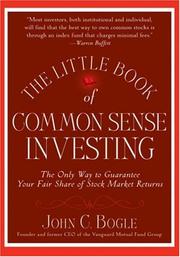
Start with John Bogle's The Little Book of Common Sense Investing, written by the man who invented the index fund. It makes the airtight case that costs matter enormously and that owning the market beats most attempts to outguess it. Then read William Bernstein's If You Can, a short, free-in-spirit booklet that lays out a complete beginner's plan and the behavioral hurdles you must clear to follow it.
Build a simple, durable portfolio
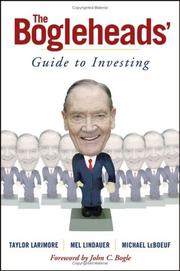
Now turn conviction into a plan. J.L. Collins's The Simple Path to Wealth is a warm, readable guide to building wealth with a handful of low-cost funds and a long horizon. Taylor Larimore's The Bogleheads' guide to investing distills the collective wisdom of the Bogleheads community into practical, no-nonsense portfolio construction, tax placement, and rebalancing.
Deepen the theory and the history
Finally, reinforce your resolve with depth. Bernstein's The four pillars of investing grounds indexing in theory, history, psychology, and business. Burton Malkiel's A Random Walk Down Wall Street explains the academic case for why markets are hard to beat, and Morgan Housel's The Psychology of Money addresses the behavior that actually determines whether you succeed. John Bogle's Common sense on mutual funds goes deep on fund selection and costs, while Jeremy Siegel's Stocks for the long run supplies the long-horizon historical evidence for staying invested.
Follow the full reading path to move from unsure saver to a confident passive investor who can ignore the noise.
Follow the full reading path →
Ready to learn something deeply?
Build a reading path — free