Immunology has a reputation for being the hardest subject in the life sciences to hold in your head, and the reason is structural: nothing acts alone. Every cell signals to a dozen others, feedback loops nest inside feedback loops, and the naming conventions are a language of their own. Dropped straight into a graduate textbook, most people memorize acronyms and understand nothing.
The fix is to earn the overview first. Read a clear map of the system, then a mechanistic tour, and only then the reference texts — so that when the molecular detail arrives, you have somewhere to hang it. These books are meant to build understanding, not to substitute for medical advice.
Get the map first
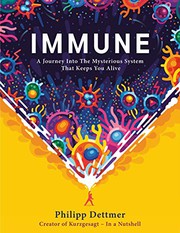
Start with The Immune System: A Very Short Introduction, which sketches innate and adaptive immunity in a few readable hours so you know the players before you meet them in depth. Then Immune, a gorgeously illustrated popular account, walks a single infection through the whole cascade — it is the book that makes the system feel intuitive rather than intimidating. To go one level deeper while staying friendly, How the Immune System Works is the beloved bridge text that students use to actually understand mechanism before opening a formal course book.
Move to the standard texts
Now the core. Immunobiology is the classic teaching text that lays out the adaptive response with the depth a real course demands. Because so much of immunology is cell biology, Molecular Biology of the Cell is the reference that grounds signaling, trafficking, and gene expression underneath it. For the clinically oriented treatment, Cellular and molecular immunology connects mechanism to disease with the precision that later study requires.
Depth: vaccines, disease, and the human story
The final arc branches into application. Vaccines is the authoritative reference on how immunization actually works, from design to deployment. The autoimmune connection turns the lens to what happens when defense misfires, a useful counterweight to textbooks focused on infection. To keep the science human, An Elegant Defense tells the story of immunology through real patients and discoveries — a reminder of the stakes behind the diagrams. Close with Janeway's immunobiology, the updated standard-bearer that many consider the definitive modern text and a natural capstone once the fundamentals are in place.
Read in this sequence, immunology stops being a blur of cell names and becomes a coherent defense system you can reason about. Follow the full path to work through it stage by stage — and remember these books inform, but never replace, professional medical care.
Follow the full reading path →
Ready to learn something deeply?
Build a reading path — free