Money is the most familiar thing most of us never examine. We use it every day and could not say what backs it, who creates it, or why it holds value at all. The history of money is the best on-ramp to those questions, because it shows the idea being invented, broken, and reinvented over thousands of years.
The Best Books on the History of Money, in Order
July 12, 2026 · 2 min read
Why read this in order
Financial history is full of dramatic set pieces — gold rushes, bank runs, the 2008 crash — and it is easy to binge the exciting bits without ever grasping the underlying mechanics. A good sequence builds the concept of money first, then the institutions that manage it, then the crises that reveal how it all really works.
The path, stage by stage
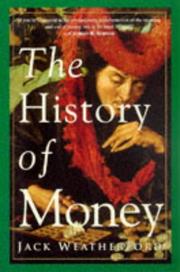
Begin with the big question: what is money? Money by Felix Martin argues that money is not a commodity but a social technology — a system of credit and trust. Read alongside The History of Money by Jack Weatherford, a sweeping tour from cowrie shells to digital cash, it reframes everything that follows.
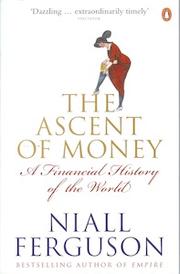
Next, get the grand narrative. The ascent of money by Niall Ferguson connects banking, bonds, insurance, and property into one story of how finance built the modern world. It is the readable backbone of this path.
Then study the institution at the center of modern money: the central bank. Lords of finance by Liaquat Ahamed follows the central bankers whose decisions helped cause the Great Depression — a gripping way to learn how monetary policy actually bites. For a more critical, contested take on the creation of the U.S. Federal Reserve, some readers turn to The creature from Jekyll Island by G. Edward Griffin; read it skeptically and check its claims against mainstream accounts, because it argues a strong ideological line.
For the modern era, The big short by Michael Lewis makes the 2008 mortgage crisis vivid and comprehensible, while Money and Government by Robert Skidelsky steps back to ask what governments should actually do with monetary and fiscal power.
How to actually study this
Money is a subject where smart people disagree for ideological reasons, so weigh the evidence rather than adopting a doctrine. When a book insists there is one villain or one simple fix, slow down. Keep a glossary — liquidity, inflation, reserve, credit — and re-read the definition each time a book uses it differently. The concepts compound, and the payoff is reading the financial news and actually understanding it.
Keep going with the full reading path, the history of money hub, or browse more paths.
FAQ
- What is a good first book on the history of money?
- *Money* by Felix Martin is an excellent starting point because it reframes what money fundamentally is before you dive into institutions and crises.
- Do I need an economics background to read these?
- No. This path is written for curious general readers and builds vocabulary as it goes, though a book like *The ascent of money* rewards close, patient reading.
Get the books
- 1The ascent of moneyAmazon ↗Niall Ferguson
- 2MoneyAmazon ↗Felix Martin
- 3The History of MoneyAmazon ↗Jack Weatherford
- 4The creature from Jekyll IslandAmazon ↗G. Edward Griffin
- 5A History of the Federal Reserve, Volume 1Amazon ↗Allan H. Meltzer
- 6Lords of financeAmazon ↗Liaquat Ahamed
As an Amazon Associate we earn from qualifying purchases. Some book links are affiliate links; you pay the same price and we may earn a small commission.
Follow the full reading path

The history of money: debt, gold & modern finance
Beginner9books107 hrs5 stages
Ready to learn something deeply?
Build a reading path — free