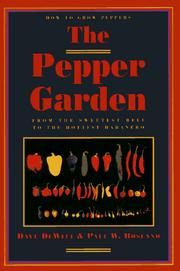
Start with Dave DeWitt and Paul Bosland's The pepper garden, the growing manual, and read it before you buy seed. Most first chilli crops fail on timing rather than on technique — the seed needs eight to ten weeks under lights before the last frost and warm soil to germinate at all, and a plant transplanted late in a cool spring will sulk through the season and set nothing.
The second thing worth knowing early is that this subject has one dominant author. Dave DeWitt has written most of the useful books in English on chillies, and five of the books here are his. That is not padding; it is what the field looks like. Where two of his titles overlap, the notes below say which to skip.
Get a crop this year
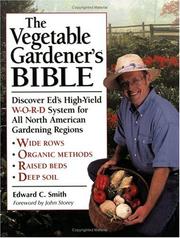
The pepper garden covers germination temperature, the long indoor start, spacing, and why pod set fails in heat. Barbara Ellis's Starting seeds is a short Storey guide to exactly the part that defeats beginners: bottom heat, light distance, hardening off. Edward Smith's The vegetable gardener's bible is the general garden book to sit behind the specialist ones — beds, soil, watering, rotation. Read it if this is your first vegetable garden as well as your first chillies, and skip it if it is not.
Know your species
There are five domesticated Capsicum species, and knowing which one you are growing explains most of what a plant does. The complete chile pepper book, by DeWitt and Bosland for Timber Press, is the best modern combination of botany, hundreds of varieties and growing instructions in one volume — the one to own if you own one. The field guide to peppers is a pocket identification guide with heat levels, useful precisely because chilli naming is chaotic and the same pod is sold under four names depending on the region. Maricel Presilla's Peppers of the Americas is a food historian's book, photographing and describing chillies as ingredients with regional identities, and it is the most beautiful thing here. It belongs at this stage because it turns variety choice into a decision about what you want to eat.
The reference shelf
The Chile Pepper Encyclopedia is alphabetical and exhaustive — a lookup book for settling a question about a variety or a term, not a read-through. Jean Andrews's Peppers, published as Peppers: The Domesticated Capsicums, is the scientific monograph on the five species, illustrated with the author's own botanical paintings; it is the most authoritative account here of what a Capsicum actually is. DeWitt's The whole chile pepper book is his earlier and more cooking-weighted survey, strongest on regional New World chilli cuisines. If you already have The complete chile pepper book, this one is optional — take it for the culinary vocabulary rather than for the growing advice.
Seed saving, overwintering and the harvest
Suzanne Ashworth's Seed to seed is the standard seed-saving reference and matters for chillies specifically, because Capsicum crosses readily: the isolation distances and blossom-bagging technique here are what keep a saved variety true. For a September glut, Kirsten and Christopher Shockey's Fiery Ferments covers lacto-fermented sauces, pastes and krauts, which is where most of the flavour in a serious hot sauce comes from. Robb Walsh's The hot sauce cookbook handles the drying, smoking and vinegar traditions the fermentation book leaves out, plus a history of the American hot sauce industry.
Where the chilli came from
Chile Peppers, published in Reaktion's Edible series as Chile Peppers: A Global History, is a brief well-sourced account of how a Mesoamerican domesticate reached Sichuan and Kerala within a century of 1492. Andrews's The Pepper Trail traces the same journey at greater length and into the cuisines that now seem unimaginable without it. It is the right closing book, because it explains why a chilli seed catalogue reads like a world atlas. The full ordered path with stage goals and study plans is below; more growing subjects are on Discover.
Follow the full ordered path here: Growing Chili Peppers: Best Books, in Reading Order.