Gout occupies odd territory: it is genuinely well understood, has effective long-term treatment, and is still widely mismanaged — often as a series of flare-ups treated in isolation rather than as a chronic condition of urate handling. A lot of the popular literature contributes to that, because the diet story is more interesting to write about than the unglamorous truth that most cases are driven by renal urate excretion and are managed with a daily medication.
So this path is arranged to separate the history, the metabolic hypothesis, and the clinical standard of care. The middle group in particular contains strong claims that go beyond what trials have established, and this article says where.
Directly: gout is diagnosed clinically and often by identifying urate crystals in joint fluid, and the decision about urate-lowering therapy belongs to a physician. Diet changes affect serum urate modestly compared with medication. Nothing here replaces a rheumatologist, and an acutely hot, swollen joint needs medical assessment because septic arthritis presents similarly.
Where the disease has been
Start with Gout, the medical history by Roy Porter and G. S. Rousseau. It traces the condition from antiquity through its long career as a marker of aristocratic excess — the podagra of satirists, the affliction of kings and men of letters — and shows how a metabolic disorder became a moral one. That framing still shapes how patients are treated and how they blame themselves, which is why it is worth reading first.
The metabolic argument, and its limits
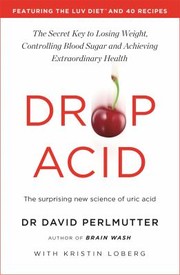
Drop Acid is David Perlmutter's case that uric acid is not merely a marker but a driver of metabolic dysfunction — obesity, insulin resistance, hypertension, and more. The uric acid hypothesis is a real research programme with real evidence behind parts of it, and the fructose connection to urate production is well documented. But the strong version, in which lowering uric acid broadly improves metabolic health, is not established, and the book is more certain than the literature supports.
The Fat Switch by Richard Johnson is where that hypothesis originates. Johnson is a nephrologist and the researcher who developed the argument that fructose metabolism and uric acid function as an evolutionary fat-storage switch, and his book is the primary source rather than the popularization. Nature Wants Us to Be Fat is his later, more accessible restatement of the same case with updated research. The two overlap heavily — read the newer one unless you want the original argument in full.
Treat all three as one contested position, not as settled physiology. The mechanism is plausible and actively studied; the clinical conclusions are not consensus.
Then the clinical picture
The arthritis cure by Jason Theodosakis is included as a widely read book about joint disease, and it needs a plain caveat: it is about osteoarthritis rather than gout, and its central glucosamine and chondroitin recommendation has performed poorly in the large trials conducted since publication. It is useful as context for how supplement claims enter the arthritis conversation, not as a treatment guide.
Close with Firestein and Kelleys Textbook of Rheumatology, the field's standard reference. Its chapters on gout and crystal arthropathies give you what the popular books skip: how hyperuricemia is defined, the actual evidence for allopurinol and febuxostat, treat-to-target urate thresholds, flare prophylaxis during initiation, and management alongside kidney disease. It is expensive and technical, and library access is usually enough — the gout chapters alone will realign everything you read earlier.
Read in this order and the sequence does real work: history explains the stigma, the metabolic books explain the mechanism and the hype, and the textbook tells you what care should actually look like. Follow the full path, then take the questions to a clinician.
Follow the full ordered path here: Gout: The Best Books to Read, in Order.