Enameling is glass fused to metal in a kiln at around 1400 to 1500 degrees Fahrenheit, and almost everything that goes wrong for beginners traces back to the metal rather than the glass. Copper that was not cleaned properly, a piece that warped because it was enamelled on one side only, counter-enamel skipped to save a firing, a gauge too thin for the stress — these produce cracking, pitting and pop-off that look like enamel problems and are not.
The reading order therefore builds from a modern, well-illustrated studio manual, into the specific discipline of cloisonne, then to the classic reference, and finally to the metalworking skills that support all of it. Note that enameling involves kiln heat, fine powders and metal fumes, so ventilation and a dust mask are not optional.
The modern studio manual
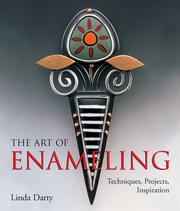
Start with The Art of Enameling by Linda Darty. It is the most useful single book for a contemporary beginner: clear photography, a full survey of techniques from basic sifting through champleve, plique-a-jour and painted enamel, and honest coverage of the failures and how to diagnose them. Darty also treats kiln and torch firing side by side, which matters because many people start with a torch before committing to a kiln.
Read the preparation and counter-enamel material closely. It is the least glamorous part of the book and the part that determines whether your first two dozen pieces survive.
Learn one demanding technique properly
Then take up Cloisonne enameling and jewelry making by Felicia Liban and Louise Mitchell. Cloisonne — bending fine wire into cells, setting them into a base coat, and filling each cell with wet-packed enamel — is a rigorous discipline that teaches wet-packing control, layer thickness and firing judgment better than free-form work does. Getting a cloisonne piece flat and fully filled requires the exact patience the rest of the craft needs.
Working through this book after Darty gives you a specialization deep enough to reveal what you do not yet control, which is usually water content in the packed enamel and how many firings a piece can take.
The classic reference
The Enamelist by Kenneth F. Bates is the older, more foundational text from a teacher who shaped mid-century American enameling. The equipment discussions have dated, but the treatment of colour behaviour, the interaction of transparent enamels with the metal beneath, and the design thinking behind a piece remains valuable and is not fully replaced by newer books. Read it once you have fired enough to have your own questions, because Bates is more rewarding as a second voice than as a first.
The metal underneath
Finish with The complete metalsmith by Tim McCreight. It is not an enameling book at all — it is the compact standard reference on jewelry metalwork, covering sawing, soldering, forming, finishing, alloys and their behaviour under heat. You need it because enamel goes on a piece somebody had to make, and because understanding how metals move at temperature explains warping, firescale and why certain solders cannot survive a kiln cycle.
Keep it on the bench. It answers the questions that arise mid-project rather than the ones you thought to ask beforehand.
For related fine-textile making, the wet felting hub sits nearby.
Read them in this order and your failure rate will drop before your ambition does.
Follow the full ordered path here: Best Books on Enameling, in Reading Order.