Cryptography is unusually unforgiving: subtle errors do not produce visible bugs, they produce silent insecurity. That is why "roll your own crypto" is the field's cardinal sin — and why reading order matters so much. You want intuition and modern practice before the deep theory, and theory before you touch protocol engineering.
The path opens with accessible, practice-oriented books, builds the mathematical foundations that make the guarantees real, and ends with the engineering of protocols and systems that actually resist attackers. Follow it and cryptography stops being intimidating and becomes a discipline you can apply responsibly.
Start with practice and intuition
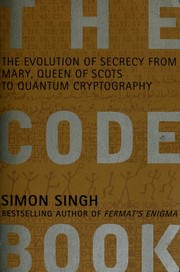
Begin with Serious Cryptography, a modern, practical introduction that explains how real algorithms work and where they fail, without drowning you in proofs. For motivation and context, The Code Book tells the gripping history of secrecy from ancient ciphers to public-key crypto — the most enjoyable on-ramp the field has. Then Real-World Cryptography focuses on the protocols and primitives actually deployed today, which is exactly what a practitioner needs to reason about.
Build the mathematical foundation
Cryptography's guarantees rest on math, and this arc supplies it. An introduction to mathematical cryptography covers the number theory and algebra behind modern schemes at an approachable level, and A course in number theory and cryptography goes deeper into the theory. Introduction to modern cryptography is the rigorous, definition-and-proof treatment that teaches you what "secure" formally means, and The Joy of Cryptography is a free, unusually clear text on the same provable-security foundations.
Engineer real systems
Finally, connect theory to practice. Cryptography engineering teaches how to build systems that use cryptography correctly — where real deployments go wrong and how to avoid it. Cryptography and Network Security situates the primitives within complete secure systems and protocols, and Applied Cryptography, the influential classic, surveys the algorithms and techniques that shaped the field. Read the practice-focused engineering books as the authority on what to actually do; treat the older classic as valuable history and breadth.
Read in this order and cryptography stops being scary math and becomes a set of tools you can use without fooling yourself. Follow the full path from your first cipher to reasoning soundly about secure protocols — and always prefer vetted libraries over your own implementations.
Follow the full reading path →
Ready to learn something deeply?
Build a reading path — free