Concurrent and parallel programming is notorious for a reason: code that looks obviously correct can harbor race conditions, deadlocks, and memory-ordering bugs that appear only under load. That is precisely why reading order matters. You need the low-level primitives and mental models before any language-specific book, or its advice will feel like a bag of tricks with no foundation.
This path builds the fundamentals, then teaches concurrency in the languages that take it seriously, and closes with the deep theory and high-performance computing.
Build the mental model
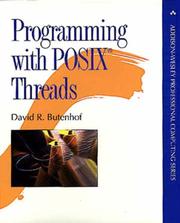
Start with Programming with POSIX threads, which teaches the raw threading primitives every higher-level model is built on. Then The little book of semaphores drills the synchronization patterns and classic problems until they are intuitive. For the why behind the difficulty, Is Parallel Programming Hard, And, If So, What Can You Do About It? honestly surveys the whole landscape and its hazards.
Learn it in real languages
Now see concurrency done well in practice. C++ Concurrency in Action is the definitive guide to the modern C++ memory model and threading. The art of multiprocessor programming is the rigorous, foundational text on shared-memory algorithms and lock-free structures. Concurrent Data Structures in Java and Java Concurrency in Practice together make you genuinely competent on the JVM, and Programming Rust shows how Rust's ownership model eliminates whole classes of data races at compile time.
Reach for performance
Finally, turn to raw throughput. Structured Parallel Programming teaches the patterns for exploiting many cores effectively, and Parallel Programming in C with MPI and OpenMP takes you into high-performance and cluster computing where parallelism is the entire point.
Read in this order and you will reason about concurrency with confidence instead of hoping the tests catch your races. Follow the full path to keep the sequence.
Follow the full reading path →
Ready to learn something deeply?
Build a reading path — free