Clock repair has an unusual property for a hobby: its reference books do not go stale. A striking movement made in 1780 and one made in 1920 share the same escapement, the same mainspring behaviour, the same depthing problems. So the classic texts written between the 1940s and the 1980s are not historical curiosities — they are the current manuals, and several are still in print for exactly that reason.
What trips people up is not the age of the books but the order. Beginners buy the big reference first, open it at a chapter on escapement geometry, and conclude the craft is beyond them. It is not. The correct sequence is: learn to take a movement apart and put it back together without breaking it, then learn to clean and bush and pivot, then learn to diagnose, and only then start reading about tooth profiles and depthing tools. This path follows that order.
The first bench
How to Repair Clocks is the right opening because it assumes nothing. Eric Smith walks through dismantling, cleaning, reassembly and the small number of faults that account for most non-running clocks — a dirty movement, a worn pivot hole, a set mainspring. Read it with a scrap movement in front of you. Nothing in horology is learned by reading alone, and the cheapest tuition available is a junk mantel clock bought for the price of a sandwich and taken apart twice.
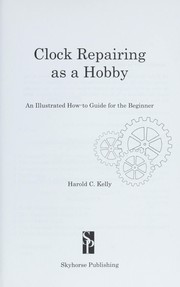
Clock repairing as a hobby covers similar ground with a different temperament — more about the workshop, the tools you actually need versus the ones catalogues want to sell you, and how to set up to work on a kitchen table. The overlap with the first book is real, so if money is tight, read one and move on. If you can have both, the second reading of the same operations in a different voice is where most of the confidence comes from.
The reference you keep
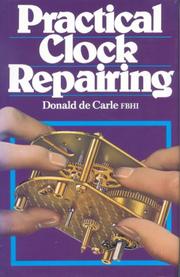
Practical clock repairing is the standard. Donald De Carle wrote the book that professionals still reach for, and it is the one to own permanently rather than borrow. It is organised as a working reference, not a course, which is precisely why it makes a poor first book and an excellent third one — by the time you meet it you will have questions it answers. Its companion strength is that it treats the awkward jobs seriously: mainspring work, bushing, pivot polishing, and the striking and chiming trains that defeat most self-taught beginners.
Restoration, as distinct from repair
Repairing old clocks and watches marks the point where the subject changes character. Repair means making a movement run. Restoration means making decisions — whether to replace a worn part or conserve it, how to treat a re-dialled face, what an over-cleaned case does to the value of an antique. Whiten is good on the ethics as well as the technique, and the book brings watches into scope, which is a natural next step because the principles are the same at a quarter of the scale and four times the difficulty.
A note on tools, because the books assume some of them: you will need a mainspring winder before you work on a spring-driven clock, and improvised alternatives are how people lose fingertips. Budget for that one properly.
Four books is the whole honest list. The literature is small, but it is unusually high quality and it has aged well, and there are still clockmakers' guilds and local associations where someone will show you a pivot polish in ten minutes that a chapter cannot convey. Work through the path in order, and start with something worthless.
Follow the full ordered path here: How to Learn Clock Repair from Books, in Order.
Ready to learn something deeply?
Build a reading path — free