Start with The Complete Stories. Lispector is difficult in a specific way — her sentences track consciousness as it happens, plot is nearly incidental, and a story can turn on a woman noticing a cockroach — and the short form is where that becomes legible fastest. The collection is arranged chronologically across her whole career, so you also watch the method develop from the early stories to the fractured late ones. "The Smallest Woman in the World" and "Love" are the pieces most likely to convert you, and both take fifteen minutes.
Do not start with Água viva. It is the book her admirers are most evangelical about and it is also the deep end: no plot, no characters to speak of, a first-person voice describing the instant of being alive, closer to music than to fiction. Readers who meet Lispector there overwhelmingly conclude she is not for them, and they are usually wrong.
The second book
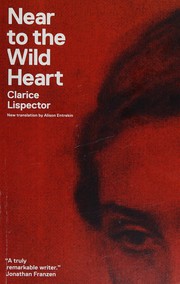
Near to the wild heart is the 1943 debut, written when she was twenty-three, and it is startling — a young woman named Joana, a fractured chronology, and a prose style that Brazilian critics immediately recognised as unprecedented. It is the most conventionally novel-like thing in this path, which is not saying a great deal, and it is the right second stop. Reading it after the stories means you already know how her sentences move.
The unexpected entry point
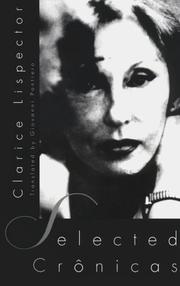
Selected cronicas is the one to know about. For years Lispector wrote a weekly newspaper column in Rio, and the crônica is a Brazilian form somewhere between essay, anecdote and prose poem — a few hundred words on a maid, a taxi, an insomniac night, her sons. They are funny, worldly, sometimes exasperated, and completely accessible.
If the fiction feels forbidding, read this first instead. It is the best evidence that the woman who wrote the difficult books was not a mystic on a mountain but a working writer with deadlines and a household, and it makes the fiction easier to trust.
The deep end
Now Água viva, from 1973. Ninety pages, addressed to an unnamed "you", about the impossibility of capturing the present moment in language and the attempt to do it anyway. Read it slowly, in a few sittings, and stop trying to work out what is happening — nothing is happening, deliberately. It is either the most extraordinary thing she wrote or unreadable, and both reactions are common enough that neither is wrong.
What is missing from this path
Two of the books most often recommended as starting points are not in our catalogue, and it would be misleading not to say so. The Hour of the Star, her last novel — short, brutal, about a poor migrant typist in Rio narrated by a man who cannot stop intruding — is the most frequently suggested first Lispector and is genuinely accessible. The Passion According to G.H. is her central novel and the one most argued over. If the four books here work for you, those are the next two to find.
The translation and the biography
Almost all Lispector in English now comes through the New Directions retranslation project overseen by Benjamin Moser, which deliberately preserves the strangeness of her Portuguese where earlier translators smoothed it. That decision is contested — some readers find the results uncomfortable in a way that is faithful, others find them awkward in a way that is not. Moser's biography Why This World is the standard life and has itself drawn criticism from some Brazilian scholars over its interpretations. Both are worth reading with the disagreements in mind.
How to read her
One concrete rule: stop trying to follow the story. Lispector's sentences are the event. Readers who approach her as they would a novelist, waiting for something to happen so the meaning can arrive, find her frustrating; readers who slow down to the pace of the individual sentence usually find that the meaning was in it the whole time.
More world literature reading paths are on Discover.
Follow the full ordered path here: Clarice Lispector Reading Order: Where to Start.