A chainsaw is the only tool most people will ever own that can injure them badly in well under a second, and felling adds a second hazard the saw itself does not cause: a multi-tonne object falling in a direction you chose. That is why order matters here more than it does in most crafts. The sequence of competence is fixed — saw handling and reactive forces first, then limbing and bucking wood that is under tension, then felling, and only then anything that involves leaving the ground.
Two honest warnings before the list. First, this is a short path. Only four books cleared our verification, and none of them is a dedicated chainsaw safety manual — the best chainsaw-specific documents in existence are your saw's own manual and the regulator's guidance (OSHA in the US, HSE in the UK), neither of which is a book you can buy. Second, and more importantly: a book is not a substitute for hands-on training. Structured chainsaw instruction genuinely exists and is not expensive relative to an emergency room — Game of Logging in North America, NPTC and City and Guilds units in the UK, and the ISA credentials on the arborist side. Take a course. Read these to get more out of it.
Start on the ground
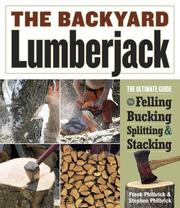
The backyard lumberjack is the right first book because its scope matches an honest first year: choosing a saw, sharpening a chain, dropping small trees on your own land, bucking, splitting and stacking for firewood. It is written for the person heating a house, not for a production crew, and it does not pretend that reading it makes you a faller. Sharpening deserves special attention on a first read — a dull chain is the single most common cause of the forcing and pinching that gets people hurt.
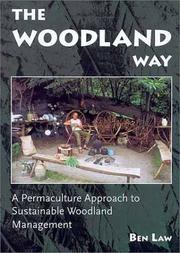
The Woodland Way changes the question from how to cut to why and what. Ben Law worked a coppice woodland for decades, and the book treats felling as a management decision inside a system with a fifteen-year cycle rather than a one-off task. Read it for judgement: which stems come out, what the canopy does afterwards, what the wood is actually for. It is also the book most likely to change what you plant.
Rigging, height, and the professional end
The tree climber's companion is the standard pocket reference for climbing systems, knots, friction hitches and rigging. It sits deliberately late in this path, because climbing with a running saw is the most dangerous work in the trade and this book says so itself — it is explicitly a companion to instruction, not a replacement for it. If you have not been taught to climb, treat it as reading about a job you will hire out.
Arboriculture is the university textbook: tree biology, pruning standards, hazard and risk assessment, soils and root systems. It is dense and expensive, and it is the book you buy when you are moving from cutting trees down to keeping them alive, or heading toward a certification exam. Most readers will stop before this one, which is fine — it is the end of the path, not a prerequisite for the start.
Two of these overlap less than you would expect, so there is nothing to skip. What is missing is the thing books cannot carry: how a bar behaves in a bind, what a barber chair sounds like starting, how a hinge holds. Get that from an instructor.
Once the timber is down and seasoned, the next craft is usually milling it into something — see trim and finish carpentry for where that goes.
Follow the full ordered path here: Chainsaw Use and Tree Felling: The Best Books to Read First.
Ready to learn something deeply?
Build a reading path — free