The Internet of Things is deceptively broad: it spans soldering a sensor, writing firmware, moving data over networks, and securing devices that live in the physical world. Beginners often start too abstract, reading about "IoT platforms" before they have ever blinked an LED. The fix is to start with your hands.
Learn IoT From Books: Build Connected Devices, in Order
July 12, 2026 · 2 min read
Why order matters here
Build first, generalize later. You learn far more from making one small connected device work than from reading about architecture diagrams. The path moves from microcontrollers, to electronics, to networking, to the systems and security view that ties it together.
The path, stage by stage
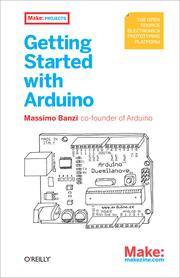
Start by making something blink and move. Getting Started with Arduino by Massimo Banzi, from a co-creator of the platform, gets you building immediately, and Programming Arduino by Simon Monk deepens your code and project skills. This stage is pure momentum — physical results in an afternoon.
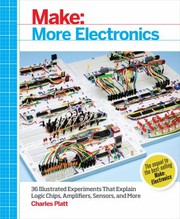
Fill in the electronics underneath with Make More Electronics by Charles Platt, a hands-on guide that teaches components through experiments so your circuits stop being cargo-cult copies.
Now connect things. Getting started with the Internet of Things by Cuno Pfister introduces networked devices and getting data onto the internet, and Building Wireless Sensor Networks by Robert Faludi teaches device-to-device communication — the heart of a real IoT system.
Then zoom out to design. Designing The Internet Of Things by Adrian McEwen covers turning a prototype into a product, and Building the Internet of things by Maciej Kranz gives the broader business and systems context.
Finally, take security seriously, because connected devices are attack surfaces. Practical Internet of Things Security by Brian Russell and The IoT Hacker's Handbook by Aditya Gupta show how devices get compromised — knowledge you need in order to build responsibly. Treat any hacking techniques as tools for securing your own devices and testing only systems you own or have permission to test.
How to actually study this
Build a real project as you read — a temperature logger, a plant monitor, anything that touches the physical world. Debugging hardware teaches lessons no book can, because reality is messier than diagrams. Keep notes on what broke and why. And bake in security from the start rather than bolting it on: a default password on a networked device is a genuine risk, not a hypothetical.
Continue with the full reading path, the IoT hub, or browse more paths.
FAQ
- What is the best way to start learning IoT?
- Begin hands-on with a microcontroller using *Getting Started with Arduino* by Massimo Banzi — building a small device teaches more than abstract overviews.
- Do I need to know about IoT security?
- Yes. Connected devices are attack surfaces, so books like *Practical Internet of Things Security* help you build responsibly and test only systems you own.
Get the books
- 1Getting Started with ArduinoAmazon ↗Massimo Banzi
- 2Programming ArduinoAmazon ↗Simon Monk
- 3Make More ElectronicsAmazon ↗Charles Platt
- 4Getting started with the Internet of ThingsAmazon ↗Cuno Pfister
- 5Building Wireless Sensor NetworksAmazon ↗Robert Faludi
- 6Designing The Internet Of ThingsAmazon ↗Adrian McEwen
As an Amazon Associate we earn from qualifying purchases. Some book links are affiliate links; you pay the same price and we may earn a small commission.
Follow the full reading path

Build with IoT: connected devices, explained
Beginner10books61 hrs4 stages
@codesherpa♥ 0
Ready to learn something deeply?
Build a reading path — free