Anyone can wire a chat completion into a demo in an afternoon. The gap between that demo and an AI product people rely on is enormous, and it is exactly the gap most tutorials skip: retrieval, evaluation, latency, cost, failure modes, and the unglamorous systems work around the model.
That gap is why reading order matters here more than in almost any software subject. If you start with a systems book, the vocabulary is opaque. If you only ever read prompt tips, you plateau at demos. The sequence below builds each layer on the one beneath it.
Stage 1: understand the machine you are programming
Start with Hands-On Large Language Models by Jay Alammar. Alammar is famous for making transformer internals visual, and this book gives you a working mental model of tokens, embeddings, and attention without requiring you to train anything. You will debug ten times faster once you can picture what the model is actually doing.
Stage 2: learn the interface
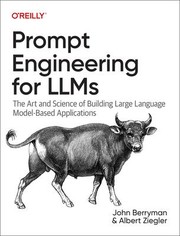
The prompt is your API, and it deserves engineering discipline. Prompt Engineering for LLMs by John Berryman treats prompting as a real design problem: how context windows behave, how to structure instructions, and why small wording changes swing outputs. Then Developing Apps with GPT-4 and ChatGPT by Olivier Caelen walks you through the practical plumbing of building on hosted model APIs, from function calling to basic app architectures. The specific models will age; the patterns will not.
Stage 3: think like an engineer, not a demo builder
AI Engineering by Chip Huyen is the book this field was waiting for. It covers the full application layer: retrieval-augmented generation, evaluation, fine-tuning decisions, latency and cost trade-offs, and guardrails. If you read only one book on this path, read this one. Follow it with Designing Machine Learning Systems, also by Chip Huyen, which supplies the production discipline underneath: data pipelines, monitoring, drift, and iteration loops that apply to LLM systems just as much as to classic ML.
Stage 4: look at where this is heading
Agentic systems are the current frontier, and they rest on decades-old ideas. Multiagent systems by Yoav Shoham gives you the theoretical foundations of agents that negotiate, coordinate, and act. It is denser than everything before it on this path, which is exactly why it comes last.
How to actually study this
Build one project and carry it through the whole path: a small retrieval-backed assistant over documents you know well. After each book, upgrade it. Add structured prompts after Berryman, real evals after Huyen, a second cooperating agent after Shoham. Keep a log of failure cases; in this field, your eval set is your real asset.
One honest caveat: this stack moves fast, and any book naming specific models will date at the edges. Read for durable patterns, and treat vendor-specific details as examples rather than gospel.
The staged version of this curriculum, with study plans for each stage, is in the full reading path. For neighboring topics, browse the subject hub, or explore other paths.