Astrobiology is a science with exactly one confirmed example to study: life on Earth. That constraint shapes everything, and it shapes the right reading order. Before you can reason about what might live on an ocean moon or an exoplanet, you need to understand what life is, how it started here, and how far its limits can stretch.
That is why this path reads inward before it reads outward. It builds from biochemistry and the origin of life, through the toughest organisms our own planet has produced, and only then looks up to Mars, the outer solar system, and the stars, where the real search is happening now.
What life is, and how it began
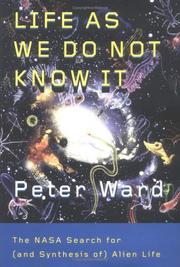
Begin with The vital question by Nick Lane, a bold argument about why life on Earth took the form it did, rooted in energy and cell membranes rather than genes alone. It reframes the origin of life as a chemistry problem. Then widen the imagination with Life as we do not know it by Peter Douglas Ward, which asks what a genuinely alien biochemistry might look like.
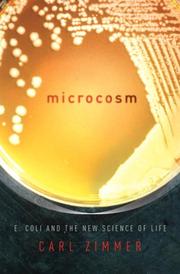
Ground yourself in the microbial reality with Microcosm by Carl Zimmer, a portrait of E. coli that shows how much of life's logic is written in its simplest forms, and Life in the Extreme by Lee Sweetlove, a tour of the extremophiles that survive heat, acid, and radiation, expanding your sense of where life could hide.
The targets in our solar system
Now turn outward. The case for Mars by Robert Zubrin makes the argument for the nearest world where life might have existed, and Alien Oceans by Kevin Peter Hand reveals the buried seas of Europa and Enceladus, arguably the most promising real estate for life in the solar system.
The stars, and the silence
For the search beyond, The Exoplanet Handbook by Michael A. C. Perryman and Exoplanets (Space Science Series) by Sara Seager give the serious science of finding and characterizing other worlds, the field that has exploded in the last two decades. Then confront the hardest question with The eerie silence by Paul Davies: if life is common, why have we heard nothing?
Close with Astrobiology: A Very Short Introduction by David C. Catling, a compact synthesis that ties the whole field together and is a fine re-read once the rest has given you the context.
Read in this order and the search for alien life stops feeling like science fiction and becomes what it is, a rigorous science built outward from the one living world we can touch. Follow the full path to make that journey.
Follow the full reading path →
Ready to learn something deeply?
Build a reading path — free