AI-proof your career: what to learn before it's too late
This curriculum moves from honest, accessible big-picture thinking about AI and work, through rigorous economic and technical analysis of automation risk, and finally into concrete, actionable strategies for retraining and positioning yourself in an AI-augmented economy. Each stage builds the vocabulary and mental models needed to get real value from the next, so that by the end the reader can make clear-eyed, evidence-based decisions about their own career — not just feel anxious or falsely reassured.
Foundations: What AI Actually Is and What It's Doing to Work
BeginnerBuild an honest, jargon-free mental model of what modern AI can and cannot do, and why the job market is genuinely changing — without hype or denial.
▸ Study plan for this stage
Pace: 10–12 weeks total (~25–30 pages/day, 5 days/week): Weeks 1–3 for "World Without Work" (Susskind), Weeks 4–7 for "The Technology Trap" (Frey), Weeks 8–12 for "Power and Progress" (Acemoglu). Reserve one buffer day per week for reflection and note consolidation.
- Susskind's 'task encroachment' model — AI doesn't replace jobs wholesale; it progressively colonizes discrete tasks within jobs, reshaping roles from the inside out
- The distinction between 'labor-substituting' vs. 'labor-complementing' technology, and why modern AI skews heavily toward substitution in ways previous automation did not
- Frey's 'Great Divide' thesis — technological transitions historically create long transitional pain (decades, not years) before broad prosperity arrives, and the losers rarely become the winners
- The difference between automating routine cognitive tasks (spreadsheets, scheduling) and the emerging automation of non-routine, judgment-based tasks — the frontier AI is now crossing
- Acemoglu's 'so-so automation' concept — technology that is just productive enough to displace workers but not productive enough to generate new, compensating demand or roles
- The 'shared prosperity' failure: why productivity gains from AI concentrate at the top by default, and the institutional/political conditions required to redirect them
- The historical pattern of 'general purpose technologies' (steam, electricity, computing, AI) and why the transition period — not the endpoint — is the most dangerous moment for workers
- The difference between technological determinism (AI will do X no matter what) and the 'choices and institutions' view (Acemoglu) — outcomes are shaped by who holds power and what decisions they make
- After reading Susskind: Can you explain, in plain language and without jargon, why a job that 'requires a human' today might not require one in ten years — using the task-encroachment model?
- After reading Frey: What does history tell us about who bears the cost during a major technological transition, and why does the promise of 'new jobs will emerge' not automatically protect the current workforce?
- After reading Acemoglu: What is 'so-so automation,' and how does it differ from genuinely productivity-enhancing technology? Can you give a real-world example from a sector you know?
- Across all three books: What are the three most important factors that determine whether an AI-driven transition helps or harms a given worker or community — and which of those factors are within an individual's control?
- How do Susskind, Frey, and Acemoglu differ in their diagnosis of the core problem? Where do they agree, and where does their disagreement matter for how you plan your own career?
- Can you articulate, in one paragraph, why both 'AI will take all jobs' and 'AI will create as many jobs as it destroys' are oversimplifications — drawing on specific arguments from at least two of the three books?
- Task audit on your own role: List every distinct task in your current job (or a job you know well). Using Susskind's task-encroachment framework, rate each task on a 1–5 scale of near-term AI vulnerability. Identify which tasks are shrinking, stable, or growing in importance.
- Historical parallel mapping (Frey): Pick one historical technology transition Frey analyzes (e.g., the power loom, electrification). Write a one-page comparison to a current AI deployment in your industry — mapping who won, who lost, how long the transition took, and what, if anything, protected workers.
- So-so vs. transformative audit (Acemoglu): Find two recent news articles about AI being deployed in a workplace. Apply Acemoglu's 'so-so automation' test: Is this technology genuinely expanding what humans can produce, or is it primarily displacing labor without creating new demand? Write a short verdict for each.
- Three-author debate journal: After finishing each book, write a 200-word 'position statement' as if you were that author responding to the other two. After all three, write a 300-word synthesis identifying the single most actionable insight for an individual worker.
- Vocabulary purge exercise: Take any AI-related news headline and rewrite it twice — once in the most alarmist framing, once in the most dismissive framing. Then write a third version grounded strictly in concepts from these three books. Practice separating signal from hype.
- Personal 'transition risk profile': Using insights from all three books, write a one-page honest assessment of your own career's exposure — covering your industry's historical resilience to automation, the task composition of your role, and whether the institutions around you (employer, sector, government) are likely to share or hoard AI productivity gains.
Next up: These three books establish that AI disruption is real, historically grounded, and shaped by power — not fate — which makes the next stage's focus on identifying which specific human skills and roles are genuinely durable (rather than just currently untouched) both urgent and tractable.

A rigorous yet accessible starting point that honestly maps which tasks — not just jobs — are vulnerable to automation, and frames the real question: not 'will AI take jobs?' but 'which parts of which jobs, and what comes next?' Sets the intellectual tone for the whole curriculum.
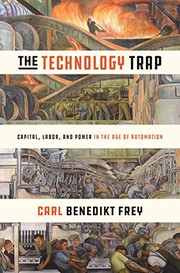
Provides crucial historical context showing that technological transitions have always been painful and uneven before becoming broadly beneficial. Reading this second prevents both panic and naive optimism by grounding the current moment in evidence.

Challenges the assumption that AI progress automatically benefits workers, arguing that who controls technology determines who benefits. Completes the foundation by adding a political-economy lens before the reader dives into personal strategy.
The Automation Map: Which Jobs Are Safe and Which Are Not
IntermediateDevelop a precise, research-backed framework for evaluating any occupation's automation risk — understanding the specific human capabilities AI still cannot replicate.
▸ Study plan for this stage
Pace: 10–12 weeks total: ~3–4 weeks per book at 20–25 pages/day. Week 1–4: "The Second Machine Age" (focus on chapters covering the frontier of machine capability and the bounty/spread framework); Week 5–8: "The Future of the Professions" (dense analytical text — slow down to 15–20 pages/day for Part II);
- The 'bounty and spread' framework from The Second Machine Age — how automation creates aggregate wealth while distributing gains unevenly across skill levels
- Brynjolfsson & McAfee's distinction between routine vs. non-routine tasks and how this predicts which roles machines displace first
- The Susskind model of 'decomposing' professions into discrete tasks rather than treating jobs as monolithic units — the key to granular risk assessment
- The 'evolution of the professions' trajectory described by the Susskinds: from bespoke service → standardization → systematization → externalization → disintermediation
- Stuart Russell's critique of the 'standard model' of AI (machines optimizing fixed objectives) and why misaligned objectives create both safety risks and capability ceilings
- Russell's concept of 'provably beneficial AI' and what it implies about the irreplaceable role of human preference, judgment, and value specification
- The specific human capabilities that remain hard to automate: tacit knowledge, ethical reasoning, empathetic communication, novel physical dexterity, and cross-domain creative synthesis
- How to build a personal 'automation risk rubric' by combining task decomposition (Susskind) with the routine/non-routine axis (Brynjolfsson) and the value-alignment gap (Russell)
- According to Brynjolfsson and McAfee, why does strong GDP growth from automation not automatically protect individual workers, and what does this mean for evaluating your own role?
- How do the Susskinds' five-stage 'evolution of the professions' model and their task-decomposition method change the way you should think about whether your profession as a whole is 'safe'?
- What specific categories of professional work do the Susskinds identify as most resistant to externalization and disintermediation, and why?
- Why does Russell argue that the 'standard model' of AI — machines given a fixed objective to maximize — is fundamentally limited, and what human capabilities does that limitation protect?
- How can you synthesize the frameworks from all three books into a single, step-by-step rubric for scoring any occupation's automation risk on multiple dimensions?
- Which of your own current job tasks would score as high-risk under the combined Brynjolfsson/Susskind/Russell framework, and what is your evidence?
- Task Decomposition Audit: List every recurring task in your current role. For each, apply the Susskind decomposition lens — label it as bespoke, standardized, systematized, or already externalized. Count what percentage sits in each category and identify your personal vulnerability profile.
- Routine/Non-Routine Matrix: Using Brynjolfsson & McAfee's framework, map your task list onto a 2×2 grid (cognitive vs. manual on one axis; routine vs. non-routine on the other). Highlight which quadrant holds the majority of your working hours.
- Profession Trajectory Timeline: Pick one profession (yours or one you're curious about) and draw the Susskind five-stage evolution timeline for it. Research one real-world technology or platform that represents each stage already in motion.
- Value-Alignment Gap Test: For your three highest-risk tasks identified above, write a one-paragraph brief explaining what human preference, ethical judgment, or tacit knowledge is embedded in each task — using Russell's 'what does the human actually want?' framing to articulate why a fixed-objective AI would fail or cause harm.
- Automation Risk Rubric: Build a one-page scoring sheet that combines all three frameworks. Score any occupation across five dimensions: task routineness, decomposability, externalizability, objective specifiability, and tacit-knowledge intensity. Pilot it on three different occupations and compare results.
- Reading Synthesis Essay: Write a 500-word memo titled 'Which capabilities should I invest in over the next five years and why?' — citing specific arguments from each of the three books to justify every recommendation.
Next up: Mastering this stage's risk-assessment framework gives you a precise diagnostic of where you are vulnerable, which sets up the next stage's forward-looking question: now that you know which human capabilities AI cannot replicate, how do you deliberately build and signal those capabilities to remain indispensable?
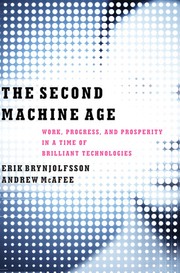
Introduces the landmark framework of tasks that computers do well (routine, codifiable) versus those they struggle with (creative, interpersonal, judgment-based) — the essential vocabulary for assessing your own job's vulnerability.

Drills into white-collar and knowledge-work professions specifically — law, medicine, education, accounting — showing exactly which expert tasks AI is already replacing and which require irreducibly human judgment. Essential for anyone in a 'safe' professional role who may be overconfident.

Written by a leading AI researcher, this book clarifies what current AI systems genuinely can and cannot do from a technical standpoint — giving the reader a reliable internal compass to cut through media hype when evaluating future automation claims.
The Human Edge: Skills AI Cannot Replicate
IntermediateIdentify the specific, trainable human capabilities — creativity, social intelligence, ethical judgment, physical dexterity in novel contexts — that remain structurally resistant to automation, and understand why.
▸ Study plan for this stage
Pace: 6–7 weeks total: Weeks 1–3 cover "The Creativity Code" (~25–30 pages/day, including pause days for reflection); Weeks 4–6 cover "Humans are Underrated" (~20–25 pages/day, with journaling sessions built in); Week 7 is a synthesis and review week with no new reading.
- The three types of creativity (exploratory, combinational, transformational) as defined by du Sautoy, and why each poses a different challenge for AI to replicate
- The mathematical and algorithmic underpinnings of machine creativity — what GANs, deep learning, and pattern-matching can and cannot do when it comes to genuine novelty
- The 'value judgment' problem: AI can generate outputs but structurally struggles to evaluate meaning, cultural resonance, and aesthetic worth without human scaffolding
- Colvin's central thesis that the most durable human skills are those rooted in empathy, social sensitivity, and face-to-face storytelling — capabilities forged by millions of years of evolution
- The concept of 'deeply human work': Colvin's framework for identifying roles and tasks where human presence, emotional attunement, and relationship-building are the core value delivered — not a byproduct
- Social intelligence as a trainable skill set (reading nonverbal cues, building trust, collaborative problem-solving) rather than a fixed personality trait
- Ethical judgment and moral reasoning as a structural human edge: why encoding values into AI systems remains an unsolved and possibly unsolvable problem
- The interplay between human and AI as collaborative partners rather than pure substitutes — and what that means for how you position your own skill development
- According to du Sautoy, what is the fundamental difference between AI that remixes existing patterns and AI that produces genuinely transformational creativity — and can any current system cross that line?
- Why does du Sautoy argue that the 'value judgment' step in the creative process is the most structurally resistant to automation, and what does that imply for careers in creative fields?
- What does Colvin mean by 'deeply human work,' and which three or four concrete job categories does he argue will grow in value precisely because they require human presence?
- How does Colvin's evolutionary argument support the claim that empathy and social intelligence are not soft extras but core economic assets — and what evidence does he provide?
- Taken together, how do du Sautoy and Colvin's frameworks complement each other in defining 'the human edge'? Where do they agree, and where might they tension each other?
- What is one specific, trainable skill you identified from these two books that you currently underinvest in, and what is the structural reason AI cannot easily replicate it?
- Creativity audit (du Sautoy): Choose one creative output you produced recently (a document, design, idea, conversation). Classify it using du Sautoy's three creativity types. Then deliberately attempt to produce a version using each of the other two types. Reflect on where AI tools helped and where they fell short.
- AI boundary test (du Sautoy): Use a generative AI tool (e.g., an image generator or LLM) to attempt a creative task in your own domain. Document specifically where the output felt hollow, contextually wrong, or culturally tone-deaf — then write a one-page analysis of *why*, grounded in du Sautoy's framework.
- Empathy mapping exercise (Colvin): After your next three meaningful professional interactions (meetings, calls, negotiations), write a brief 'empathy map' for the other person: what they were feeling, what they left unsaid, what they needed beyond the stated agenda. Track whether this awareness changed your follow-up actions.
- 'Deeply human' role audit (Colvin): List 10 tasks from your current or target job. For each, apply Colvin's framework to rate how much of the value comes from human presence, emotional attunement, or relational trust vs. information processing. Identify the top 3 to invest in and the bottom 3 to consider automating.
- Synthesis essay: Write a 500-word personal manifesto titled 'My Human Edge.' Draw explicitly on at least two concepts from du Sautoy and two from Colvin. Conclude with three concrete skill-building commitments for the next six months.
- Deliberate social-intelligence practice (Colvin): Once per week for the remaining weeks of this stage, have one conversation where your only goal is to listen, ask follow-up questions, and accurately summarize the other person's perspective back to them. Journal what you noticed and what felt difficult — this is the trainable muscle Colvin describes.
Next up: By establishing *which* human capabilities are structurally resistant to automation and *why*, this stage sets up the critical next question: how do you deliberately build, signal, and deploy those capabilities in a real career strategy — moving from diagnosis to action.
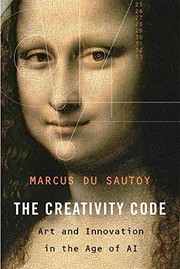
A mathematician examines exactly where AI creativity begins and ends, giving the reader a precise, non-fuzzy understanding of what 'human creativity' actually means as a career asset — and where it still has a genuine moat.

Makes the evidence-based case that empathy, storytelling, social sensitivity, and collaborative problem-solving are becoming more economically valuable as AI handles more cognitive routine work — directly translating the automation map into a skills investment thesis.
Building the Plan: Retraining, Positioning, and Career Reinvention
IntermediateTranslate all prior analysis into a concrete, personalized retraining and repositioning plan — knowing how to learn new skills efficiently, how to signal value in an AI-augmented labor market, and how to make the transition without financial ruin.
▸ Study plan for this stage
Pace: 8–10 weeks total: ~2.5–3 weeks per book at 20–25 pages/day. Suggested breakdown — Week 1–3: "Range" (272 pages); Week 4–6: "Ultralearning" (304 pages); Week 7–9: "Co-Intelligence" (256 pages); Week 10: integration, reflection, and exercise completion. Reading sessions of 30–45 minutes daily work wel
- Range (Epstein): The 'sampling period' advantage — why breadth of experience and late specialization often outperforms early hyper-specialization in complex, unpredictable environments like AI-disrupted labor markets
- Range (Epstein): 'Kind' vs. 'wicked' learning environments — AI excels in kind environments with clear rules and feedback loops, making wicked-environment skills (ambiguity, novel problem-framing, cross-domain synthesis) your durable competitive edge
- Range (Epstein): Analogical thinking and outside-view reasoning as transferable meta-skills that compound across career pivots and resist automation
- Ultralearning (Young): The nine Ultralearning principles — especially Directness (practice the actual target skill, not a proxy), Retrieval (testing over re-reading), and Feedback (seeking harsh, corrective signal over comfortable validation)
- Ultralearning (Young): Metalearning maps — researching HOW to learn a new field before diving in, identifying the concepts, facts, and procedures that unlock the rest, to avoid wasted retraining effort
- Ultralearning (Young): The 'drill' technique for isolating and attacking your weakest sub-skills, enabling rapid, targeted upskilling on a constrained timeline and budget
- Co-Intelligence (Mollick): The 'Jagged Frontier' model — AI has uneven, non-obvious capability boundaries, so career positioning requires continuous, hands-on probing of what AI can and cannot do in your specific domain
- Co-Intelligence (Mollick): Human-AI collaboration as a new core competency — the skill of prompting, directing, evaluating, and iterating with AI systems (acting as 'editor-in-chief' rather than sole producer) is itself a high-value, learnable skill that signals modern relevance to employers
- After reading Range, can you identify at least three specific skills or experiences from your own 'sampling history' that represent cross-domain advantages an AI or narrow specialist would struggle to replicate — and articulate why they matter in a wicked learning environment?
- Can you construct a full metalearning map (as described in Ultralearning) for one new skill you need to acquire — listing the key concepts to master, the most direct practice methods, and the feedback sources you will use?
- Using the Ultralearning drill technique, can you pinpoint the single highest-leverage sub-skill bottleneck in your current retraining plan and design a focused 2-week drill to attack it?
- Based on Co-Intelligence's Jagged Frontier model, can you map at least five specific tasks in your target role or industry onto a spectrum from 'AI will own this soon' to 'human judgment remains essential' — and explain the reasoning behind each placement?
- How would you combine Epstein's argument for range with Young's principle of Directness — which might seem to be in tension — into a coherent personal learning strategy that is both broad enough to be resilient and focused enough to be credible?
- Drawing on all three books, how would you pitch your value to a hiring manager or client in an AI-augmented workplace — specifically addressing what you do better with AI, what you do better than AI, and how your range makes you adaptive?
- RANGE AUDIT (after Epstein): Write a 1–2 page 'Career Range Inventory.' List every role, hobby, discipline, or project you've engaged with seriously. For each, identify one transferable cognitive skill it built (e.g., systems thinking, stakeholder negotiation, pattern recognition across domains). Then highlight the top three combinations that are rare, hard to automate, and relevant to your target
- METALEARNING SPRINT (after Young, Ch. 1–3): Before starting any new course or certification, spend one focused week doing only metalearning on your target skill. Interview one practitioner, read the table of contents of the top three textbooks, watch one expert's 'how I'd learn this from scratch' video, and produce a one-page learning map: what to learn, in what order, using which resources, measu
- ULTRALEARNING DRILL CYCLE (after Young, Ch. 7): Identify your current weakest sub-skill in your retraining target. Design a 14-day drill: daily 30-minute focused practice sessions on ONLY that sub-skill, with a measurable output each session (e.g., 3 solved problems, 1 written analysis, 1 recorded explanation). Log your output and score it against a rubric. At day 14, reassess and pick the next bo
- JAGGED FRONTIER MAPPING (after Mollick): Choose your current or target job title. List 15–20 specific tasks the role involves. For each task, spend 15 minutes actually trying to complete it using a current AI tool (ChatGPT, Claude, Copilot, etc.). Rate AI performance: Excellent / Good / Mediocre / Poor. Write a one-paragraph analysis of the pattern you see — where is the frontier jagged in your fi
- AI COLLABORATION PORTFOLIO (after Mollick, ongoing): Over the final two weeks of the stage, complete three real work products — one entirely solo, one AI-assisted with you as director/editor, one as an experiment pushing AI to its limit. Compare quality, speed, and your own learning. Package the AI-assisted piece with a short 'process note' explaining your role. This becomes a portfolio artifact d
- INTEGRATED REINVENTION ROADMAP (capstone, Week 10): Synthesize all three books into a single 2–3 page personal document containing: (1) Your Range-based positioning statement — the unique cross-domain value you offer; (2) Your Ultralearning retraining plan — skills, timeline, methods, drills, feedback loops; (3) Your Co-Intelligence strategy — how you will work with AI tools in your target role an
Next up: By completing this stage, the reader has moved from diagnosis to a concrete, personalized action plan — knowing what to learn, how to learn it fast, and how to position themselves in an AI-augmented market — which sets the foundation for the next stage, where the focus shifts to executing that plan in the real world: building financial resilience, navigating the job market, and sustaining momentum
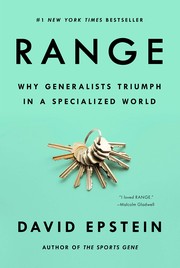
Provides the strategic case for breadth and cross-domain thinking as a career hedge — directly countering the 'specialize deeply or die' anxiety and showing how generalist, integrative thinkers thrive precisely when AI handles narrow expertise.
Gives a practical, battle-tested methodology for rapidly acquiring new skills outside formal education — essential for anyone who needs to retrain without the luxury of a two-year degree program. Turns the abstract retraining plan into executable steps.

The ideal capstone: written by a Wharton professor actively researching AI in the workplace, it teaches how to work alongside AI tools as a force multiplier rather than a competitor — the practical mindset and workflow for thriving in the near-term economy the reader is now fully equipped to navigate.
Discussion
Keep reading
Paths that share books, cover the same subject, or open a related topic.