Most people leave school with almost no picture of African history beyond slavery and colonialism — which is like knowing Europe only through two of its worst centuries. The continent holds ancient empires, sophisticated trade networks, rich oral traditions, and a modern politics shaped by forces still unfolding. It is worth learning because so much of the world's story runs through it, and hard to self-teach because the sources are uneven and the interpretations are genuinely contested.
That contestation is the point, not a flaw. This path deliberately gathers competing perspectives — outsider surveys, insider histories, radical polemics, and literary voices — because no single book holds the whole truth. Read them together and hold your conclusions loosely.
Why the order matters
Jump straight into a fierce argument about colonialism and you will lack the map to judge it. Build the map first, then let the strong arguments sharpen your thinking.
The path, stage by stage
Begin wide. Africa by John Reader is a sweeping, deep-time history of the continent from its geology and earliest humans forward — the big canvas. Pair it with African History by Parker, John/ Rathbone, Richard, a compact scholarly introduction to how historians actually study the field and where the debates lie.
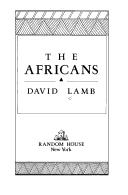
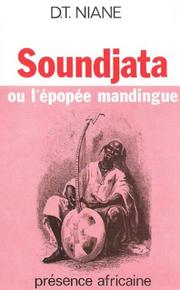
Next, hear the continent in its own voices and stories. The Africans by David Lamb is a journalist's ground-level portrait of post-independence nations, and Sundiata by Djibril Tamsir Niane preserves a West African epic that shows history carried through oral tradition rather than archives.
Then confront the rupture. The slave trade by Hugh Thomas is a monumental account of the Atlantic trade that reshaped three continents; Lose your mother by Saidiya V. Hartman turns that history inward, tracing its human and psychological afterlife. For the argument that this destruction was deliberate and civilizational, read The Destruction of black civilisation by Chancellor Williams — a polemic to engage critically, not to swallow whole.
Finally, reach the modern era. The fate of Africa by Martin Meredith is the standard narrative history of independence and its turbulent aftermath, and Africa's world war by Gérard Prunier anatomizes the catastrophic conflict in the Congo. Close with two shorter, essayistic voices — Wretched of the Earth by Riley Quinn on the psychology of decolonization, and We Should All Be Feminists by Chimamanda Ngozi Adichie on the continent as a living, contemporary culture rather than a museum piece.
How to actually study this
Keep a timeline as you go — empires, the trade, the colonial carve-up, independence — because the books jump around and a spine keeps you oriented. When two authors clash on causes or blame, write both cases in a sentence each; that habit is the whole skill. And watch for whose voice is telling the story: an outside journalist, an African historian, and a novelist are describing the same events with different stakes.
Read the overviews cover to cover and the denser histories chapter by chapter. See the full reading path for the staged study plan, and the subject hub for how it links to empire and diaspora. To explore neighboring topics, browse /subjects.
Ready to learn something deeply?
Build a reading path — free