Wilkie Collins Reading Order: Where to Start with the Victorian Sensation Novels
Collins wrote what T. S. Eliot called the first and greatest of English detective novels, invented most of the machinery the genre still runs on, and then spent a century filed as Dickens's friend. The order is unusually clear: the two great sensation novels first, because they are the reason anyone comes here, then the stranger and more radical books of the 1860s, then the campaigning novels of the 1870s, and finally the apprentice work, which is worth reading only once you know what it was leading to.
Start Here: The Two Masterpieces
BeginnerRead the two novels Collins's reputation rests on, in the order that shows the technique developing, and see the device he essentially invented: a story assembled from the testimony of people who each know part of it.
▸ Study plan for this stage
Pace: Five to six weeks. The Woman in White runs past 540 pages and The Moonstone about 450, both originally serialised in weekly parts — reading two or three chapters a sitting reproduces the rhythm they were built for and is far better than sprinting. Three weeks for the first, two to three for the seco
- The device that defines both books: a narrative assembled from documents and testimony, each witness knowing only part of the story. Collins frames The Woman in White explicitly as evidence presented as at a trial, which is where the technique comes from.
- Because each narrator is limited, characterisation and plot advance by the same mechanism — what a witness notices, misunderstands or conceals is simultaneously information about the crime and about the witness.
- Count Fosco is the century's best villain because Collins makes him genuinely charming, physically absurd and intellectually superior to everyone opposing him, including the reader. Marian Halcombe is the only character who can see him and she is the one nobody will listen to.
- The Moonstone applies the same method to a theft and in doing so lays down the furniture of the detective genre: the country house, the closed circle of suspects, the incompetent local police, the brilliant outside investigator, the least likely culprit, the reconstruction of the crime.
- Sergeant Cuff is the ancestor of the eccentric professional detective — hobbyhorse, deductive flourish, and a solution he gets substantially wrong, which is a subtlety later imitators dropped.
- The Moonstone's frame — the diamond's looting from India and the three Brahmins pursuing it — makes the theft at the centre of the plot the second theft in the book, not the first. Collins puts that on the first page.
- Both novels are engines for anxiety about identity and the legal machinery around it: who a person can be proved to be, and what happens when the documents say otherwise.
- How does the multiple-narrator structure of The Woman in White let Collins withhold information without cheating the reader? Find the point where you first know more than the narrator does.
- Marian Halcombe is the novel's most capable mind and cannot act. What does Collins gain by that constraint, and what is he arguing through it?
- Fosco is allowed to write his own narrative near the end. What does giving the villain the pen do to your judgement of him?
- In The Moonstone, which of Sergeant Cuff's conclusions are wrong, and how does the novel arrange for him to be wrong in an interesting rather than a merely embarrassing way?
- The opening of The Moonstone concerns the siege of Seringapatam. How does that prologue change how you read the English theft at the centre of the book?
- Which narrators in either novel are unreliable through self-interest and which through simple limitation? The distinction matters for how the plots resolve.
- For The Woman in White, list every narrator with the number of pages they get and what they alone know. The distribution is the plot's architecture.
- Reconstruct the actual chronology of events in The Woman in White in date order, separately from the order the book delivers them. Note every place the gap does work.
- In The Moonstone, write a one-page account of the night of the theft using only what Betteredge could have known, then a second using only what Franklin Blake could have known.
- Take Miss Clack's narrative in The Moonstone and mark every sentence where the comedy comes from what she does not realise she is telling you.
- Summarise in 200 words what Collins had to invent to make The Moonstone work, and which of those inventions are still standard in detective fiction.
Next up: With the technique and its most controlled uses in hand, you are ready for the two novels where Collins pushes the same machinery past what respectable Victorian fiction was supposed to permit.

The right first Collins, not The Moonstone. The opening encounter on a moonlit Hampstead road is one of the great hooks in English fiction, and Count Fosco — fat, charming, keeping white mice in his waistcoat — is the best villain of the century.
Second, because it is the same multiple-narrator method applied to a stolen diamond and turned into the template for the entire detective genre: the country house, the bungling local police, the brilliant outside investigator, the least likely culprit. Sergeant Cuff is the ancestor of everyone who follows.
The Strange Ones
IntermediateRead the two enormous novels Collins wrote between his masterpieces, where the plotting gets wilder and the social argument gets sharper than anything Dickens attempted.
▸ Study plan for this stage
Pace: Seven to eight weeks — this is the longest stage on the path, over a thousand pages between the two. No Name is around 550 pages and Armadale longer still. Three to four weeks each at 25 pages a day, and do not attempt them back to back without a break; both are exhausting on purpose.
- No Name turns on a real legal cruelty: children born before their parents' marriage were illegitimate regardless of what the parents later did, and could be disinherited by a technicality. The plot is an argument about the law dressed as a revenge story.
- Magdalen Vanstone sets out to recover the money by fraud, disguise and a marriage she finds repellent. Collins declines to punish her in proportion to her transgressions, and the novel's refusal to moralise is the reason it startled readers.
- Magdalen is an actress by talent before she is a criminal by necessity — Collins ties her capacity for deception to a performing gift, which lets him make her sympathetic while she is doing indefensible things.
- Armadale is his most excessive book: two men with the same name, a prophetic dream used as a plot spine, and a plot that keeps doubling back on inherited guilt.
- Lydia Gwilt is the novel's centre of gravity even though she is a forger, a bigamist and a poisoner. Her diary hijacks the book, and Collins gives her the wit and the self-knowledge nobody else has.
- Contemporary reviewers found Armadale genuinely immoral rather than merely sensational, which is a useful marker of where the line sat and of how deliberately Collins was standing on it.
- Both novels test the same question: what is a woman without money, name or legal standing entitled to do? The books answer it differently, and neither answer is the one Victorian convention required.
- Read as a pair, No Name is the sharper argument and Armadale the wilder performance. The transgressions of the second double the first, which is why the order matters.
- Does No Name endorse what Magdalen does? Point to the specific narrative choices — outcomes, sympathies, final pages — that support your answer either way.
- Collins ties Magdalen's talent for disguise to her talent for acting. What does that connection let him say that a straightforward criminal heroine could not?
- Lydia Gwilt's diary is more alive than the third-person narration around it. What does Collins do formally to make that happen, and why is it dangerous for the book?
- Armadale hangs an enormous plot on a dream. Does the novel treat the dream as supernatural, as psychological, or does it refuse to decide?
- Reviewers called Armadale immoral. On the evidence of the text, what exactly were they objecting to — the acts described, the sympathy extended, or the absence of punishment?
- Compare the fate Collins arranges for Magdalen with the one he arranges for Lydia. What accounts for the difference?
- Write out the legal situation at the start of No Name in plain modern language, in under 200 words. If you cannot, reread the opening chapters — the whole plot depends on getting it exact.
- Track Magdalen's disguises across No Name, recording for each what she gains and what she loses. Plotted in order, the list is her character arc.
- Extract Lydia Gwilt's diary entries from Armadale and read them consecutively as a standalone narrative. Write 300 words on what the surrounding novel adds and what it dilutes.
- Take the dream sequence in Armadale and list its elements against the events that later fulfil them. Judge how many are genuinely predictive and how many are retrofitted.
- Make the case in one page that No Name is a better novel than The Woman in White, using only structural evidence. Then decide whether you believe it.
Next up: You have now seen how far Collins would push a plot for its own sake; the next stage shows what happened when he began pushing it in service of specific reforms instead.
Two sisters are disinherited by a legal technicality and one of them sets out to steal the money back by fraud and seduction. Magdalen Vanstone is the most extraordinary heroine in Victorian fiction and the novel never punishes her properly, which is the point. Read it third.
Eight hundred pages, two men with the same name, and Lydia Gwilt — a forger, poisoner and diarist who takes over her own book. Collins's most excessive novel and the one his contemporaries found genuinely immoral. Read after No Name, whose transgressions it doubles.
The Campaigning Novels
IntermediateFollow Collins into the 1870s, where the sensation plotting is bent toward specific social arguments, and judge for yourself the usual verdict that the late work declines.
▸ Study plan for this stage
Pace: Six to seven weeks for four books totalling roughly 1,450 pages. Man and Wife is the longest at about 480 pages and deserves two weeks; The Law and the Lady around 375; The New Magdalen is short at under 270 and goes in a few days; Heart and Science about 335. Read them in the listed order.
- Man and Wife attacks two targets at once: the incoherence of British marriage law across England, Scotland and Ireland, under which a couple could be married in one jurisdiction and not another, and the Victorian cult of athletic manhood. Geoffrey Delamayn embodies the second and exploits the first.
- The marriage-law plotting is not decoration — Collins researched it, appended documentation, and built the novel so that the injustice is inseparable from the suspense.
- The Law and the Lady turns on the Scottish 'not proven' verdict, which acquits without clearing, and gives a wife the job of investigating her own husband's past. It has a strong claim to be the first full-length English novel with a woman detective as its protagonist.
- Valeria Woodville investigates by social means — visits, conversation, persuasion — rather than by official authority, because those are the only tools available to her. The method is dictated by her position, which is the novel's quiet argument.
- The New Magdalen puts a former prostitute at its centre, has her take a dead woman's identity to escape her past, and pointedly refuses to make her repent. Collins's quarrel with respectability is at its plainest here.
- Heart and Science is an anti-vivisection novel with a frightening scientist villain, written when Collins's commitment to a cause was overtaking his commitment to a plot. It is thin in places and is included so you can see where the line was crossed.
- The standard verdict is that the late work declines. Reading four of them consecutively lets you test that: some of what is called decline is Collins subordinating suspense to argument, which is a change of aim as much as a loss of skill.
- Across all four, the campaigning target is the same underlying thing — institutions that define who counts as respectable and then punish people for failing the definition.
- In Man and Wife, where does the legal argument strengthen the suspense and where does it interrupt it? Be specific about chapters.
- Valeria Woodville has no official standing. Which of her investigative methods would be unavailable to a professional detective, and does that make her more or less effective?
- The New Magdalen withholds repentance from its heroine. What does the novel put in its place, and how do the other characters function as a test of the reader?
- Heart and Science argues a case. At what point does the argument start to dictate character behaviour rather than emerge from it?
- The received view is that Collins's late novels decline. Having read four, what is your evidence for and against — and is the change one of ability or of purpose?
- Compare the villain of Man and Wife with Count Fosco. What has changed about the kind of threat Collins is now interested in?
- Summarise the marriage-law problem dramatised in Man and Wife in 250 words, then identify the three plot turns that would be impossible without it.
- List every step of Valeria's investigation in The Law and the Lady in order, marking each as social, documentary or accidental. The proportions tell you what kind of detective novel this is.
- Read The New Magdalen in two or three sittings and write 200 words on what the book expects the reader to have assumed at the start and to have surrendered by the end.
- Take Heart and Science and mark passages that exist to advance the anti-vivisection case rather than the story. Write a paragraph on whether the novel survives them.
- Rank the four books in this stage by quality and write one sentence of justification each; then rank them by argumentative force and note how far the two lists differ.
Next up: Having followed Collins forward to the end, you can now go back to the beginning and recognise the parts of the machine as they are being made.
An attack on the chaos of British marriage law and on the cult of athleticism, with a brutal husband at its centre. The first of the late campaigning books and the best-plotted of them.
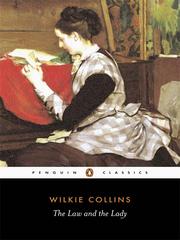
A wife investigates her own husband's Scottish not-proven murder verdict — arguably the first full-length novel in English with a female detective as protagonist. Historically the most significant of the late books.
A former prostitute takes a dead woman's identity to escape her past, and Collins refuses to make her repent for it. Read here as the clearest statement of his lifelong quarrel with respectability.

An anti-vivisection novel with a genuinely frightening scientist villain. Late, thin in places, and included for readers who want to see how far the campaigning impulse eventually took over.
The Early Novels
IntermediateGo back to the 1850s apprentice work and watch the sensation novel being assembled piece by piece, which is only interesting once you know the finished machine.
▸ Study plan for this stage
Pace: Four to five weeks for roughly 1,025 pages across three books, each around 310 to 360 pages. About ten days each. Read The Dead Secret last and, if you have time, follow it immediately with a reread of the opening chapters of The Woman in White.
- Basil is startlingly frank for its date — a secret marriage and a sexual obsession described more directly than mid-century convention allowed — and Collins dedicated it defiantly in the expectation of hostile reviews. It is the first clear sign of the writer he would become.
- Basil's confessional first-person narration is the seed of the testimony technique: a narrator telling his own story in order to be judged.
- Hide and Seek — catalogued under its longer published title, Hide and Seek, or, The Mystery of Mary Grice — was Dickens's favourite of the early books, and its deaf heroine is written with markedly more attention than Victorian fiction usually gave a disabled character.
- Collins's recurring interest in characters whose bodies or legal status cut them off from ordinary communication starts here and runs through the blind heroine of the last stage and the mute and confined figures of the great novels.
- The Dead Secret is the immediate predecessor of The Woman in White and reads as its rehearsal: a secret hidden in a locked room of a Cornish house, a household organised around not knowing, and a plot that depends on a document.
- What these three lack is not invention but control. The suspense machinery is present and the calibration is not — which is precisely why reading them after the masterpieces is instructive and reading them first would be discouraging.
- All three were shaped by serial publication and by Collins's apprenticeship in Dickens's magazines. The chapter-end hooks are visible as technique before they became second nature.
- What in Basil would have shocked its first reviewers, and what did Collins do formally to make it publishable at all?
- How does the deaf heroine of Hide and Seek function in the plot — as an obstacle, as a source of suspense, or as a character with her own agency? Does the answer change across the novel?
- The Dead Secret and The Woman in White share a structure. Name three specific things the later novel does better and one the earlier does at least as well.
- Which of the three early books has the most confident narration, and does confidence correlate with quality here?
- Reading these after the mature work, what looks like an accident of the early novels and what looks like a lifelong preoccupation arriving early?
- Write 200 words on Basil as a first-person confession, then compare it directly to Walter Hartright's narration in The Woman in White and note what Collins learned.
- In Hide and Seek, list every scene where deafness changes what information reaches which character. That list is the novel's plot mechanism.
- Read The Dead Secret and then reread the first hundred pages of The Woman in White immediately. Write a page on what the later novel does with the same materials.
- For each of the three books, identify the single scene that most obviously anticipates a later Collins novel, and say which one.
Next up: One stage remains: the shorter and odder work, where Collins writes at lengths the serial market did not usually let him choose.

An 1852 novel about a secret marriage and a sexual obsession, startlingly frank for its date and dedicated defiantly to a reviewer who was expected to hate it. The first sign of what he would become.
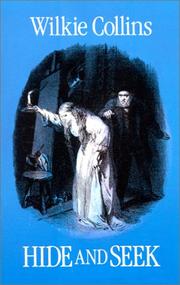
Catalogued under its full title, Hide and Seek, or, The Mystery of Mary Grice. Dickens's favourite of the early books, and notable for a deaf heroine written with far more care than Victorian fiction usually managed.
A secret hidden in a locked room of a Cornish house — the last novel before The Woman in White and effectively its rehearsal. Read it directly before rereading the first book on this path.
The Short Fiction and the Curiosities
IntermediateFinish with the shorter work, where Collins is at his most gothic and least concerned with the length demanded by serial publication.
▸ Study plan for this stage
Pace: Two to three weeks. The Haunted Hotel is under 200 pages and can be read in two sittings; Poor Miss Finch runs to about 430 and needs a week and a half. Read the short one first so the contrast in pacing is unmistakable.
- The Haunted Hotel is a Venetian ghost story with a murder plot underneath it, and it is among the most efficient things Collins wrote — no subplots, no padding, the reveal arriving where it should.
- Its efficiency is evidence about the big novels: the sprawl of The Woman in White or Armadale is largely a commercial constraint of serial publication, not a natural habit of the writer.
- The Countess in The Haunted Hotel is a late variation on the Lydia Gwilt figure — a woman who is both the criminal and the most compelling consciousness on the page — compressed into a fraction of the space.
- Poor Miss Finch is Collins at his most absurd on paper: a blind heroine whose sight may be restorable, a man turned permanently blue by silver nitrate treatment for epilepsy, and an identical twin impersonation that turns on the heroine's inability to see.
- The blue-skin device is not a joke Collins is making; it comes from real contemporary medical treatment, and he uses it to build a plot in which a physical fact and a perceptual limitation lock together.
- The novel is oddly moving in practice, and the reason is that its heroine's judgement of the two men is made without sight and is therefore not correctable by the reader's own prejudices.
- Both books are the end of the path rather than an appendix to it: taken together they show Collins choosing his own length and choosing his own strangeness once he no longer had to justify either.
- The Haunted Hotel is short and Armadale is enormous. Which is the better-made book, and what does your answer say about serial publication as a constraint?
- Where exactly does The Haunted Hotel decide whether it is a ghost story or a murder mystery, and does the decision hold?
- Poor Miss Finch is built on a coincidence most novelists would refuse. What does Collins do to make it survive the reader's disbelief?
- How does the heroine's blindness in Poor Miss Finch change what the reader is allowed to know, and how does that compare with the withholding techniques of The Moonstone?
- Having now read across Collins's whole career: which single book would you give someone who has never read him, and has your answer changed since the first stage?
- Read The Haunted Hotel in one or two sittings and outline its structure by chapter. Compare that outline with your Armadale notes and write 200 words on what the length changes.
- In Poor Miss Finch, list every plot turn that requires the heroine not to see. Then decide whether the novel is exploiting the condition or building on it.
- Write a one-page defence of Poor Miss Finch to a reader who dismissed it after the blue-skin reveal, using only what the novel does with the device afterwards.
- Draw up your own five-book Collins reading order for a newcomer, with one sentence of justification per slot, and note where it differs from the order you have just followed.
Next up: This closes the path: you have read Collins from the apprentice novels to the late curiosities and can judge for yourself whether the reputation as Dickens's friend was ever the right filing.
A short Venetian ghost story with a murder plot underneath it, and one of the most efficient things he wrote. A good demonstration that the sprawl of the big novels was a commercial constraint, not a habit.
A blind heroine, a man turned blue by silver nitrate, and an identical twin impersonation. Absurd on paper and oddly moving in practice — the last stop for readers who have decided they will read everything.