Start with The Woman in White. It opens with a woman in white stopping a man on a moonlit road outside London and never lets the tension go, and it contains Count Fosco — fat, charming, fond of his pet mice, and the most entertaining villain in Victorian fiction.
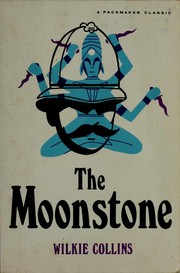
Then The Moonstone, which T. S. Eliot called the first and best English detective novel. The claim is arguable but the influence is not: a stolen jewel, a country-house theft, a methodical professional detective, multiple narrators contradicting each other, and a solution that is genuinely fair to the reader.
Those two are the reason to read Collins, and they are the only ones most people need. Everything after this is for readers who finished them and wanted more.
What the sensation novel actually was
Collins wrote at the centre of a 1860s craze for novels of bigamy, forged identity, wrongful confinement and inheritance fraud — respectable domestic settings with a crime underneath. The genre was attacked at the time for exciting the nerves rather than improving the mind. What makes Collins durable is that his plots turn on real legal disabilities: what a married woman could not own, how easily a sane person could be confined, what an identity actually consisted of when it rested on a parish register.
The strong second tier
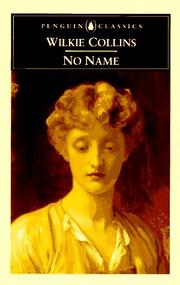
No name is about two sisters left illegitimate and penniless by a technicality of marriage law, and its heroine is a genuinely startling creation — she responds with a long, cold campaign of fraud, and the novel refuses to condemn her. Armadale has the other great Collins villain in Lydia Gwilt, whose diary is the best thing in it.
The campaigning novels
Collins increasingly used fiction to argue: Man and Wife against the chaos of Scottish and English marriage law and against the cult of athleticism, The Law and the Lady with an amateur woman detective, The new Magdalen about a former prostitute attempting respectability. The arguments are sincere and the novels are more didactic than the great two. Heart and Science is the thinnest of them, an anti-vivisection novel, and only for the committed.
The early and the odd
Basil is early and lurid. Hide and seek, or, The mystery of Mary Grice — the doubled title is the period's convention, not two books — has a deaf heroine drawn with real care. The dead secret, The Haunted Hotel and Poor Miss Finch are the remaining curiosities, the last of these involving a blind heroine and blue-skinned twins, which gives the flavour.
Where to stop
The Woman in White and The Moonstone, and there is no shame in that at all — they are the two best things he did by a distance. No name and Armadale if you want the fuller sensation novelist. The campaigning novels are for readers interested in what Victorian fiction was being used to argue.
A practical note: Collins wrote for serial publication, so the novels are long and built around regular cliffhangers. That structure is a feature when read a few chapters at a time and can feel repetitive when read straight through.
Follow the full ordered path here: Wilkie Collins Reading Order: Where to Start with the Victorian Sensation Novels.
Ready to learn something deeply?
Build a reading path — free