Western Movies: The Best Books to Read, in Order
The Western is the most heavily theorised genre in American cinema, and the literature divides cleanly into people explaining how it works and people arguing about what it is doing to its audience. This path takes the structuralist grammar first, then the big interpretive arguments — Tompkins on masculinity, Slotkin on regenerative violence — then John Ford and the silent era the genre actually grew out of, then the revisionist turn and the question of who the Western erases, and finally the Italians who dismantled the whole thing from outside.
The genre's grammar
IntermediateAnalyse a Western in the terms the criticism uses — the wilderness and garden opposition, the individual against the community, the closing frontier — and place any given film in the genre's chronology and its production history
▸ Study plan for this stage
Pace: Four weeks, and only two of these three are read cover to cover. Jim Kitses's Horizons West (342 pages) is the one to work through properly — it is an argument, not a survey, and 25 to 30 pages a sitting is the honest rate for structuralist criticism. Mary Lea Bandy's Ride, boldly ride (344 pages) i
- The wilderness-and-garden opposition and the rest of Kitses's antinomies, which every later critic on this path either uses or attacks
- Auteur criticism applied to a genre: Ford, Mann, Boetticher and Peckinpah working the same oppositions differently
- The genre's chronology — silent, classical, postwar, revisionist — as Bandy lays it out
- Studio production history as a constraint on what a Western could be in a given period
- The difference between a genre's iconography and its structure, and why only one of them is portable
- How to place an unfamiliar Western by its look, its studio and its date of release
- What are Kitses's antinomies, and which pair does a given film actually turn on?
- Where does Bandy's chronology contradict the tidy periodisation Kitses's auteur readings imply?
- What can you learn from a Buscombe entry that neither of the other two books will tell you?
- Which of the four directors Kitses treats fits his framework worst, and why does he keep him anyway?
- If you had to place an unlabelled Western within a decade, what three features would you use?
- Watch one Ford, one Mann and one Boetticher, then map each onto Kitses's oppositions on a single sheet and note where a film refuses to sit on either side.
- Take a film Bandy covers in a paragraph and look up its studio, its star and its year's production cycle in Buscombe; write what the reference adds that the survey omitted.
- Pick a Western you already knew well and rewrite your own summary of it in Kitses's vocabulary — then say what the vocabulary made you miss.
- Keep a running list of films mentioned by all three books; the overlap is the working canon the rest of the path assumes.
Next up: With the grammar in hand you can now follow the two big arguments about what the genre is doing to its audience — which is what stage two is for.
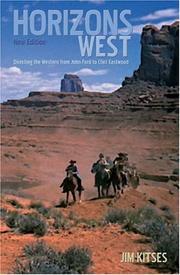
The founding structuralist account, and the source of the wilderness-versus-civilisation antinomies every later critic argues with. Kitses reads Ford, Mann, Boetticher and Peckinpah as auteurs working the same set of oppositions. Start here: it gives you the vocabulary the rest of the path assumes.

The reference volume — historical entries, filmographies, studio and star histories, and essays on the genre's periods. Not a book to read straight through; the thing you check every time a name, cycle or studio comes up in the other books.

Catalogued as Ride, boldly ride. Bandy and Stoehr's chronological survey from the silents to the twenty-first century, and the best single overview of what the genre has actually contained. Read it third, once Kitses has given you something to sort the films with.
What the Western is really doing
IntermediateArgue for and against the two big claims about the genre — that it is a formal ritual with a fixed set of plots, and that it is a myth of regeneration through violence — and identify which one a given film supports
▸ Study plan for this stage
Pace: Six weeks, and the imbalance is the point: 850 pages of Richard Slotkin's Gunfighter Nation against 272 for Jane Tompkins's West of Everything and 138 for John Cawelti's The six-gun mystique. Read Tompkins first and quickly — a week, and it will change how you watch a saloon scene. Read Cawelti next
- Regeneration through violence as a myth with a political function, not merely a plot device
- Tompkins's reading of the Western as a reaction against nineteenth-century women's sentimental fiction
- Formula criticism: the Western as a stable popular ritual, which is Cawelti's position
- The three incompatible claims — formal ritual, gendered reaction, political myth — and what evidence would settle between them
- Silence, pain, landscape and the refusal to feel as a described system rather than a mood
- Why a genre's repetition satisfies rather than bores, on Cawelti's account
- What is Tompkins claiming the Western is a reaction against, and what evidence does she offer that is not from the films themselves?
- How does Slotkin connect a film cycle to a specific political moment, and where is that connection weakest?
- Which of the three positions best explains a Western you have watched this month, and which explains it worst?
- What does Cawelti's formula account predict that Tompkins's cannot, and vice versa?
- Cawelti later revised the argument in The Six-Gun Mystique Sequel — what in the original would you expect him to have changed?
- Watch a single Western twice in a week, once with Tompkins's argument in mind and once with Slotkin's, and write the two different films you saw.
- Take Cawelti's formula and test it against a Western that obviously breaks it; decide whether the formula bends or the film is outside the genre.
- Find one claim in Slotkin that rests on a specific historical event and check it against a general history — then judge whether the film reading survives.
- Write a page arguing against Tompkins using only films she does not discuss.
Next up: You now have arguments about the genre in the abstract; the next stage tests them against the one director and the one period that made the conventions in the first place.
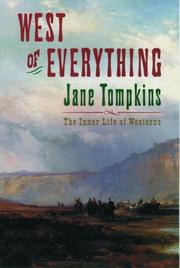
Tompkins reads the Western as a reaction against nineteenth-century women's sentimental fiction — a genre organised around silence, pain, landscape and the refusal to feel. The most disorienting book in the path and the one that changes how you watch a saloon scene.

The third volume of Slotkin's trilogy on the frontier myth, after Regeneration Through Violence and The Fatal Environment, and the one that deals directly with twentieth-century film and politics. Read this volume alone if you read only one; it stands on its own and covers the movies.

Catalogued as The six-gun mystique. Cawelti's formula criticism treats the Western as a popular ritual with a stable structure, which is the cleanest counterposition to Tompkins and Slotkin. Short, and the best account of why the same plot satisfies repeatedly. Cawelti later revised the argument in The Six-Gun Mystique Sequel.
Ford, Monument Valley, and where it came from
IntermediateAccount for John Ford's dominance of the genre without accepting the legend, and understand how much of the Western's iconography was fixed before sound
▸ Study plan for this stage
Pace: Six to seven weeks, dominated by one very long book. Read Scott Simmon's The invention of the western film (393 pages) first, before either Ford book — it is the most surprising history here, and it shows the conventions being assembled before sound, including a strand of early Westerns sympathetic
- The silent Western as the period in which the iconography was fixed, not the sound era
- Early sympathetic portrayals of Native characters, and their disappearance
- Ford's self-mythology and the specific places McBride shows the record contradicting it
- How a historical event becomes a novel and then a film, traced step by step in Frankel
- Monument Valley as a production decision with a history rather than a natural fact about the genre
- The difference between a biography's evidence and a critic's reading of the same films
- What conventions does Simmon show were already fixed before sound, and which ones were not?
- Where does McBride catch Ford's account of his own career being false, and does it change how you read the films?
- What did Alan Le May's novel change about the Parker abduction, and what did Ford change about the novel?
- How does Ford's treatment of Native subjects change across his career on McBride's evidence, and is the change a conversion or a correction?
- Which of the arguments from stage two does the silent-era material support, and which does it undercut?
- Watch a silent Western Simmon discusses, then a Ford sound Western, and list every convention present in both.
- Read Frankel's account of the abduction, then watch The Searchers and mark each point at which the film departs from the record he establishes.
- Use McBride to date and contextualise three Ford films, then check what Kitses said about the same three; note where biography and structural reading pull apart.
- Track one Ford collaborator — a writer, a cinematographer, a stock-company actor — through McBride's index and see how much of the 'Ford style' is theirs.
Next up: The classical genre is now fully in view, which is the only position from which its collapse and reinvention makes sense.
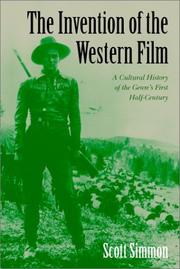
Catalogued as The invention of the western film. Simmon shows the genre's conventions being assembled in the silent era, including the strand of early Westerns sympathetic to Native characters that the sound era abandoned. The most surprising history in the path — read it before the Ford books.
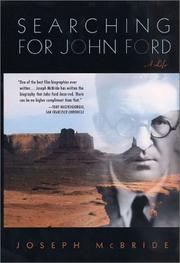
The major biography, and unusually good at separating Ford's self-mythology from the record — the Irish background, the studio politics, the contradictions in his treatment of Native subjects. Scott Eyman's Print the Legend covers the same life if you want a second account.

Catalogued as The searchers. Frankel traces one film back to the 1836 abduction of Cynthia Ann Parker, then forward through Alan Le May's novel to Ford's production. The best demonstration in the path of how a Western converts a historical atrocity into a myth.
The revisionist turn and who gets erased
IntermediateTrack the genre's collapse and reinvention from the late 1950s through Peckinpah and after, and evaluate the Western's representation of Native peoples as a subject in its own right rather than as a footnote
▸ Study plan for this stage
Pace: Four weeks for 1,006 pages, and all three read at roughly the same trade-paperback rate. Take Glenn Frankel's High noon (390 pages) first: it is the blacklist read through one production, with Carl Foreman writing the screenplay while under subpoena, and it makes the political-allegory reading concr
- A Western carrying contemporary politics that could not be stated openly, and how the allegory was built
- The revisionist turn as a change in what violence was allowed to look like on screen
- Production history as evidence: locations, budgets, ratings boards and censorship shaping the finished film
- The representation of Native peoples as a subject in its own right rather than a footnote to auteur criticism
- Why the sympathetic revisionist Westerns have problems of their own, on the Rollins and O'Connor essays
- What 'the end of the classical Western' actually names, and whether the genre in fact ended
- How was High Noon's allegory constructed, and who at the time said out loud what it was about?
- What did The Wild Bunch make possible for the genre, and what did it make impossible?
- Which revisionist Westerns do the Hollywood's Indian essayists find most compromised, and on what grounds?
- Does the revisionist turn change the genre's structure, in Kitses's sense, or only its surface?
- Whose story is a sympathetic Western still not telling, on the evidence of this stage?
- Watch High Noon after reading Frankel and identify the scenes that only make sense with the blacklist context; then watch it again ignoring the context and see what is left.
- Read one essay from Hollywood's Indian on a film you have seen, then rewatch it counting how many lines Native characters speak and who they speak to.
- Use Stratton's production detail to explain one specific edit or shot in The Wild Bunch, rather than describing the film's violence in general.
- Return to the Slotkin argument from stage two and test it against these three books: does the revisionist turn confirm regeneration through violence or refute it?
Next up: American directors reworking the genre from inside sets up the last stage, where Italians took it apart from outside it entirely.

Catalogued as High noon. The blacklist read through one production: Carl Foreman writing the screenplay while being subpoenaed, and the film becoming an allegory nobody could say out loud. The clearest case of a Western carrying contemporary politics.
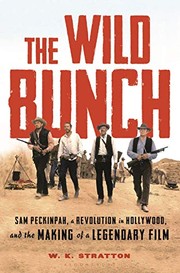
A production history of the film that ended the classical Western, with Peckinpah's violence, the Mexican location shooting and the ratings fight it provoked. Read it as the hinge between the revisionist turn and everything after.
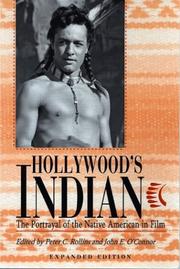
Rollins and O'Connor's essay collection on the portrayal of Native Americans in film, including the sympathetic revisionist Westerns and their own problems. The necessary corrective to a path that has so far been about white protagonists.
The spaghetti Western
IntermediateExplain how Italian filmmakers took the genre apart from outside it — the politics, the economics of Cinecittà and Almería, the stylistic inversions — and why the American Western never fully recovered
▸ Study plan for this stage
Pace: Four to five weeks for 862 pages, both by Christopher Frayling. Read Spaghetti Westerns (312 pages) first, in about two weeks — it is still the only serious book-length study in English of the subgenre, and it covers the Italian film industry, the left-wing politics under the violence, and exactly w
- The economics that produced the cycle: Cinecittà, Almería, co-productions and very fast schedules
- Which specific American Western conventions the Italian films invert, and how the inversion reads as commentary
- The politics underneath — the left-wing content Frayling identifies that the American reception missed
- Leone's own account of his formation, and the gap between it and the record
- Why the American Western did not simply resume after the cycle ended
- The difference between parody, homage and dismantling, applied to particular films
- What did Italian production conditions make possible that a Hollywood Western of the same period could not do?
- Which conventions from Kitses's grammar survive in a Leone film, and which are deliberately broken?
- What is the political reading Frayling gives the cycle, and how much of it depends on knowing the Italian context?
- Where should you distrust Leone's account of himself, given how the biography was sourced?
- Did the spaghetti Western kill the American Western or expose that it was already finished?
- Watch a Leone film beside its acknowledged American model and list every convention reversed, then check your list against Frayling's.
- Take Frayling's account of the production economics and work out what it implies about a specific scene's shooting — extras, sound, location, coverage.
- Find a claim Leone makes about his own influences in the biography and test it against the film he says it produced.
- Write the closing page of the path yourself: one paragraph on what the Western is, drawing on Kitses, Tompkins, Slotkin and Frayling, and stating which of them you now think is right.
Next up: This is the last stage: from here the useful next step is not another survey but a director or a cycle you now have the vocabulary to study on its own terms.
The scholarly foundation for the entire subgenre: Frayling on the Italian film industry, the left-wing politics under the violence, and the specific American conventions being parodied. Still the only serious book-length study in English.

Catalogued simply as Sergio Leone. Frayling's biography, built on years of interviews with Leone himself, and the right last book in the path — one director's career traced from a childhood watching American Westerns in Fascist Rome to remaking the genre for everyone else.