Walt Longmire Reading Order: Where to Start with Craig Johnson
Craig Johnson's sheriff of Absaroka County, Wyoming — a fictional county the size of a small state, population 25 to the square mile — anchors a series that starts as a conventional rural procedural and turns into something closer to a landscape novel with murders in it. The books run in strict publication order and the arc is real: Walt's grief for his wife, his daughter Cady, his deputy Vic, and his friendship with Henry Standing Bear all move forward, and later books assume injuries and losses from earlier ones. This path takes the sequence in order, flags the volumes worth not skipping, and notes where the Netflix and A&E adaptation diverges from the page badly enough to mislead a reader coming from the screen.
The first four, in order
BeginnerEstablish Absaroka County, Walt's grief, and the Walt-and-Henry friendship the whole series rests on.
▸ Study plan for this stage
Pace: Six to eight weeks at roughly a book every two weeks, which is the pace that carries a reader through a long series without turning it into a chore. Death Without Company is 271 pages, Kindness Goes Unpunished 288 and Another Man's Moccasins 290 — 849 pages between them — and the length is not relia
- Absaroka County as a character: a fictional Wyoming county with 25 people to the square mile, whose emptiness drives the plots rather than decorating them
- Walt's grief for his wife as a standing condition of the series rather than a plot to be resolved
- The Walt-and-Henry Standing Bear friendship, which is the relationship every later book leans on
- Lucian Connally, Walt's predecessor as sheriff, and the county history — Basque sheepherding, ranching — that he carries
- Cady's injury in Philadelphia and the consequences that persist across the following volumes
- The Vietnam flashback structure introduced in Another Man's Moccasins, which is how Johnson explains the man rather than the sheriff from here on
- First-person narration in Walt's voice, which is what makes the landscape writing possible in a procedural
- What does The Cold Dish establish about Walt's relationship to the law that the later books never revisit but always assume?
- Kindness Goes Unpunished leaves Wyoming entirely. What does the series lose in Philadelphia, and what does Johnson get in exchange?
- How does Lucian function differently from a standard mentor figure, and what does Death Without Company use him to explain about the county?
- In Another Man's Moccasins, what does the Vietnam strand tell you about Walt that the present-day case could not?
- Which of these four would you defend as skippable, and what would a reader of book eight notice missing?
- Keep a running injury and loss ledger for Walt — physical damage, deaths, estrangements — starting with The Cold Dish. Later books remember all of it, and by stage four the ledger is the arc.
- Mark every passage in The Cold Dish that is landscape rather than plot, then check how many pages they add up to. That proportion is the series' real signature and it is worth knowing you are signing up for it.
- After Another Man's Moccasins, go back and reread the two or three scenes in the earlier books where Walt refuses to explain himself. The flashback structure recasts them.
- If you came from the screen, list the three biggest differences you find between The Cold Dish and the pilot. Do it now, before the divergence widens, because in stage four it becomes the point.
Next up: The county, the cast and Walt's own history are established, which is what lets the next three books push the form into something other than a procedural.
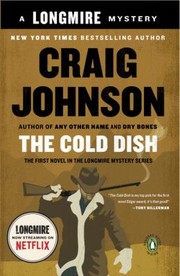
The first novel and the only correct starting point: a revenge killing following the assault of a Cheyenne girl, and the book that sets Walt's voice, his reluctance and the county itself. The television series opens from this book but changes the outcome, so read it before watching.
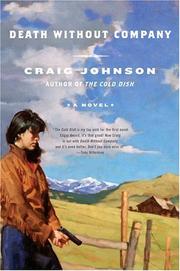
Read second for Lucian Connally, Walt's predecessor as sheriff, who becomes one of the series' best recurring figures. It also settles the Basque and ranching history of the county that later books keep returning to.
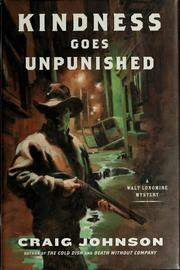
Johnson takes Walt out of Wyoming to Philadelphia, where his daughter Cady is badly hurt. The consequences run through the next several books, so this is not one to skip despite being the odd one out geographically.
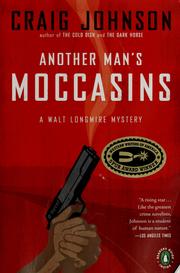
The first book to cut between the present and Walt's Vietnam service, which is the device Johnson uses from here on to explain the man rather than just the sheriff. Fourth in order and best read there.
The high point of the early run
BeginnerRead the three books most often named as the series' best, and the standalone novella that shows what Johnson can do at short length.
▸ Study plan for this stage
Pace: Six weeks, and give Spirit of Steamboat an evening rather than a fortnight — at 146 pages it is a novella and reads in one sitting, while Junkyard Dogs is 306. No reliable length is recorded for The Dark Horse or Hell Is Empty, both of which are standard-length novels in the series. Read The Dark Ho
- The alternating structure of The Dark Horse — Walt undercover in a county where he has no jurisdiction — and why it is the series' most controlled novel
- Comedy as a real register in this series, not an accident: Junkyard Dogs is funny on purpose and the books are not uniformly grim
- Hell Is Empty's loose Dante scaffolding, and the shift from procedural to survival narrative
- Physical consequence: the injuries Walt takes in the mountains persist into later volumes rather than resetting
- What Johnson can do at novella length — Spirit of Steamboat carries a full arc in 146 pages with a young Walt and Lucian
- Jurisdiction as the series' recurring engine: almost every strong Longmire plot puts Walt somewhere he has no authority
- How does the alternating structure of The Dark Horse control what you know, and where does it deliberately let you get ahead of Walt?
- Junkyard Dogs is comic and still turns on a real case. What does Johnson do to keep the two from cancelling each other?
- Hell Is Empty leans on Dante. Does the scaffolding earn itself, or is the manhunt strong enough without it?
- Spirit of Steamboat is a fraction of the length of the novels around it. What does it cut, and what does it turn out not to need?
- Of these four, which would you now give a new reader first — and does your answer contradict this path's order?
- Read The Dark Horse with a pencil: mark each chapter as past or present and note where the two strands touch. Then compare that map to the Vietnam cuts in Another Man's Moccasins.
- Add Hell Is Empty's damage to the injury ledger in detail. It is the single largest entry in the series so far and stage four assumes it.
- Read Spirit of Steamboat in one sitting, then write two sentences on why a 146-page novella works as an introduction to a series it comes ninth in.
- Take one comic set piece from Junkyard Dogs and one from The Cold Dish and compare them. The humour was always there; this stage just stops hiding it.
Next up: With the series at full strength and Walt visibly damaged, the middle books can widen past the county line without needing to re-establish anything.
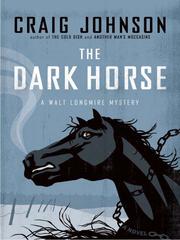
Walt goes undercover in a neighbouring county on a case he has no jurisdiction over, and the alternating structure makes it the most tightly built novel in the series. If someone tells you the books get good, this is usually the one they mean.
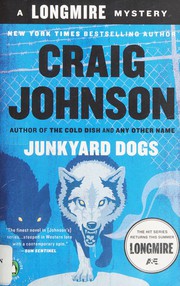
The funniest of the early books and a useful corrective to the idea that the series is grim, while still turning on a real case. Read after The Dark Horse for the tonal change.
A manhunt through the Bighorn Mountains in a blizzard, structured loosely on Dante, and the book that pushes furthest from procedural into survival narrative. It leaves Walt physically wrecked in ways later books remember.

A Christmas novella about a 1988 flight through a storm to save a burned child, told mostly in flashback with a young Walt and Lucian. It is short, it is the best introduction to the series for a doubtful reader, and it fits naturally here.
The middle years
IntermediateFollow the series as it widens beyond the county and the recurring cast takes on more of the weight.
▸ Study plan for this stage
Pace: Six to eight weeks for 995 pages — As the Crow Flies 308, A Serpent's Tooth 335 and Dry Bones 352. These are the longest books yet and the plots are the most externally researched, so a fortnight each is realistic rather than generous. Read them in this order: As the Crow Flies puts Walt outside his
- Jurisdiction as law rather than plot device: the reservation books turn on who actually has authority, and Johnson gets the answer right
- Lolo Long as a corrective to Walt — a character built to refuse his authority rather than defer to it
- The modern rural West as subject: A Serpent's Tooth takes on the present rather than the county's history
- Ownership of the ground, worked through the fossil dispute in Dry Bones, which reflects a real legal fight in Montana and Wyoming
- The recurring cast taking more of the narrative weight as the series stops needing to explain Walt
- How the series widens without leaving: each book pushes past a boundary while keeping Absaroka as home base
- What does Lolo Long see in Walt that the Absaroka cast does not, and does the book agree with her?
- Dry Bones is built on a real category of dispute. What is the legal question underneath the fossil, and how does the novel present the competing claims?
- A Serpent's Tooth handles a breakaway sect. Where does the book locate the harm — in the belief, in the isolation, or in the specific men?
- Across these three, how much narrative time does Walt actually get compared to the earlier books, and who has taken the rest?
- These are the longest novels so far. What are the extra fifty pages a book buying?
- Read one contemporary news account of a fossil-ownership dispute on tribal or federal land, then reread the legal argument in Dry Bones and note what the novel simplifies.
- Track Lolo Long's disagreements with Walt in As the Crow Flies and mark which ones the book resolves in her favour. The tally is more even than a reader expects.
- Update the injury and loss ledger, and add a second column for the cast: who has gained standing since stage one, and who has lost it.
- Pick the weakest of the three and write down what makes it weakest. A series this long is uneven by definition, and a reader who cannot say why is at the mercy of the next slump.
Next up: With the county's boundaries and the cast's independence both established, the late books can turn back on Walt's own history and on the reader's.
A death on the Cheyenne reservation puts Walt outside his own jurisdiction and gives Lolo Long, a new tribal police chief, room to push back at him. Read here for the reservation politics the later books build on.

A polygamous breakaway sect and a runaway boy, and the book where Johnson most directly takes on the modern rural West rather than its history.

A dispute over a Tyrannosaurus skeleton found on tribal land, which is a genuine legal fight in Montana and Wyoming and gives the series one of its sharpest plots about who owns the ground.
The later books, and the television divergence
IntermediateRead the late-series volumes that reopen Walt's own history, and understand exactly where the adaptation and the novels part company.
▸ Study plan for this stage
Pace: Two to three months at a book every two to three weeks, and the first two of these four must be read back to back. The Western Star is 362 pages and Daughter of the Morning Star 420 — 782 pages between them — while no reliable length is recorded for Depth of Winter or The Longmire Defense; both are
- The Western Star's dual timeline as the series' most consequential use of a device it has run since Another Man's Moccasins
- Depth of Winter's deliberate removal of the ensemble, and what a Longmire novel becomes with Henry, Vic and Absaroka County taken away
- Missing and murdered Indigenous women as the subject of Daughter of the Morning Star, handled as a live crisis rather than a plot premise
- Inherited guilt as the series' long argument, running from Walt's Vietnam service to his grandfather in The Longmire Defense
- Where the adaptation and the novels part company: the show keeps cases self-contained and stops short of the subjects the late books take on
- Why the late books cannot be read in any order — unlike the middle run, these assume specific outcomes
- What does The Western Star's cliffhanger actually threaten, and how much of its force depends on books you read months ago?
- Depth of Winter strips out the ensemble. Is the result a different kind of Longmire novel or a different kind of book altogether?
- How does Daughter of the Morning Star present the jurisdictional gap that makes the MMIW crisis possible, and how does that connect to As the Crow Flies?
- The Longmire Defense reaches back three generations. What does it conclude about inherited guilt, and does the conclusion fit the man in The Cold Dish?
- Name the three clearest divergences between the novels and the television version by this point. Which would most mislead a reader who came from the screen?
- Read The Western Star and Depth of Winter as one unit, with no other book between them. Readers who leave a gap here consistently report the second as incoherent, and it is a sequencing problem rather than a quality one.
- Close the injury and loss ledger after The Longmire Defense and read it start to finish. It is a fair summary of the series' actual arc, and no single volume contains it.
- Compare the reservation material in As the Crow Flies with Daughter of the Morning Star and note what has changed in how the series handles tribal jurisdiction across roughly ten volumes.
- Write the divergence list — page versus screen — you started in stage one, now complete. This is the deliverable a reader coming from the adaptation actually wants.
- Decide whether to continue past The Longmire Defense. The series is ongoing; this path stops where the grandfather question closes, and that is a clean ending rather than an arbitrary one.
Next up: This is the end of the path: the series' long arguments about grief, jurisdiction and inherited guilt are all closed, and anything published later reads as a new sequence rather than a continuation.

A 1972 sheriffs' excursion on a steam train cut against the present day, and the book that ends on the series' hardest cliffhanger. Do not read it out of sequence — it is built to detonate on a reader who knows the cast.

The direct continuation, taking Walt into Mexico alone and stripping the series of its supporting cast entirely. It is the most divisive book Johnson has written and only makes sense immediately after The Western Star.

Built around the crisis of missing and murdered Indigenous women, and the late book that most clearly shows the series taking on subjects the television version never touched.
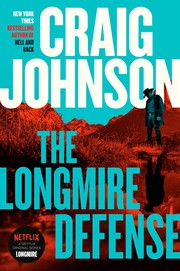
Walt investigates a decades-old shooting that implicates his own grandfather, closing the path on the series' long argument about inherited guilt. A good place to stop, and the clearest illustration of how far the novels have travelled from the show's self-contained cases.