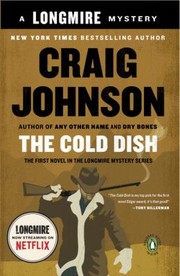
Start with The Cold Dish. It is the first novel, it sets Walt's voice and his reluctance and the shape of Absaroka County, and it is the only correct entry point. Craig Johnson's series runs in strict publication order with no chronology puzzle attached — the one thing to know is that it is a real sequence rather than a set of interchangeable mysteries. The cases close; the grief, the injuries and the relationships do not.
The alternative people try is to start wherever the television series left them. That is the one approach to avoid, and not because of snobbery: the adaptation opens from this same book and changes its outcome. Read The Cold Dish before watching, or accept that you already know a version of the ending that is not the one on the page.
The first four
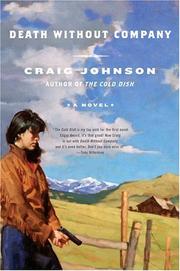
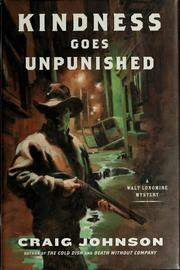
Death without company brings in Lucian Connally, Walt's predecessor as sheriff and one of the best recurring figures in the series, and settles the Basque and ranching history the later books keep returning to. Kindness goes unpunished takes Walt out of Wyoming to Philadelphia, where his daughter Cady is badly hurt; it is geographically the odd one out and absolutely not skippable, because the consequences run through several books. Another man's moccasins is the first to cut between the present and Walt's service in Vietnam, which becomes Johnson's standing device for explaining the man rather than the sheriff.
The high point of the early run
The Dark Horse sends Walt undercover in a neighbouring county on a case he has no jurisdiction over, and its alternating structure makes it the most tightly built novel in the series. When somebody tells you the books get good, this is usually the one they mean. Junkyard dogs is the funniest of the early novels and a useful correction to the idea that the series is uniformly grim. Hell is empty is a manhunt through the Bighorns in a blizzard, structured loosely on Dante, and it leaves Walt physically wrecked in ways later books remember.
Spirit of Steamboat is a Christmas novella about a flight through a storm to save a burned child, told largely in flashback with a young Walt and Lucian. Our path places it here; it was actually published after A serpent's tooth, and because it is a flashback it sits comfortably almost anywhere. It is short, and it is the best thing to hand a doubtful reader.
The middle years
As the crow flies moves a death onto the Cheyenne reservation and introduces Lolo Long, a tribal police chief with room to push back at Walt — the reservation politics here matter later. A serpent's tooth takes on a polygamous breakaway sect and is the book where Johnson engages most directly with the modern rural West rather than its history. Dry Bones turns on a dispute over a Tyrannosaurus skeleton found on tribal land, which is a live legal fight in Montana and Wyoming and produces one of the series' sharpest plots about who owns the ground.
The later books
The Western Star cuts a 1972 sheriffs' excursion on a steam train against the present day and ends on the hardest cliffhanger Johnson has written; do not read it out of sequence, because it is built to detonate on a reader who knows the cast. Depth of Winter is its direct continuation, stripping away the entire supporting cast and taking Walt into Mexico alone. It is the most divisive book in the series and only makes sense read immediately after. Daughter of the Morning Star is built around missing and murdered Indigenous women, and Longmire Defense — published as The Longmire Defense — has Walt investigating a decades-old shooting that implicates his own grandfather. It is a good place to stop.
Two practical notes
Our catalogue records alternate between "Craig Johnson" and "Johnson, Craig" across this path. That is a cataloguing artefact of how the source data stores names, not two authors. And this path holds fifteen volumes; the series is longer. Any Other Name, An Obvious Fact, Land of Wolves, Next to Last Stand, Hell and Back and First Frost are not represented here, so treat the list as the spine rather than the complete bibliography.
The television divergence
Beyond the changed ending of the first case, the adaptation runs largely on original, self-contained plots and keeps its cast in a tighter, more procedural frame. The novels do the opposite: they widen, they carry consequences forward, they spend chapters on landscape, and they take on subjects — reservation jurisdiction, missing and murdered Indigenous women, inherited guilt — that the screen version never approaches. Liking one is not much evidence about the other. The full ordered list is on the Walt Longmire path.