W. Somerset Maugham: Where to Start and What to Read Next, in Order
Maugham is one of the most readable major novelists in English, and the usual entry point is the one that puts people off: Of Human Bondage, seven hundred pages of thinly veiled autobiography. Start instead with the two short, ruthless novels that show what he does best, work through the literary comedy and the theatre novel, and only then take on the long books. The path closes with the short stories, the travel writing and the memoir, which is where a lot of readers end up deciding he was better than his reputation.
Start Here: The Two Short Novels
BeginnerMeet Maugham at his most economical and see the pattern that runs through everything he wrote: an ordinary narrator watching someone destroy their life for something they cannot explain.
▸ Study plan for this stage
Pace: Two to three weeks. The Moon and Sixpence is under 240 pages and The Painted Veil under 290, both in short chapters — 30 pages an evening finishes each in a week. Read them in this order and back to back; the second one is far more interesting when the first is still fresh.
- Maugham's signature structure: a civilised, faintly appalled first-person narrator reports on someone else's obsession from the outside. In The Moon and Sixpence you never get inside Charles Strickland's head, and that refusal is the design.
- Strickland is loosely modelled on Gauguin, but Maugham deliberately strips out the artist's biography and most of his charm. Watch how little the novel tells you about the paintings themselves.
- The Painted Veil applies the same compression to a marriage. Kitty Fane is shallow, and Maugham refuses to redeem her by making her likeable — her self-knowledge arrives without turning her into a better character.
- Both novels stage a collision between a conventional life and something the character cannot justify in conventional terms. That collision is the engine of nearly everything else on this path.
- The prose is deliberately plain: short sentences, ordinary words, no showing off. Maugham argued for lucidity over decoration and these two books are the argument in practice.
- The cholera epidemic in The Painted Veil is a plot device that also does moral work — it strands Kitty somewhere she cannot perform, which is the only condition under which Maugham lets a character change.
- Why does Maugham keep Strickland at narrative arm's length? What would the novel lose if it gave you his interior life directly?
- The narrator of The Moon and Sixpence disapproves of Strickland throughout. Does the book share that disapproval, and how can you tell?
- Kitty Fane changes over The Painted Veil, but Maugham withholds several of the rewards a novel usually gives a character who changes. Which ones, and why?
- Both novels feature a character who abandons an ordinary life. Compare what each book thinks that abandonment cost and what it bought.
- Take one page from each novel and describe the prose style concretely — sentence length, vocabulary, use of metaphor. What is Maugham refusing to do?
- Mark every passage in The Moon and Sixpence where the narrator judges Strickland out loud. Write 200 words on whether the novel endorses those judgements.
- Summarise Kitty Fane's arc in The Painted Veil in five sentences, then write a sixth naming the specific thing she still does not understand at the end.
- Copy out a 150-word paragraph from either novel and rewrite it in a more decorated style. The comparison is the fastest way to see what Maugham's plainness is buying.
- List the ways the narrator of The Moon and Sixpence is himself a character with interests — social, professional, moral — rather than a neutral window.
Next up: You now know the Maugham shape at short length; the next stage turns that same detachment on the two worlds he worked in himself, where his own stake in the material shows.
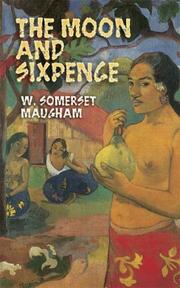
The right first Maugham. Under two hundred pages, loosely modelled on Gauguin, and it establishes his signature move — a detached, faintly appalled narrator reporting on someone else's obsession. If this does not work for you, nothing later will.
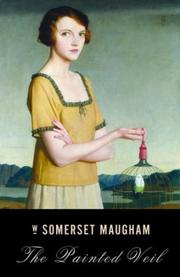
Read second because it is the same compression applied to a marriage rather than an artist. A cholera epidemic in rural China forces a shallow woman into self-knowledge, and Maugham refuses to make her likeable in the process.
The Literary World and the Stage
BeginnerSee Maugham writing about the two worlds he knew best — literary London and the theatre — and understand why other writers found him so irritating.
▸ Study plan for this stage
Pace: Two to three weeks. Both novels run to roughly 260 to 290 pages. Read the literary comedy first, then the theatre novel; a week each is comfortable, with a few days between them to let the joke settle.
- Cakes and Ale — catalogued here under its longer published title, Cakes and Ale or The Skeleton in the Cupboard — was Maugham's own favourite of his novels, and it is a comedy about how literary reputations get manufactured after a writer dies.
- Rosie is the novel's real subject and its structural joke: the biographers and memoirists in the book cannot see her, and the reader can. Maugham lets a warm, unliterary woman defeat an entire apparatus of respectability.
- The book was widely read as a hit at Thomas Hardy and Hugh Walpole. Whether or not the identifications hold, the scandal is part of what the novel is about — the reception enacted the satire.
- Theatre is Maugham's verdict on his own commercial career. He was for years the most successful playwright in London, and Julia Lambert's technique, vanity and craft are described by somebody who knew exactly how the trick was done.
- Both novels are about performance: one about the performance of literary seriousness, one about performance as a trade. Read as a pair, they argue that the second is the more honest of the two.
- Maugham's detachment turns colder here than in the first stage, because he is inside the world being satirised rather than outside an obsession looking in.
- Julia Lambert's final act is the closest Maugham gets to letting a character win. Notice what she wins and at what price.
- What exactly is Cakes and Ale satirising — the biographer, the literary establishment, posthumous reputation itself, or the reader's appetite for all three?
- Rosie is treated with more affection than any character in the first stage. What does Maugham gain by making the least respectable person in the book the most sympathetic?
- How does Julia Lambert's professional skill in Theatre map onto the narrator's social skill in Cakes and Ale?
- Is Theatre admiring of Julia or contemptuous of her, and does the book ever settle the question?
- Having read both, what does Maugham appear to believe about the relationship between craft and sincerity?
- Write a 200-word account of the plot of Cakes and Ale as the pompous biographer inside the novel would tell it, then a 200-word version as Rosie would. The gap between them is the book.
- In Theatre, list every scene where Julia uses a stage technique off-stage. Note which ones the novel presents as manipulation and which as competence.
- Take the closing chapter of Theatre and argue, in one page, that it is a triumph; then argue in one page that it is a defeat. Use only the text.
- Compare the narrator of Cakes and Ale with the narrator of The Moon and Sixpence in 200 words: what has changed in how much he wants you to like him?
Next up: You can now recognise Maugham's method at two hundred pages and see through his narrators, which is exactly what you need before spending seven hundred pages with a narrator who is barely a mask at all.
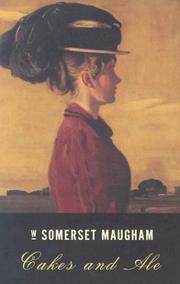
His own favourite, and a comic demolition of literary reputation-making that was widely read as an attack on Thomas Hardy and Hugh Walpole. Catalogued under its full published title, Cakes and Ale or The Skeleton in the Cupboard. Comes third because the joke lands harder once you have watched him take art seriously twice.
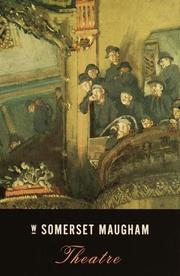
Maugham spent years as the most commercially successful playwright in London, and this novel about an ageing actress is his verdict on that life. A neat companion to Cakes and Ale: both are about performance, one on the page and one on the stage.
The Long Books
IntermediateTake on the two novels Maugham's reputation actually rests on, now that you know his shape well enough to see what he is doing across seven hundred pages instead of two hundred.
▸ Study plan for this stage
Pace: Six to seven weeks. Of Human Bondage runs to nearly 600 pages and The Razor's Edge to about 320. Give the first four weeks at roughly 25 pages a day — it is episodic and rewards steady pace over sprints — and the second two to three weeks.
- Of Human Bondage is a bildungsroman built on Maugham's own life, with Philip Carey's club foot standing in for the author's stammer. The substitution matters: a visible disability replaces an audible one, which changes what the humiliation is made of.
- The Mildred sections are the reason the book has lasted, and they are genuinely uncomfortable — a sustained portrait of erotic humiliation that refuses to make either party admirable or to release Philip on schedule.
- The novel is episodic by design: Paris, medical school, the shop floor, the countryside. Each phase is a life Philip might have had, and the book's argument about meaning is delivered by their accumulation rather than by any single scene.
- The famous Persian carpet image is where the novel states its thesis outright — that life's pattern has no purpose beyond the pattern. Read it as the book's answer to everything preceding it.
- The Razor's Edge takes the same question and asks it late in life rather than young: Larry Darrell walks away from a conventional American future to look for something he cannot name, and returns without a doctrine to sell.
- Maugham puts himself into The Razor's Edge as a named narrator, which is why the book reads best after the autobiographical novel — you already know how much of him is in the material.
- The two novels answer each other. Philip's resolution is a settling; Larry's is a refusal to settle. Neither book presents its answer as available to the other's protagonist.
- What does the Persian carpet passage actually claim, and does the rest of Of Human Bondage earn it or merely assert it?
- Why does Maugham keep returning Philip to Mildred long past the point where the reader wants him to stop? What is the length of that sequence doing?
- Philip's disability is a substitute for Maugham's stammer. What does the exchange change about how other characters can respond to him?
- Larry Darrell is admired by the narrator but never fully explained. Compare that with the narrator's handling of Strickland in the first stage — same technique, different verdict?
- Of Human Bondage ends in acceptance of an ordinary life; The Razor's Edge ends in the rejection of one. Are the two endings compatible with a single view of what a life is for?
- Maugham appears as himself in The Razor's Edge. What does naming the narrator gain, and what does it cost the book?
- Chart Of Human Bondage as a list of phases with page ranges. For each, write one sentence on what Philip believes at the start and one on what he believes at the end.
- Summarise the Persian carpet passage in your own 100 words, then find three earlier episodes in the novel that it retroactively explains.
- Take the Mildred sections alone and write 300 words on how Maugham keeps them from becoming either pornographic or moralising.
- Put Philip's final choice and Larry's final choice side by side in a paragraph each, then write a third paragraph on what each man would say about the other.
- Reread the opening twenty pages of Of Human Bondage after finishing it and note everything the beginning already knew.
Next up: Having watched Maugham sustain his method across seven hundred pages, you are placed to see what happens when he compresses the same instincts into twenty — the form many readers think was his best.
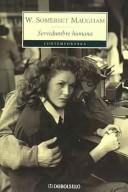
The autobiographical novel, and the one to read fourth rather than first. Philip Carey's club foot stands in for Maugham's stammer, and the Mildred sections are among the most uncomfortable depictions of sexual humiliation in English fiction.
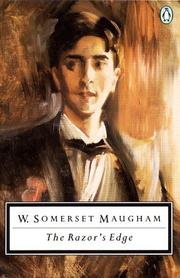
The late masterpiece and the natural sequel in theme: a young American walks away from a conventional life to look for something he cannot name. Maugham puts himself in the book as the narrator, which is why it reads best after Of Human Bondage.
The Short Stories
IntermediateRead the form many critics think he was best at, and understand why the colonial stories are both his most gripping work and his most historically compromised.
▸ Study plan for this stage
Pace: Three to four weeks, but read these differently: one or two stories a sitting, never a whole volume in a day. The Casuarina Tree and Ashenden run to roughly 285 pages each. Take either the original volumes or the collected edition, not both — they overlap.
- The Casuarina Tree gathers the Malayan stories, including The Letter and Before the Party. Each is built on a single social fact that the surrounding characters cannot afford to acknowledge, and the story is the moment it becomes unavoidable.
- The colonial stories are simultaneously his most gripping work and his most historically compromised. Maugham observes the small cruelties of that society with a cold eye and is unmistakably part of it — the stories notice the Europeans' self-deceptions far more sharply than they notice anyone else'
- Read alert to what the stories are and are not curious about. The servants, the local characters and the mixed households are usually plot conditions rather than perspectives, and that limitation is a fact about the work worth naming rather than reading past.
- The Letter is the clean example of Maugham's story engine: an opening statement of what happened, and then a slow revelation that every element of that statement was chosen.
- Ashenden draws on Maugham's own First World War intelligence work and deliberately drains espionage of glamour — boredom, admin, small betrayals. It is the direct ancestor of le Carré's version of the genre.
- Ashenden is a set of linked stories rather than a novel, and the linking is loose on purpose: the job it depicts has no arc.
- Maugham's story form is closer to the anecdote told at dinner than to the modernist epiphany. Nothing is left implicit that a good raconteur would leave implicit — which is exactly why some critics rate him and others do not.
- Take The Letter: at what point does the reader know more than the characters, and how does Maugham time that transfer?
- What do the Casuarina Tree stories see clearly about colonial society, and what do they consistently fail to be curious about? Point to specific stories for each.
- Ashenden refuses excitement almost systematically. What does that refusal let it depict that a conventional spy story cannot?
- Compare a Maugham story with one of the short novels from the first stage. What survives the compression and what is lost?
- Critics have argued both that Maugham was best at the story and that the stories are merely well-told anecdotes. Which specific features would each side point to?
- Read The Letter and Before the Party, then write out the sequence of events of each in chronological order rather than narrative order. The difference shows you the construction.
- Pick one Casuarina Tree story and list every named character by how much interior life the text grants them. Write 200 words on the pattern.
- Take any three consecutive Ashenden stories and note what actually happens in each. Then write one paragraph on why the sequence still holds attention.
- Choose one story and rewrite its final page withholding the revelation. Decide whether the story survives, and what that tells you about Maugham's form.
Next up: The stories show Maugham working from direct observation; the last stage takes the mask off entirely and lets him describe how the observing was done.

The Malayan stories, including Before the Party and The Letter. Colonial society observed with a cold eye and an unmistakable complicity — read them alert to what Maugham notices and what he does not.
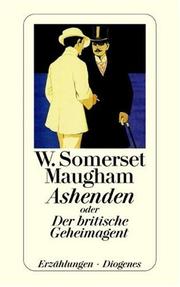
Linked stories drawn from Maugham's own First World War intelligence work, and the direct ancestor of le Carré's unglamorous spy fiction. Placed here because it reads as a bridge between the short stories and the travel books.
If you want the stories in bulk rather than in their original volumes, this is the standard collection to start with. Redundant with The Casuarina Tree in places, so take one route or the other.
The Traveller and the Memoirist
IntermediateFinish with the non-fiction, where Maugham drops the narrator's mask and explains, more plainly than most novelists ever do, exactly how and why he wrote.
▸ Study plan for this stage
Pace: Four to five weeks. The Summing Up is about 300 pages and should be read slowly, in short sittings, with a pencil. The Gentleman in the Parlour and On a Chinese Screen run to roughly 300 and 235 pages and go quickly; Liza of Lambeth is barely 130 and is an evening.
- The Summing Up is a memoir of a working method rather than of events: what Maugham concluded about prose, the theatre, money, religion and his own limits. He states his limitations flatly, which is rare enough to be worth studying on its own.
- His stated ideal — lucidity, simplicity, euphony — is the explicit version of what you have been watching for four stages. Read it against the novels and check whether he did what he says he did.
- The Gentleman in the Parlour is the best of the travel books: Burma, Siam and Indochina, and the observational habit that powers the fiction shown in raw form, before it has been turned into plot.
- On a Chinese Screen is fifty-eight sketches from a river journey through China — too short to be stories, too shaped to be essays. It is the closest thing to a notebook Maugham published, and several sketches are recognisably the raw material of The Painted Veil.
- The travel books carry the same asymmetry as the colonial stories: sharp on Europeans abroad, thinner on the people whose countries they are in. Reading them after the stories makes the pattern legible rather than incidental.
- Liza of Lambeth is the first novel, written from what Maugham saw as a medical student attending births in the London slums. It is slight beside everything else here, and the plain style is already fully formed — which is the reason to read it last rather than first.
- Read in this order the stage runs backwards through his career on purpose: the mature statement of method, then the notebooks, then the beginning, so you see the method arriving rather than being explained.
- The Summing Up names Maugham's ideals for prose. Pick a paragraph from Of Human Bondage and one from a late story and judge whether he met them.
- He is unusually candid about his limitations as a writer. Are his self-assessments accurate on the evidence of the work you have now read?
- Which sketches in On a Chinese Screen can you match to material in The Painted Veil, and what did he have to add to turn observation into fiction?
- The Gentleman in the Parlour and The Casuarina Tree cover overlapping territory in different forms. What can the travel book do that the stories cannot, and vice versa?
- Liza of Lambeth was written at twenty-three. What is already present, and what had he not yet learned?
- After the whole path: is Maugham a major novelist, an exceptional craftsman, or both — and which books would you cite for your answer?
- Read The Summing Up with a pencil and extract every prescriptive statement about writing into a numbered list. Then test three of them against a page of his own fiction.
- Match at least three sketches in On a Chinese Screen to scenes or characters in The Painted Veil, and write a paragraph on what changed in transit.
- Read Liza of Lambeth in one sitting and write 250 words on which features of the mature style are already present and which are missing entirely.
- Build a one-page reading order of your own for a friend who has read none of this, choosing five books and justifying each position. Doing this is the test of whether the path taught you the shape.
- Take a single paragraph of description from The Gentleman in the Parlour and one from The Moon and Sixpence and compare how each handles a place. Note what the fiction removes.
Next up: This closes the path: you have read Maugham at every length he worked in and heard his own account of the method, which is enough to judge for yourself whether the reputation or the work is the thing that needs adjusting.
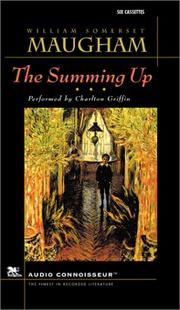
Not a memoir of events but of a working method: what he learned about prose, the theatre, money and belief. The single most useful book here for anyone who wants to write, and best read once you know the work it is summing up.
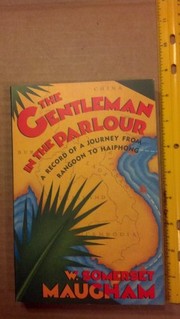
A journey through Burma, Siam and Indochina, and the best of his travel books. The observational habit that powers the fiction is here in its raw form.
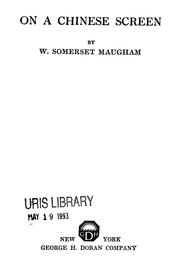
Fifty-eight sketches from a 1920 river journey through China — barely stories, barely essays. Read last: it is where you can watch him taking the notes that became The Painted Veil.
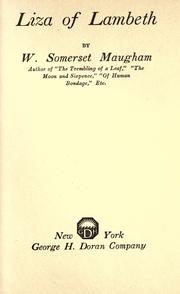
The completist's final stop. His first novel, written from what he saw as a medical student in the London slums, published at twenty-three. Slight next to everything above, but it shows the plain style already fully formed.