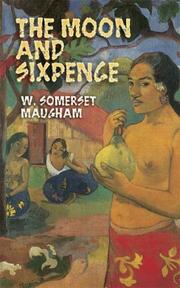
Start with The moon and sixpence. It is short, it moves, and it is Maugham doing the thing he does better than almost anyone — telling you about a difficult man through the eyes of a narrator who cannot quite work him out. The painter at its centre is loosely modelled on Gauguin, and the novel is far more interested in the cost of a vocation than in celebrating it.
The obvious alternative is Of Human Bondage, his big autobiographical novel and generally called his best. It is also seven hundred pages and its middle section is a long, painful, deliberately repetitive account of a humiliating obsession. It is worth all of that, and it is not where you find out whether you like him.
The short novels first
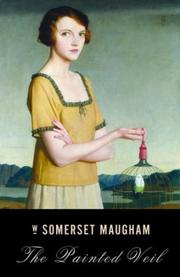
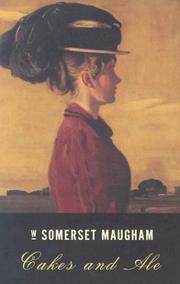
The Painted Veil — a marriage collapsing during a cholera epidemic in China — and Cakes and Ale or The skeleton in the cupboard, a comedy about literary reputation which caused a considerable scandal because contemporaries recognised the targets. Theatre is an actress at the height of her powers, and it is the most purely enjoyable book he wrote.
Any of these three could be a starting point. All of them will tell you within fifty pages whether Maugham's manner — cool, worldly, faintly amused, never showing off — is one you want to spend time in.
The two big ones
Of Human Bondage belongs here, once you trust him. The Razor's Edge follows, a novel about a young American who comes back from the First World War and refuses the life he was expected to want, and it is the book that made Maugham enormously popular in the 1940s.
The short stories, which may be the real achievement
Maugham is one of the great short-story writers in English, and The casuarina tree is where to start — colonial Malaya, told with an unnerving lack of authorial comment. That restraint is also the problem: these stories grant far more interior life to their English characters than to anyone else, and a modern reader should notice which people are given thoughts and which are given only behaviour. It is not an argument for skipping them. It is an argument for reading them attentively.
Ashenden draws on his own First World War intelligence work and effectively invented the unglamorous, morally tired spy story that Le Carré later inherited. Collected Short Stories Volume 1 is the fuller gathering.
The non-fiction
The summing up is his account of his own life and craft at sixty-four, and it is unusually free of vanity about both. The gentleman in the parlour and On a Chinese screen are travel books from the period when he was covering enormous distances by boat and mule.
Liza of Lambeth is his first novel, written while he was a medical student working in a South London slum, and it is nothing like the rest of him — raw, unpolished and directly observed.
Where to stop
The moon and sixpence, The Painted Veil, Of Human Bondage and The casuarina tree is a complete Maugham and more than most readers need. Theatre and Ashenden if you want more pleasure; The summing up if you want the man.
One record note: several of these carry doubled or extended catalogue titles — the Collins-era practice of an alternative title after "or" — which is a cataloguing artefact rather than a different book.
Follow the full ordered path here: W. Somerset Maugham: Where to Start and What to Read Next, in Order.