Vinland Saga Reading Order: Where to Start Makoto Yukimura's Viking Manga
Makoto Yukimura's Vinland Saga is read in English as twelve hardcover Books, each collecting two of the Japanese volumes, and that numbering is the one to stay in — the Vol. N form does not exist as a separate English edition. This path runs all twelve in order and marks the two places where the series changes what it is: the end of the revenge arc, and the farm.
The revenge years: Books One and Two
IntermediateMeet Thorfinn as a child soldier chasing his father's killer, and learn the political map of the Danish invasion of England.
▸ Study plan for this stage
Pace: About a week. Book One runs 470 pages and Book Two 432, 902 between them, but read that correctly: each English hardcover collects two Japanese volumes, so a 470-page Book is two ordinary manga volumes and goes down in roughly ninety minutes to two hours rather than in a week of evenings. One Book a
- The frame structure of Book One: the adult Thorfinn first, the childhood second, so that the flashback explains a man you have already judged
- Thors and the argument he makes about violence, stated once and then withheld for thousands of pages
- Askeladd's mercenary band as a working economy rather than a gang, with raiding as a trade
- The political map of the Danish invasion of England — factions, claimants and who is paying whom
- Revenge as the engine of the early arc and, deliberately, as its weakest justification
- English hardcover Books against Japanese volumes: one numbering scheme, chosen and kept
- Why does Book One start with the adult Thorfinn rather than in Iceland, and what would be lost by telling it chronologically?
- What does Thors actually argue, in his own words, and how much of it does the young Thorfinn understand?
- How does Askeladd's band make its living, and what does the series show about the economics of raiding?
- Who is fighting whom in England by the end of Book Two, and on whose authority?
- What is Thorfinn's revenge actually for at this stage — his father, his own standing, or something the series has not named yet?
- Check your shelf before you start: if the spine says Book One rather than Vol. 1, you are in the right edition. Note the mapping, since two Japanese volumes sit inside each Book and secondary discussion often uses the other numbering.
- Time yourself on Book One. Knowing that 470 pages takes you under two hours is what makes a twelve-Book series a plannable commitment rather than an intimidating one.
- Write out Thors' argument in your own words after Book One. Keep it — the Farmland arc, six Books later, is an extended answer to it.
- Sketch the political map at the end of Book Two: claimants, armies, and Askeladd's position between them. The next stage assumes you can hold it.
Next up: Askeladd is established as the most interesting person in the story, which is exactly the setup the next stage needs in order to take the war arc to its end.
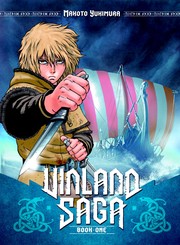
The only correct starting point. It opens with Thorfinn already grown and travelling with Askeladd, then flashes back to Thors and Iceland — a structure that only works if you meet it in this order.
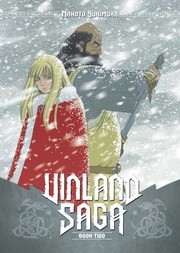
The campaign in England begins in earnest and Askeladd stops being a villain and becomes the series' most interesting character. Read straight on; Books One and Two are a single introduction.
Askeladd and Canute: Books Three and Four
IntermediateFollow the war arc to its end and understand why the story cannot continue in the same mode afterwards.
▸ Study plan for this stage
Pace: A week. Book Three is 454 pages and Book Four 432, 886 in total, or roughly four Japanese volumes; at this series' pace that is four or five sittings. Read them close together and, more importantly, read Book Four cold. Its ending is one of the most abrupt tonal breaks in modern manga and the shock
- Canute's transformation as the hinge the whole series turns on — a change of person, not merely of ambition
- The political plot overtaking the revenge plot, and Thorfinn becoming a bystander in his own story
- Askeladd's actual project, withheld until it can only be completed one way
- The end of the Prologue arc — the series' own name for these four Books — as a deliberate closure rather than a cliffhanger
- Kingship, paradise and the argument about what a ruler can build, introduced here and carried to the end of the series
- Why the story cannot continue in the same mode afterwards, structurally rather than merely tonally
- What changes in Canute, and which specific scene do you take as the turn?
- What has Askeladd been working toward all along, and at what point were you given enough to know?
- How does Thorfinn's role in the narrative change across these two Books, and does the series make that loss of centrality feel like a defeat?
- Why is the first arc called a Prologue? Answer it from what Book Four's ending makes possible rather than from what it concludes.
- What does Canute's version of paradise require, and what is the objection the series lets stand against it?
- Read Book Four without looking anything up, and stay off discussion until you have finished it. This is the one place on the path where spoiler avoidance materially changes the reading.
- Mark the page where you think Canute changes, then reread the twenty pages before it. The preparation is usually visible only in retrospect, which is the craft of the sequence.
- Write down what you expect the rest of the series to be about, immediately after finishing Book Four. Keep the note for the end of the next stage; almost nobody predicts it.
- Reconstruct Askeladd's plan from the evidence in Books One to Four, in order of when each piece was available to you. It is a case study in withholding without cheating.
Next up: The Prologue arc is closed and the revenge that drove it is gone, which leaves the series needing an entirely different subject — and the next stage is it.

Prince Canute enters and the political plot overtakes the revenge plot. Canute's transformation across this book is the hinge the whole series turns on.

The end of the Prologue arc, and one of the most abrupt tonal breaks in modern manga. Do not read a synopsis first; the shock of this ending is doing structural work.
The Farmland Saga: Books Five to Eight
IntermediateRead the slavery-and-farming arc on its own terms rather than as a delay before more fighting.
▸ Study plan for this stage
Pace: Two to three weeks. Four Books totalling 1,668 pages — 448, 400, 404 and 416 — which is eight Japanese volumes, so this is the longest stage on the path and about a third of the whole series. Read it at the same pace as the war arc rather than speeding up because the fighting has stopped: Book Five
- Farm labour as subject matter rather than as interlude — the clearing of land given the space combat had
- Einar as the second protagonist the series needed, and the friendship that carries the arc
- Thorfinn's pacifism argued rather than asserted: the position is stated, attacked and defended on the page
- Ketil's farm as a self-contained world with its own economy, hierarchy and precarity
- Canute returning as a king rather than a prince, and the two halves of the series reconnecting
- Whether a refusal of violence can survive contact with power — the question Book Eight exists to answer
- What does Book Five spend its length on, and why does the series need hundreds of pages of labour before anything can be argued?
- What is Einar for, structurally? What can the arc do with him that it could not do with Thorfinn alone?
- Where is the series' thesis actually stated, and by whom? Quote it as closely as you can.
- How does Canute as king differ from Canute as prince, and is the change consistent with what happened in Book Three?
- Does Thorfinn's refusal of violence survive Book Eight intact, partially, or not at all — and what does the arc conclude about it?
- Read Book Five deliberately slowly and count roughly how many pages pass before any violence occurs. That number is the arc's opening argument.
- Take Thors' position, as you wrote it down in the first stage, and set it beside what Thorfinn says in Book Six. Mark the differences — they are the six Books of experience between them.
- List the farm's inhabitants with their status: owner, family, free labourer, slave. The crisis in Book Seven runs on those distinctions and is much clearer with them written out.
- After Book Eight, retrieve the prediction you made at the end of Book Four and read it back. Then decide, in writing, whether you are continuing — the arc is built to make stopping here legitimate.
Next up: The Farmland arc settles what Thorfinn believes; the next stage takes that belief out of Europe and tests it on people who have never encountered it.

Thorfinn as a slave clearing stumps, with almost no violence for hundreds of pages. Readers who abandon Vinland Saga abandon it here; readers who stay usually name this arc as the best of it.
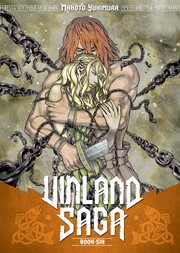
Einar and Ketil's farm become the whole world, and Thorfinn's pacifism starts being argued rather than asserted. The series' actual thesis is stated in this book.

The farm's precarity turns into open crisis and Canute returns as a king rather than a prince. The two halves of the series reconnect here.

The resolution of the Farmland arc, and the test of whether Thorfinn's refusal of violence can survive contact with power. A complete story if you choose to stop here.
Eastern Expedition: Books Nine and Ten
IntermediateFollow the turn from Europe toward Baltic trade, and the long project of actually reaching Vinland.
▸ Study plan for this stage
Pace: A week to ten days. Both Books are 400 pages, 800 in total, four Japanese volumes, and the pace is a genuine change: Book Nine is slower than Book Eight, with a new cast, a new geography and problems that are mercantile and diplomatic rather than martial. Expect to read it more slowly than the page
- The turn from Europe toward Baltic and eastern trade, and the shift from armies to markets
- A largely new cast introduced at the two-thirds mark, and what the series gains by refusing a fixed ensemble
- Commerce, credit and obligation as the engines of the plot in place of war
- Thorfinn's principles tested by people with no context for them, which is a harder test than opposition
- The Vinland project moving from an idea Thors described to a venture requiring money and ships
- Pacing as a deliberate instrument: Yukimura slowing the series down at the point most series accelerate
- What kind of problem drives Book Nine, and how does it differ from every problem in the first eight Books?
- Who are the new characters and what does each want? How much of the arc's difficulty is simply that their aims are legitimate?
- How do Thorfinn's principles fare when nobody he meets has any reason to take them seriously?
- What does the expedition east cost, in money and in obligation, and who ends up owing whom?
- Why does Yukimura slow the series down here, and does the choice pay off by the end of Book Ten?
- Keep a ledger as you read: who owes what to whom, in money, ships or obligation. The arc is a commercial plot and it is far easier to follow written down.
- Track the geography — draw the route east as it is described. The series assumes a familiarity with the Baltic that most readers do not have.
- Find the moment in Book Ten where Thorfinn's position is tested by someone who is not hostile to it, merely uninterested. Write down how he answers, and whether the answer is new.
Next up: The expedition has raised what the voyage requires and pushed the series to the edge of Europe, which is where the crossing finally becomes a concrete plan rather than an inheritance.

A new cast, a new geography and a shift into mercantile and diplomatic problems. The pacing changes again — expect a slower book than Eight.

The expedition east reaches its most difficult stretch and Thorfinn's principles are tested by people who have never heard them. Read on directly from Nine.
Toward Vinland: Books Eleven and Twelve
IntermediateReach the current end of the English hardcover run and know where the series stands.
▸ Study plan for this stage
Pace: Four or five days, and know the ending in advance. Book Eleven is 384 pages and Book Twelve 370, 754 in total — the shortest stage on the path and four Japanese volumes. Book Twelve is the furthest the English hardcovers currently reach: Vinland Saga is still being serialised in Japan, so this is a
- The crossing becoming concrete: ships, provisioning, crew and route, after many Books of Vinland as an idea
- The title's irony resolving — a series named for a place it had not reached finally heading there
- Thors' description of Vinland in Book One returning as a practical specification rather than as a memory
- Reading an ongoing serial: how to finish at the edge of what exists deliberately rather than by running out
- What the series has become by Book Twelve, measured against what it was in Book One
- What has to be true, materially, before the crossing can be attempted — and how much of the last four Books was arranging it?
- How does the Vinland the series is now heading toward compare with the one Thors described in Book One?
- Where does Book Twelve leave each of the main characters, and how much of that is resolution rather than suspension?
- Vinland Saga has changed genre at least twice. Name the changes and say which of them the series recovered from best.
- Given that the series is unfinished, what does the ending you have actually deliver — and is it enough?
- Reread Thors' account of Vinland in Book One immediately after finishing Book Eleven. Twelve Books apart, the same description reads as prophecy and as specification.
- Write the series' shape as a list of its arcs with the page totals you have accumulated — 902, 886, 1,668, 800 and 754. Seeing where Yukimura spent his pages is the clearest statement of what the series is about.
- Decide in writing whether you will follow the ongoing serialisation or wait for more hardcovers. The point is to make the stop a choice, which is the whole reason this stage announces it up front.
- Write a two-paragraph reading order for someone starting tomorrow: which numbering to buy, where the tonal breaks fall, what not to look up, and where the English edition runs out.
Next up: This is the end of the path: all twelve English hardcovers in one numbering scheme, both points where the series changes what it is, and an honest account of where it currently stops.
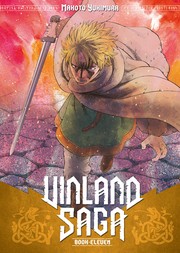
The Atlantic crossing finally becomes concrete rather than aspirational, twenty years after Thors first described it. The series' title stops being ironic.

The furthest the English hardcovers currently reach. Vinland Saga is still running in Japan, so this is a stopping point rather than an ending — worth knowing before you start Book One.