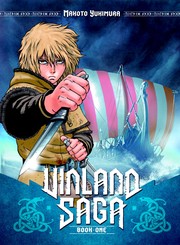
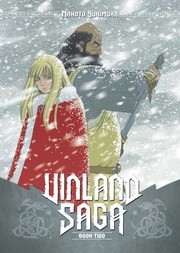
Start with Vinland Saga, Book One. There is one correct order and, more usefully, one correct edition: the English release is numbered Book One through Book Twelve, each hardcover collecting two of the Japanese volumes. The "Vol. 1, Vol. 2" numbering people search for does not exist as a separate English edition, so a listing offering you Vol. 3 is either the Japanese tankobon or mislabelled. Stay inside the Book numbering and you cannot double-buy.
The second thing to settle before you open it: this series deliberately stops being the story it starts as. Makoto Yukimura spends four books building a Viking revenge saga and then spends the next four taking it apart into an argument for pacifism. That is not a slump and it is not filler — it is the point of the work — and it is exactly where the readers who abandon Vinland Saga abandon it. Knowing the turn is coming is the single most useful thing a reading order can tell you here.
The revenge years: Books One to Four
Vinland Saga, Book One opens with Thorfinn already grown and travelling with the mercenary Askeladd, then flashes back to his father Thors in Iceland. Read it exactly as printed; the structure is doing the work. Vinland Saga, Book Two moves into the Danish invasion of England, and Askeladd stops being a villain and becomes the most interesting person in the book.
Vinland Saga, Book Three introduces Prince Canute, and the political plot quietly overtakes the revenge plot — Canute's transformation across this volume is the hinge the whole series turns on. Vinland Saga, Book Four ends what the series itself labels the Prologue, on one of the most abrupt tonal breaks in modern manga. Do not read a synopsis of it first.
A content note, as plain fact: these four books are extremely violent. Decapitation, mutilation, the burning of villages and the enslavement of survivors are drawn in detail and at length, and sexual violence sits in the background of the war throughout. The art does not stylise any of it.
The Farmland Saga: Books Five to Eight
Here is the turn. Vinland Saga, Book Five finds Thorfinn a slave clearing tree stumps on a Danish farm, with almost no fighting for hundreds of pages. Vinland Saga, Book Six gives him Einar, and his refusal of violence starts being argued rather than asserted — the thesis of the series is stated in this volume.
Vinland Saga, Book Seven turns the farm's precarity into open crisis and brings Canute back as a king rather than a prince, reconnecting the two halves of the book. Vinland Saga, Book Eight closes the arc by testing whether Thorfinn's principles survive contact with power. Most readers who stay through the farm end up naming this arc the best thing Yukimura has done. If you are going to quit, quit at Five or commit through Eight; there is no useful halfway.
Eastern Expedition and Vinland: Books Nine to Twelve
Vinland Saga, Book Nine brings a new cast and a new geography, trading battle for mercantile and diplomatic problems — expect a slower book than Eight. Vinland Saga, Book Ten is the hardest stretch of that expedition, and tests Thorfinn's principles against people who have never heard them. Vinland Saga, Book Eleven finally makes the Atlantic crossing concrete rather than aspirational, twenty years after Thors first described it. Vinland Saga, Book Twelve is as far as the English hardcovers currently reach.
Where to stop
There are two honest stopping points. Vinland Saga, Book Four ends the revenge story completely and is a clean exit if the farm does not appeal. Vinland Saga, Book Eight ends the Farmland Saga and is the stronger of the two: a full arc with a real resolution. Book Twelve is not an ending at all — the series is still running in Japan, so finishing the current English run leaves you mid-story. Better to know that now than at the end. The full ordered list is on the Vinland Saga path.