Vincent van Gogh: The Best Books to Read, in Order
Van Gogh is one of the very few painters who left an extraordinary written record of his own thinking, and the first decision this path makes is to put the letters before any biography. What follows separates three different things that usually get run together: the documented life, the paintings themselves, and the legend of the mad genius that grew from a 1934 novel and has shaped the public image ever since. His mental illness is documented in medical records and in his own letters; the details of the ear episode and of his death in 1890 are genuinely disputed among serious scholars, and this path carries that dispute rather than picking a side.
The letters first
BeginnerRead Van Gogh describing his own intentions, reading, poverty and doubts before anyone else describes them for you. About 820 of his letters survive, most to his brother Theo, and they are the primary source every biography on this path is built from — knowing them makes you a much better reader of the biographers.
▸ Study plan for this stage
Pace: Six to eight weeks for 957 pages, and the ordering of this whole path depends on this stage coming before any biography. The letters of Vincent van Gogh in our record runs to 351 pages and is an early English selection; roughly 820 of his letters survive, most of them to his brother Theo, so read wh
- That the primary source for this artist is written by the artist, which is rare, and that it covers a career of barely ten years in unusual density.
- The technical content. Van Gogh writes about complementary colour, about specific pigments and about what he was trying to achieve in named canvases, which is evidence about the work rather than about the man.
- The reading. He quotes Dickens, Zola, Michelet and the Bible constantly, and the letters establish him as a formidably literate correspondent rather than an untutored natural.
- The financial relationship with Theo, which structures the whole correspondence: an artist supported by his brother, writing to the person paying for the paint.
- The religious period in the Borinage and its collapse, documented in his own account rather than reconstructed afterwards.
- His own descriptions of his illness, which are lucid, intermittent and much more specific than the legend that grew from them.
- What an editorial arrangement does. Stone's Dear Theo makes a continuous narrative out of an incomplete correspondence, which requires selection and sequence — both of which are interpretive choices.
- What does Van Gogh say he is trying to do with colour, and which specific paintings does he say it about?
- What does the correspondence show about the terms of his financial dependence on Theo?
- How does he describe his own illness, and what does he say about the periods between attacks?
- Which writers does he cite most often, and what does he take from each?
- What has Stone left out of Dear Theo, and what does the continuous narrative form add that the letters do not have on their own?
- Pick twenty letters spread across the ten years and note in each what he is asking Theo for, what he is working on, and what he is reading. The three columns together are the life.
- Find three letters in which he describes a specific painting, then look at the painting. Do this before you read any biography, and keep the notes.
- Compare a passage as Stone arranges it in Dear Theo with the same passage in a full edition. What has been cut, and what does the cut do?
- Write a one-page account of Van Gogh's intentions as a painter using only his own words. This is the document you will check every biographer against.
Next up: With the artist's own account in hand you can read the biographers as interpreters of a source you already know, which is the whole reason for this order.
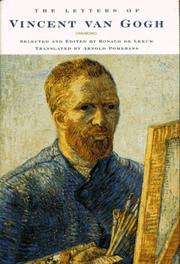
The correspondence itself, and the foundation of the whole subject: technical discussion of colour, accounts of specific canvases, and an unsparing record of his religious crisis and his illness. Many editions exist and ours is an early English selection, so read whichever complete or well-chosen selection you can find rather than this specific printing.

Stone's edited arrangement of the letters into a continuous autobiography, which is how most twentieth-century readers first met them. Read it knowing it is a selection shaped by an author who also wrote the novel — it is the letters, but arranged to tell a story.
The documented life
BeginnerGet the biography in three sizes. By the end you should know the shape of a career that lasted barely ten years, from the failed evangelism in the Borinage coalfields to Auvers — and you should have met the strongest challenge to the standard account of how he died.
▸ Study plan for this stage
Pace: Three months for 1,411 pages, and two of the three books on this stage display in our catalogue under the same title, so name the author every time you buy or cite one. Julian Bell's Van Gogh is 163 pages and takes a week; it is a short life by a working painter, which makes it unusually good on wha
- The compressed chronology. Van Gogh began painting seriously in his late twenties and died at thirty-seven, so almost everything is packed into a decade and the early failures are half of it.
- The Borinage period, in which he worked as a lay evangelist among coal miners and was dismissed, and which Naifeh treats as formative rather than as prologue.
- The family economics, documented in detail by Naifeh: the allowance from Theo, the art dealing background, and the recurring conflicts about money and dependence.
- The medical record. His illness is documented in hospital records and in his own letters, and the modern diagnostic labels applied to it are retrospective and contested.
- Naifeh's accidental-shooting thesis, argued in an appendix from ballistic and circumstantial evidence, and disputed by researchers at the Van Gogh Museum. It is a genuine scholarly disagreement, not a fringe claim, and it is unresolved.
- What Bell contributes as a painter: an account of technique and intention that biographers without studio experience tend to skip.
- How much the standard narrative actually changed after Naifeh's archival work, which is the specific question Callow's earlier book lets you answer by comparison.
- What happened in the Borinage, and why do the biographers treat that failure as the beginning of the career rather than as a false start?
- How was Van Gogh financed across the decade, and what obligations came with it?
- What is documented about his illness in the medical record, as distinct from what has been inferred?
- Set out Naifeh's argument about the shooting and the case against it. What evidence would settle it?
- Which parts of the standard story does Naifeh's archival work revise, judged against Callow's earlier account?
- What does Bell say about the paintings that the two longer biographies do not?
- Build a timeline of the ten working years with a row for place, for financial situation and for what he was painting. Everything later on this path hangs on it.
- Take three episodes and compare Naifeh's account, Callow's and what the letters themselves say. Where all three agree you have a fact; where they diverge you have an interpretation.
- Read Naifeh's appendix on the death, then find the Van Gogh Museum's published response. Write a paragraph stating the disagreement without resolving it.
- Pick one painting and read what Bell says about how it was made and what Naifeh says about the circumstances it was made in. The two kinds of explanation rarely meet, and noticing that is useful.
- List every claim you previously believed about Van Gogh's life that none of these three books supports. Keep the list for the final stage.
Next up: Fifteen months in Arles produced most of the famous paintings and the most famous episode of the life, and they deserve a stage of their own.

A short life by a working painter, which makes it unusually good on what Van Gogh was actually trying to do with paint rather than on his psychology. Our record shows the bare title 'Van Gogh'; read it first as the compact orientation.

The definitive modern biography, ten years in the making with the Van Gogh Museum's archive behind it, and the fullest account of the family, the illness and the finances. It also argues, in an appendix, that Van Gogh did not shoot himself but was shot accidentally by local boys — a claim the museum's own researchers dispute, and the clearest example of why this life remains contested.
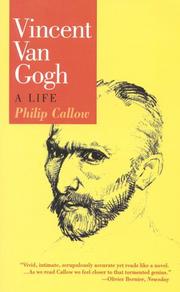
A more conventional single-volume life, written before Naifeh's and easier to carry, useful as a check on how much of the standard narrative the new research actually changed. Our record displays it as 'Vincent van Gogh'.
Arles, Gauguin and the ear
IntermediateConcentrate on the fifteen months that produced most of the famous paintings and the most famous episode in the artist's life. Read these four together and notice how much of what everyone 'knows' about December 1888 rests on very thin evidence.
▸ Study plan for this stage
Pace: Three months for 1,295 pages, and the four books should be read together rather than treated as separate accounts. Gayford's The yellow house is 352 pages reconstructing the nine weeks Gauguin spent in Arles day by day from letters and canvases, and it is the vivid entry point; three weeks. Our cata
- The Arles period as the productive centre of the career: a large proportion of the best-known paintings were made in roughly fifteen months in one town.
- The yellow house project — Van Gogh's plan for a studio of the south, a community of painters working together — and its collapse into nine weeks with one increasingly unwilling colleague.
- The working relationship with Gauguin: two painters with incompatible methods, one insisting on painting from the motif and the other on painting from memory, sharing a room.
- What is actually documented about December 1888, which is much less than the popular account assumes, and what has been filled in by inference and repetition.
- Murphy's archival findings, including the identification of the woman who received the ear and evidence about the extent of the injury, established from local records rather than from the artists' letters.
- Gauguin as an interested witness. His own later account of the episode was written long afterwards and serves his own version of the friendship, which is why the archival route matters.
- Bailey's contribution on the physical circumstances — the house, the light, the materials, the local suppliers — which explains a good deal that psychological readings attribute to temperament.
- How a disputed episode is investigated: municipal records, hospital registers, local newspapers and property documents rather than rereading the same correspondence.
- What was the studio of the south meant to be, and why did it fail?
- On what specific points did Van Gogh's and Gauguin's working methods conflict, and can you see the conflict in the paintings?
- What is documented about the events of December 1888, and by whom? Separate contemporary record from later recollection.
- What did Murphy establish that was not previously known, and what remains unsettled?
- How reliable is Gauguin's own account, and what interests does it serve?
- What does Bailey's material about the house and the local suppliers explain that the psychological accounts attribute to character?
- Build a day-by-day chart of the nine weeks from Gayford, adding the paintings made on each side. The density of the output is itself an argument.
- Take one pair of paintings of the same subject by both men and describe the difference in method rather than in quality.
- List the sources for the December 1888 episode and date each one. The distance between the event and most of the accounts is the finding.
- Read Murphy's account of how she located a record, then trace the same method for another detail of the period. Archival research is learnable and this book teaches it.
- Write the events of that December in two versions: everything documented, and everything commonly said. The gap is the subject of the final stage.
Next up: Enough biography — the paintings themselves have a chronology and a literature that owe nothing to the life.
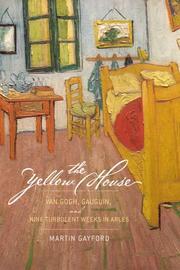
Nine weeks in Arles with Gauguin, reconstructed day by day from letters and canvases — the best account of two painters working in the same room and disliking it. The right entry to this stage because it is the most vivid.
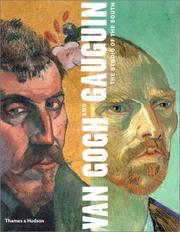
The Art Institute of Chicago's exhibition study of the whole relationship, before, during and after Arles, with the paintings reproduced alongside the argument. Read it after Gayford for the scholarly apparatus behind the narrative.

Bailey's focused account of the Arles period and the yellow house itself, drawing on local archival material other biographers did not use. Placed here because it is the most granular treatment of where and how the work was actually made.

Seven years of archival detective work in Arles which established, among other things, who the woman he gave the ear to actually was, and how much of the ear was cut. A model of how a disputed episode gets settled — and of how much remains unsettled around it.
Looking at the pictures
IntermediateShift from life to work. Read the two exhibition catalogues that organise the paintings by period, and keep a complete catalogue beside you so you can find any picture the biographies mention. The aim is to stop treating the paintings as evidence about the man.
▸ Study plan for this stage
Pace: Two months for the two catalogues, which come to 597 pages between them, plus a complete reference whose length our catalogue does not record. Pickvance's Van Gogh in Arles is 272 pages, the Metropolitan Museum catalogue that established the chronology of the Arles paintings and is still the standar
- What an exhibition catalogue is: a chronology, a set of attributions and dates, and an argument about sequence, presented with the works reproduced.
- The Arles chronology Pickvance established, which is the reference every later account of that period uses even when it does not say so.
- The Saint-Rémy year as a working period rather than an interruption — a large body of paintings made in and around an asylum, including some of the best known.
- The Auvers canvases and the compressed final months, and the difficulty of dating work produced at that rate.
- Why chronology changes interpretation. A painting read as a response to an event stops being that if the date moves, which is exactly what catalogue scholarship adjusts.
- The difference between looking at a painting and reading about it. These catalogues are structured to reward the first, which is unusual on a reading path.
- A complete catalogue as a working tool. Having every painting to hand means you can check any claim a biographer makes about a picture immediately, which is the practical reason to own one.
- How did Pickvance establish the Arles chronology, and what evidence do catalogue scholars use to date a painting?
- What was made during the Saint-Rémy year, and how does seeing it as a body of work change the standard account of that period?
- Which well-known interpretations of specific paintings depend on their dates, and what happens to those readings if the dating shifts?
- Take three paintings mentioned in the biographies and find their catalogue entries. Does the entry support what the biographer said about them?
- What can you learn from the two catalogues that no biography on this path tells you?
- Go through the Arles catalogue in chronological order looking only at the plates, then write down what changes across the period. Do it before reading the entries.
- Take one painting the biographies treat as autobiographical and read its catalogue entry. Then decide whether the biographical reading survives the dating.
- Use the complete catalogue to find every painting of one subject he returned to, and lay them out in date order. The development is visible in minutes.
- Check three claims from stage two about specific canvases against the catalogue entries. Note any that do not hold.
- Pick one Saint-Rémy painting and write a description of it that makes no reference to his illness. It is harder than it sounds, and that difficulty is the point of this stage.
Next up: With the documented life and the paintings both in hand, the last thing to examine is the legend that sits on top of them.
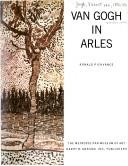
The Metropolitan Museum catalogue that established the chronology of the Arles paintings and is still the standard reference for that period. Dry and indispensable — use it as a companion to the previous stage rather than as continuous reading.
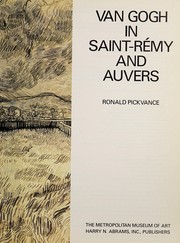
Pickvance's companion volume covering the asylum year and the final months, including 'The Starry Night' and the Auvers canvases. Together the two catalogues cover almost everything most readers want to look at, in the order it was painted.

Walther and Metzger's complete illustrated catalogue, the practical reference for finding any painting mentioned anywhere else on this path. Buy it for the reproductions rather than the commentary.
The legend, and the mind behind it
BeginnerFinish by looking at how the myth was manufactured and at what Van Gogh himself was reading. Read the novel last, deliberately, so that you can see exactly which parts of the popular image it invented — and read Guzzoni as the antidote, since a man who read this widely was not the naif the legend requires.
▸ Study plan for this stage
Pace: Six weeks for 672 pages, and the order within the stage is the entire argument. Stone's Lust for Life is 444 pages, three to four weeks, and it is a 1934 novel — later a film — that created the mad-genius Van Gogh of popular imagination and is the single most influential thing ever written about him
- The mad-genius template: suffering as the source of the work rather than a circumstance around it, which is the specific claim the novel makes and the biographies do not.
- How a novel becomes the received account. Lust for Life reached vastly more people than any biography, was filmed, and supplied the images most readers already have before they open a book.
- The scenes the novel invented, which can now be identified precisely because you have read the letters and the archival work first. This is why the reading order matters.
- Stone's dual role. He also edited Dear Theo, so the same author shaped both the most-read arrangement of the primary source and the most-read fiction about it.
- Guzzoni's evidence: named books, dated readings and specific paintings, which converts a general claim about literacy into a documented one.
- What his reading did to the work — Dickens and Michelet on the depiction of labour and the poor, Zola on how a subject is treated, the Bible throughout the early period.
- The general problem the stage illustrates: a compelling narrative about an artist can outlast and outrun every correction, and the only defence is having read the sources first.
- Name five scenes in Lust for Life that have no documentary basis. You should be able to do this from memory of the earlier stages.
- What does the novel claim about the relationship between the illness and the paintings, and do any of the biographies support it?
- Why did this novel become the popular account rather than any of the biographies? Consider form, timing and the film.
- What did Van Gogh actually read, on Guzzoni's evidence, and which paintings can be tied to which books?
- How does knowing his reading change what the popular image gets wrong?
- Return to the list you made in stage two of things you believed that no biography supports. How many trace to this novel?
- Read the novel with the letters beside you and mark every invented scene as you meet it. By the end you will have annotated the myth line by line.
- Take the ear episode as the novel presents it and set it against Murphy's archival account. The comparison is the clearest single demonstration of what this path is for.
- Pick one book Guzzoni names and read a chapter of it, then look again at the paintings she connects it to.
- Write the one-paragraph biography of Van Gogh you would now give someone, and check every clause against a source. That paragraph is the deliverable of this whole path.
- Compare Stone's arrangement in Dear Theo, which you read in stage one, with his novel. The same author working in two registers on the same material is unusually instructive.
Next up: The path closes with the legend identified and the reading list of the man himself, which is where a reader stops being an audience for the myth.
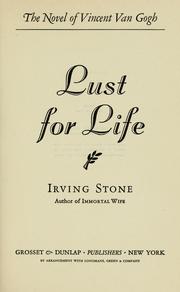
The 1934 novel, later a film, that created the mad-genius Van Gogh of popular imagination — it is fiction, and it is the single most influential thing ever written about him. Read it after the biographies, never before, and treat every scene as invented unless you have seen it elsewhere.

A study of what Van Gogh actually read — Dickens, Zola, Michelet, the Bible — and how specific books shaped specific paintings. The best correction to the previous entry, and the right place to end: he was a formidably literate man who chose what he was doing.